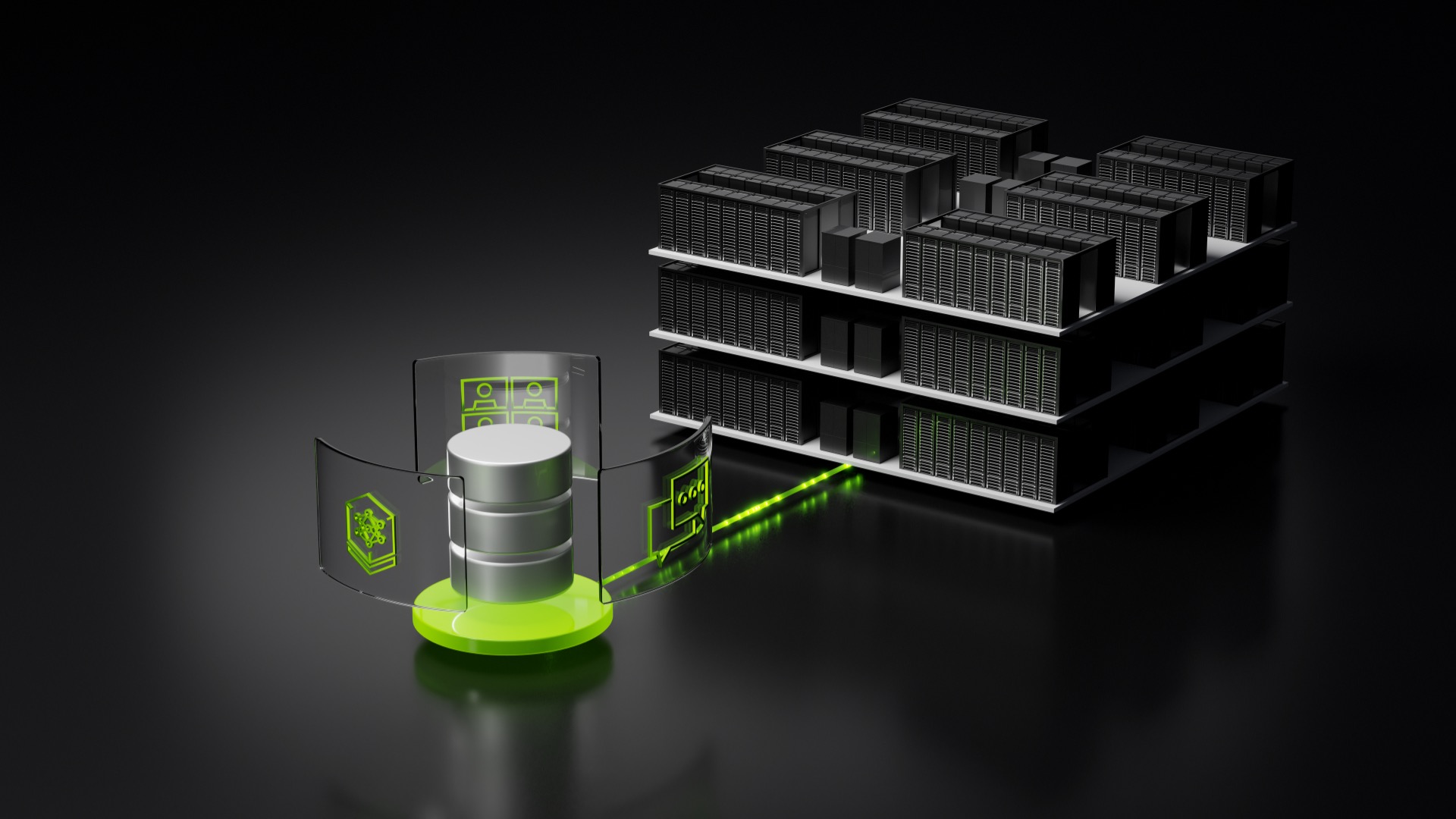
Over the past several years, model capabilities and training dataset sizes have experienced exponential growth. During the past year or so, the time between new-frontier-model releases has gone down from months to weeks. Reliable and fast access to storage is important to both the speed and computational cost of this AI innovation. If AI is the brain, storage is the memory: Capability and speed are highly dependent on the size of memory and speed of retrieval.
Yet while AI compute performance has roughly tripled every two years, storage and interconnect performance growth have been more modest. As a result, storage bottlenecks continue to be one of the primary contributors to GPU stalls for AI workloads, directly impacting expenditures and time to market. Aside from GPU utilization, storage architecture also directly impacts the speed of iteration in AI research; with GPUs increasingly becoming geo-distributed and dataset sizes increasingly becoming massive, researchers spend a significant amount of time ingesting and moving data across regions, thus impacting research velocity. In this blog post, we discuss how Meta’s BLOB-storage architecture evolved to address two primary challenges: maximizing GPU utilization and maximizing research velocity.