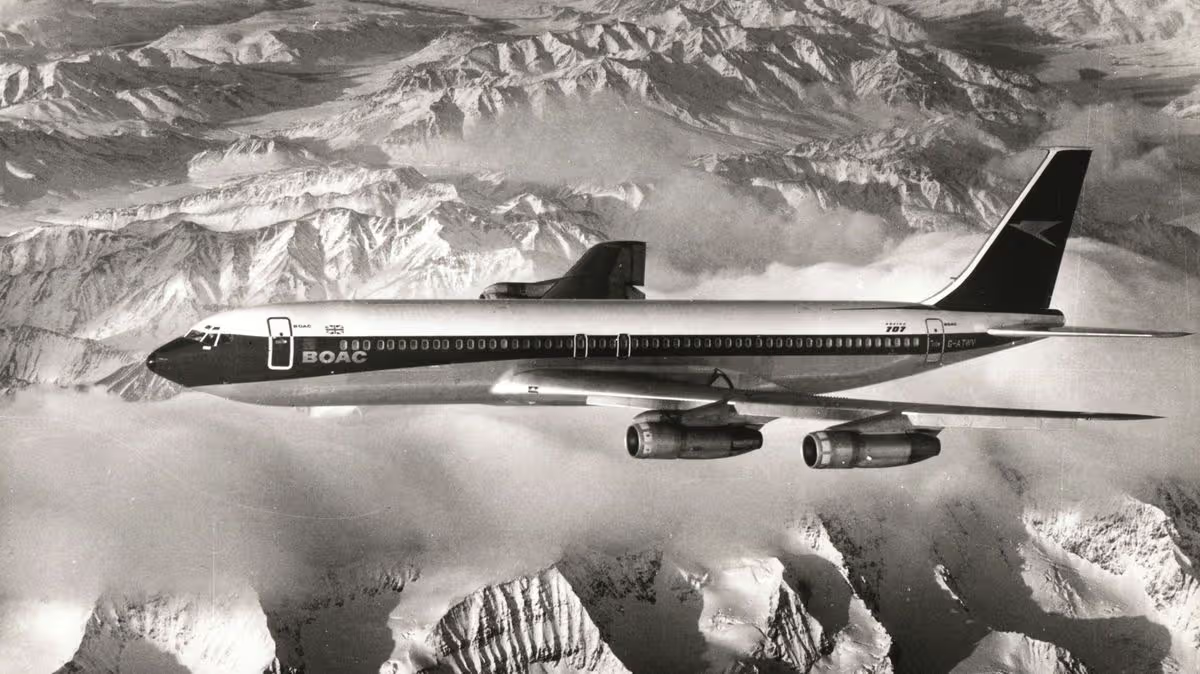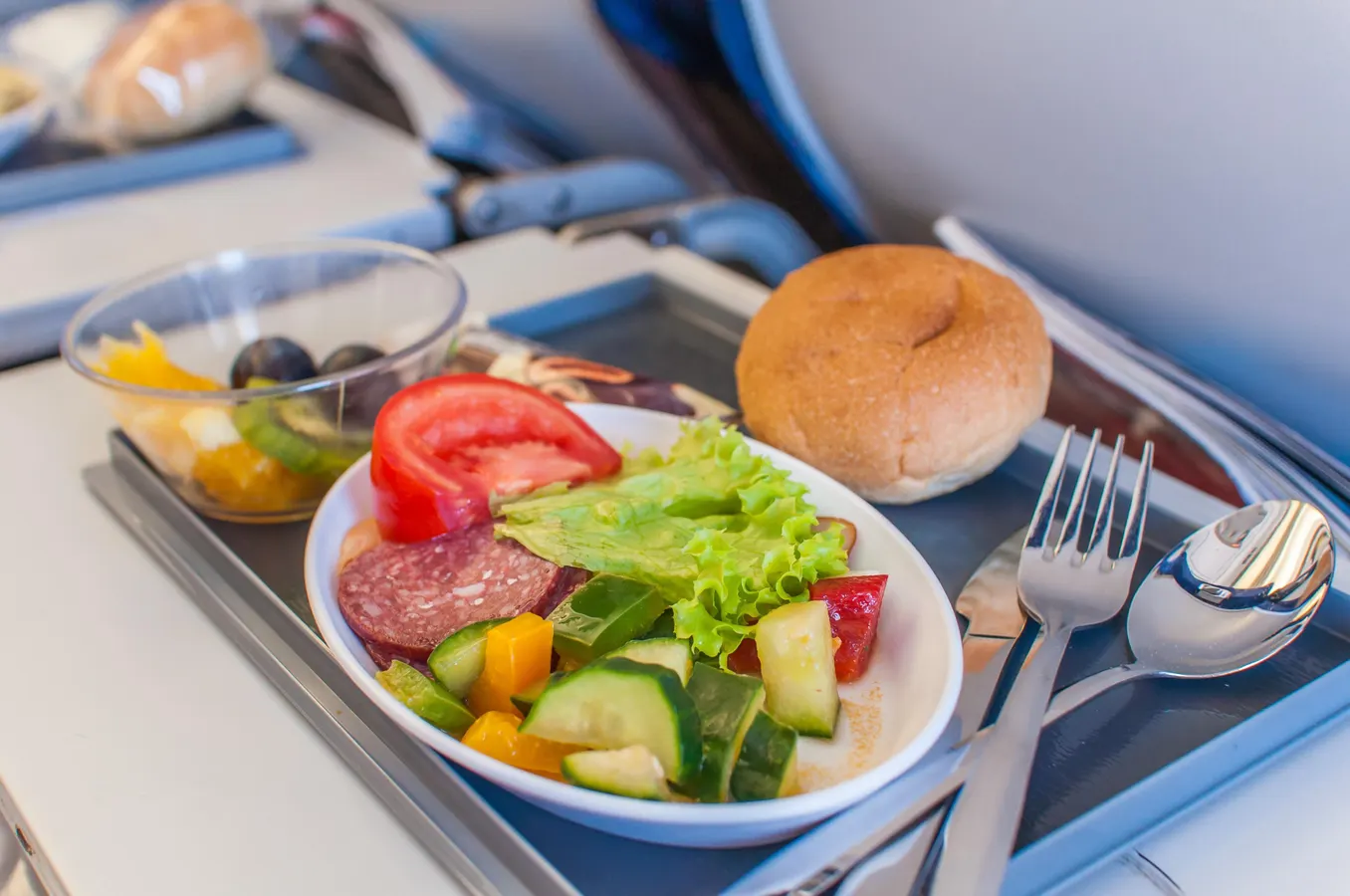
The story of airline food is really a story about aviation itself.gettyIn the early days of flying, airline food was as much about practicality as pleasure. Cabin crew handed out chewing gum to ease ear pressure, meals were simple, and the sky was a bumpy place to eat anything at all.By the 1950s, passengers could expect everything from white-tablecloth breakfasts to warm sandwiches, depending on where they sat, with airline food mirroring the glamour of the flight itself.The decline of airline food is often blamed on cost-cutting, but that only tells part of the story. Aircraft design, changing safety rules, and even changes in human taste have all helped shape what is served on board.Airline Food Began With Chewing Gum And Ended With PeanutsAirline food has changed a great deal:In the 1920s, cabin crew would give passengers chewing gum to help relieve ear pressure. There also wasn't any way to heat food up, so you would have been eating apples. Airplanes used to be so bouncy that everything was served on paper plates.By the 1950s, frozen food had arrived, as had a way to heat meals. Economy class was created in 1951, so depending on your seat, you’d have eaten filet mignon and lobster or a warm sandwich and a snack pack. Traveling by plane could have meant breakfast served on white tablecloths, with the cabin crew scrambling eggs. First-class passengers were served kangaroo tail soup on Qantas flights.In 1978, the airline industry was deregulated, so airlines cut ticket prices and food choices too. Peanuts came in as a low-cost snack. Continental Airlines was the last major airline to serve free domestic meals in economy class, but it, too, ended that practice in 2010.Different Airline Food Isn’t Just About Cost-CuttingAs CNN reported, though, one of the reasons airline food began to disappear wasn’t only cost-cutting but also changes in airline design, increased government regulation, and shifts in our attitudes toward health and safety:September 11th changed the cooking knives that are allowed in the cabins.Peanuts are now off the menu for fear of causing allergic reactions.Airplane galleys are now smaller to fit in more seats and passengers.Cost-cutting has had an impact, though. Famously, Robert Crandall, head of American Airlines in the 1980s, said that removing one olive from every salad saved the airline $40,000 a year. Domestic fares are subject to a 7.5% federal excise tax, but this doesn’t apply to food onboard, so because airlines can make more money from untaxed add-ons than from included service, they have less reason to keep giving passengers free food.Passengers are also arguably happier to trade a good meal for a less expensive seat.Is Airline Food Really All That Bad, Or Is It More About Where It’s Served?Airline food has a bad reputation, but it's down to a lot of factors. Some of it is just biology. The Telegraph reports that we lose up to 30% of our taste buds when traveling at altitude, and the BBC adds that a lack of humidity, lower air pressure, and background noise can also change how food tastes.It also doesn’t stop us from eating at all. Just as we tuck into a breakfast buffet in a hotel we might not really want, The Telegraph describes our behavior as that of collectors and maximizers when confronted with lots of food. We take it all, even if we don't want or need it.As The Times reports, certain dishes work better in the air, and dishes can taste very different up in the sky than they do down on the ground. Color plays a role too, as airplane lights can make orange food look very dull under cabin lighting. Add in the recycled air and air conditioning, the food dries out fast.And despite lots of things being found in airline food over the years—needles, human teeth, a live mouse—bacteria are the real concern. Hot dishes are blasted in freezing temperatures as quickly as possible, then kept chilled below 5°C until the crew reheats them on board.Airline Food Is A Big IndustryIn 1980, nearly 1 billion passengers flew somewhere. In 2025, 5 billion passengers were up in the air at some point. The IATA expects demand to double by 2050.Outside Hong Kong International Airport, Bloomberg reports on an airline catering facility, Cathay Dining, spanning 13 soccer fields across three floors and producing up to 100,000 meals a day for over 30 airlines, including Emirates and Singapore Airlines. There are 2,000 people who work here over shifts of eight or nine hours—for such a technologically intensive industry, it relies on lots of manual labor to prep its food, even if AI plans the in-flight menus and customer demand. And, just like Crandall’s olive remarks, everything is measured carefully to keep costs tight. Some automation works, though. Cathay Dining has a machine that makes 10,000 croissants and 60,000 rolls every day, and an egg machine that allows one chef to produce 800 omelets every hour. In other cases, machines cannot replace human hands for slicing dragon fruit or cleaning greens.Airline food is now a small part of a much bigger picture: an industry balancing cost, safety, comfort, and scale in ways early passengers could hardly have imagined. The real story is not that airlines stopped caring about food; it is that the whole system around flying changed, and airline food had to change too.MORE FROM FORBESForbesThe 10 Safest Countries In The World, Per 2026 Global Peace IndexBy Alex LedsomForbesMachu Picchu Joins Governments Worldwide To Curb Overtourism In 2026By Alex Ledsom
How Airline Food Went From Chewing Gum To 60,000 Bread Rolls In A Day
Airline food has changed a lot since the early days of aviation, and it isn't just about tighter margins—health, terrorism and science play a role too.
917 words~4 min read