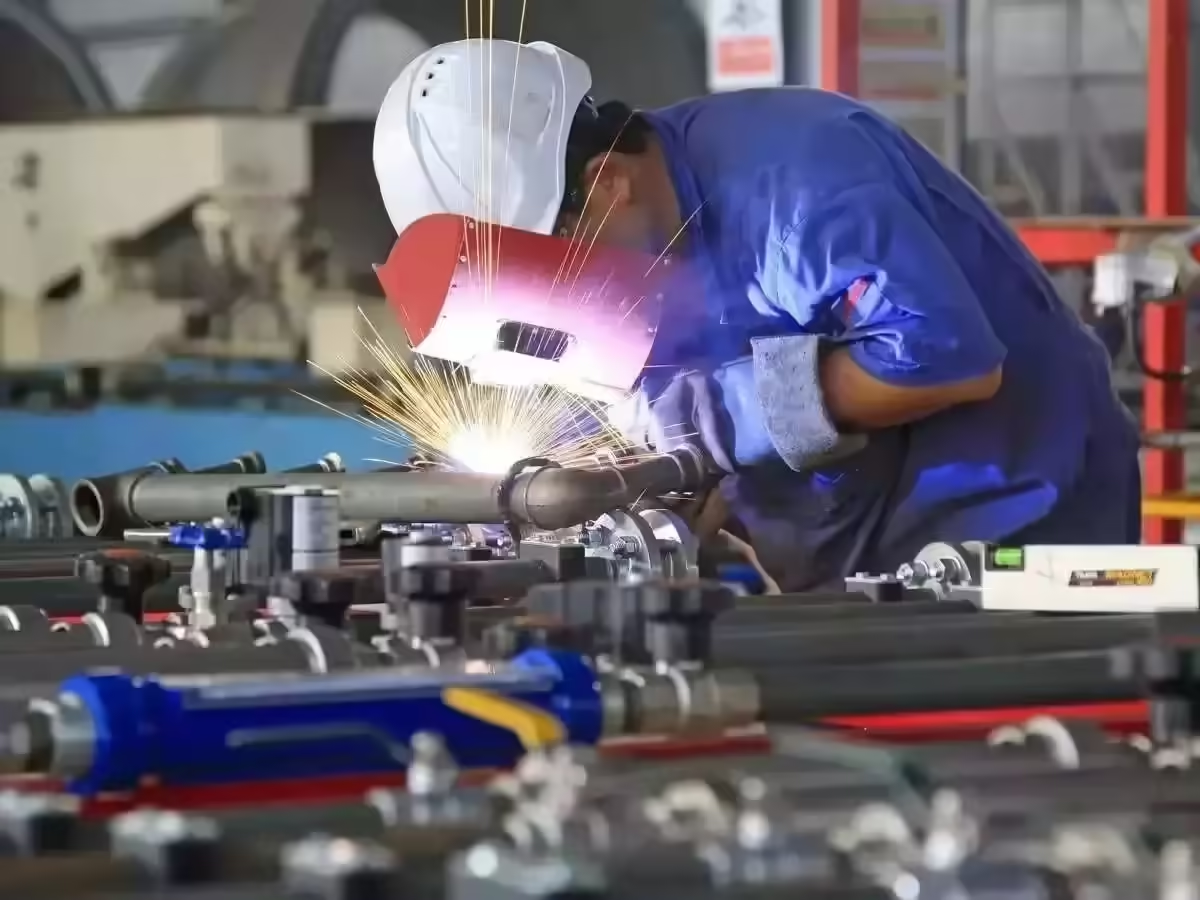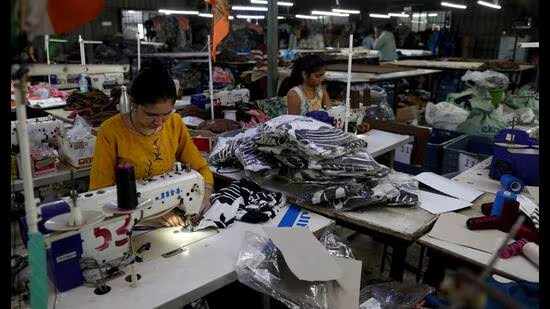
Why can’t India solve its manufacturing conundrum? It is a policy challenge which continues to test our economic policy. What makes the problem even more confusing is that India tends to do well in capital-intensive manufacturing rather than labour-intensive manufacturing, a phenomenon at odds with our relative advantage in resource endowment.For decades, India’s manufacturing problem has been attributed to rigid labour laws which have not allowed industry to exploit India’s cheaply available labour to the full extent. (Reuters)For decades, India’s manufacturing problem has been attributed to rigid labour laws which have not allowed industry to exploit India’s cheaply available labour to the full extent. There is merit in the argument as labour laws were an archaic silo-based labyrinth. Hopefully, some of these problems have been solved by the current government’s rollout of the four labour codes. Does this mean Indian manufacturing will enter a new trajectory now?Evidence, both anecdotal and statistical, should warn us against such complacency. Recent unrest by factory workers in Noida brought the precarious condition of workers in Indian manufacturing to the fore. An HT analysis of the latest employment data from the Periodic Labour Force Survey (PLFS) showed that the average monthly income for a salaried manufacturing worker is ₹18,735, which is less than the ₹22,699 earned by the average salaried worker across all industries in India. Another government report released this week — based on the 2025 PLFS and providing labour market statistics about India’s million-plus population cities — underlines an even more troubling fact. Cities where manufacturing is a bigger component of employment tend to face headwinds for salaried wages. When read together, these two statistics raise a troubling question: Manufacturing might be good for the economy and a cherished policy goal, but is it good for the workers too? How can it be good for workers if it means lower wages? Who is to blame for this asymmetry?There are no easy answers here. But a related question ought to be asked. Are paltry wages in Indian manufacturing as a whole a reflection of low productivity levels? Have entrepreneurs failed the manufacturing ecosystem in India rather than workers by making manufacturing an exercise in drudgery instead of an endeavour to push the productivity and value-addition, which could make both capital and labour better off even with similar terms of trade? Important voices, both within and outside government, and data have been drawing our attention to this fact. It is time to act on it, now that the alibi of rigid labour laws is gone.
Making in India, with low wages
The need is to assess if it is low productivity or enterprises shying away from value addition that is responsible for low worker pay
420 words~2 min read