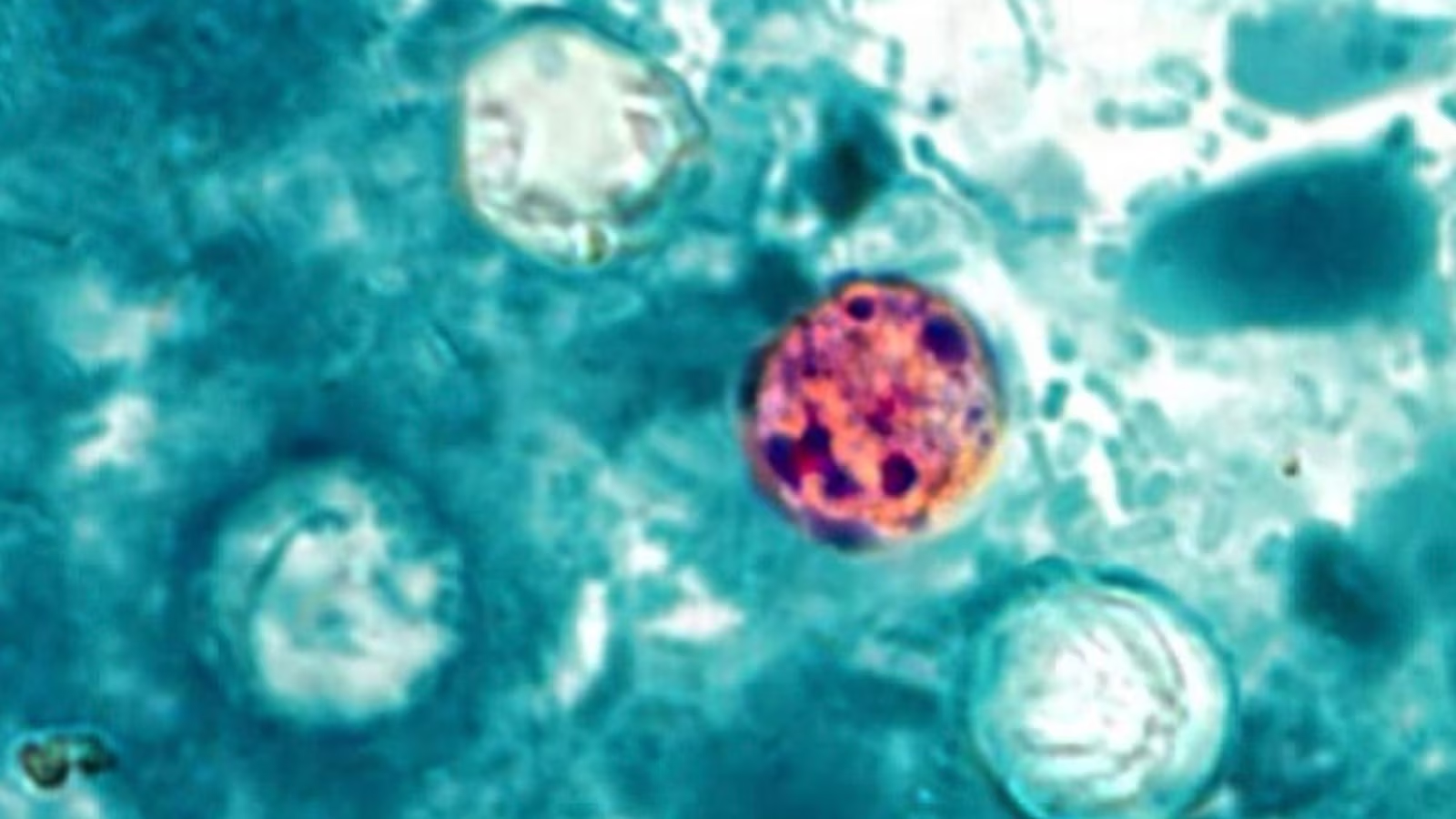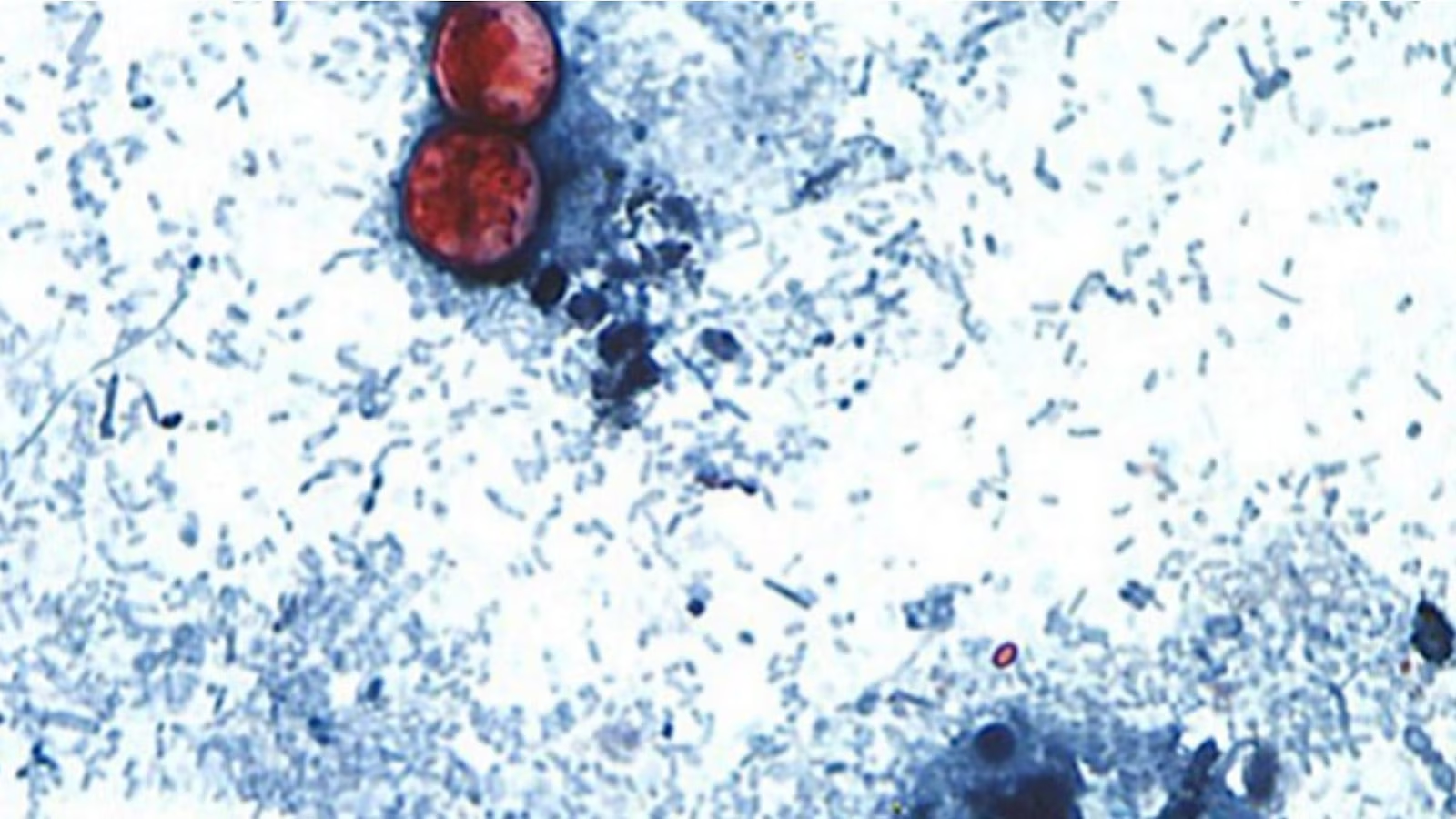
More than 150 people in southeastern Michigan have been sickened in an outbreak of cyclosporiasis, a gastrointestinal illness caused by a parasite known as cyclospora cayatenensis, state health officials told the Detroit Free Press, which is part of the USA TODAY Network.The first case was identified June 22 and in the eight days since, dozens of other cases have been identified in Monroe, Lenawee, Washtenaw, Wayne, Livingston, Shiawassee and Jackson counties, said Lynn Sutfin, a spokesperson for the Michigan Department of Health and Human Services."MDHHS is working with local health department(s) in southeastern Michigan to investigate a sudden and large increase in cyclospora cases and identify a common exposure," Sutfin said. "The department is coordinating the multi-jurisdictional investigation, assisting in case interviews."At this time, the source or sources have not yet been identified," she said.How does cyclosporiasis spread? What are the symptoms?Cyclosporiasis spreads when people eat or drink food or beverages contaminated by feces containing the microscopic parasite, which infects the small intestine and causes watery diarrhea with frequent and sometimes explosive bowel movements, according to the U.S. Centers for Disease Control and Prevention.Other symptoms can include:Loss of appetite.Weight loss.Abdominal cramps and bloating.Nausea.Low-grade fever.Vomiting, though it is less common than other symptoms.Can cyclosporiasis be treated?Cyclosporiasis can be treated with antibiotics, but if it goes untreated, the illness can last days to months and recur and relapse, according to the CDC.MDHHS issued a health alert to medical providers about the outbreak, Sutfin said, and the department is sharing details of its investigation with the CDC as well as the Michigan Department of Agriculture and Rural Development."Individuals concerned about sudden gastrointestinal illness should contact a health care provider," Sutfin said. "Individuals experiencing diarrheal illness or vomiting are encouraged to hydrate, particularly during the high temperatures expected this week."How common is cyclosporiasis?The cyclospora cayatenensis parasite is commonly found in developing countries, but in recent years, outbreaks have occurred in the United States when people eat contaminated fresh produce, especially during the summer months, Sutfin said. Michigan typically identifies 50 cases of cyclosporiasis a year.The Monroe County Health Department told the Detroit Free Press on Tuesday, June 30, that it is aware of 67 cases within its boundaries, but that more "continue to be reported."Of those 67 known Monroe County cases, 14 people have been hospitalized, said Breauna Dungey, director of personal health for the county health department."Investigations are underway to identify a potential common exposure or source," she said.Monroe County health leaders urge people to protect themselves by:Avoiding the consumption of any food or water that may be contaminated with feces.Washing all fruits and vegetables thoroughly under running water before eating, cutting or cooking.Scrubbing fruits and vegetables, such as melons and cucumbers, with a clean produce brush.Cutting away any damaged or bruised areas on fruits and vegetables before preparing and eating.Refrigerating cut, peeled or cooked fruits and vegetables as soon as possible (within two hours).
What is cyclosporiasis? Parasite sickens more than 150 people in Michigan
Michigan health leaders are investigating the source of an outbreak of a gastrointestinal illness that's sickened 150 people in seven counties.
485 words~2 min read