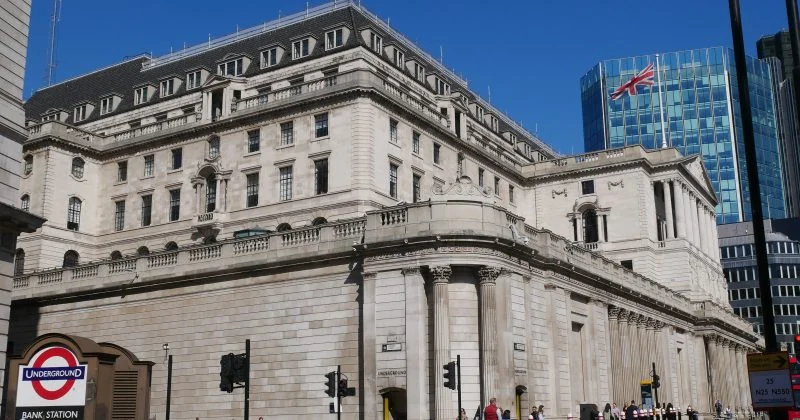
The Bank of England is reshaping how it manages the plumbing of the UK financial system. Governor Andrew Bailey has laid out a policy framework focused on continuing to shrink the central bank’s balance sheet through quantitative tightening while transitioning to a system where reserve supply is driven by actual bank demand, not legacy crisis-era holdings.
The numbers behind the wind-down
UK central bank reserves sat at £643.5B as of early 2026, down £63.2B from March 2025. That’s a meaningful decline, but the reserves are still well above what the BoE considers the sweet spot.
That sweet spot has a name: the Preferred Minimum Range of Reserves, or PMRR. The current estimate puts the PMRR at £365B to £515B, recently updated from a previous range of £345B to £490B. The banking system probably needs somewhere between £365B and £515B in reserves to function smoothly, and the BoE is still holding about £130B more than the top end of that range.
Bailey first introduced the PMRR concept in a lecture on May 21, 2024, arguing that banks need higher reserve levels than pre-2008 norms to maintain financial stability. The updated range reflects a more refined understanding of banks’ day-to-day transactional demands.