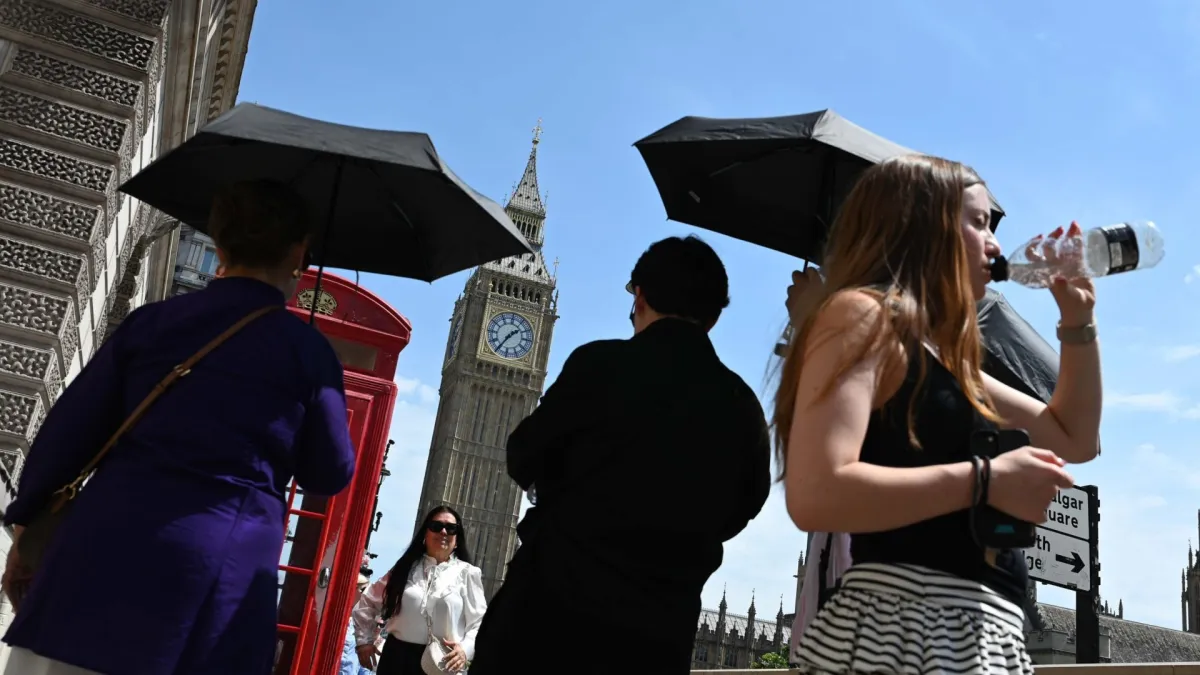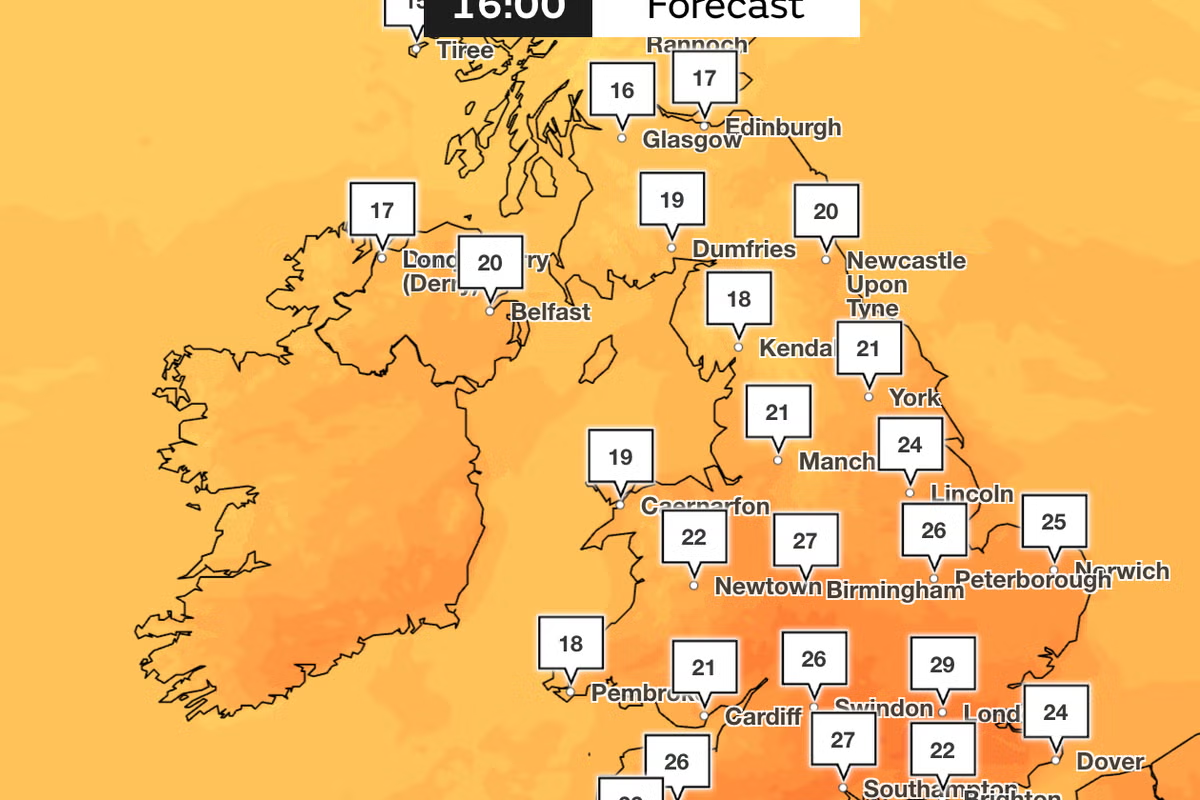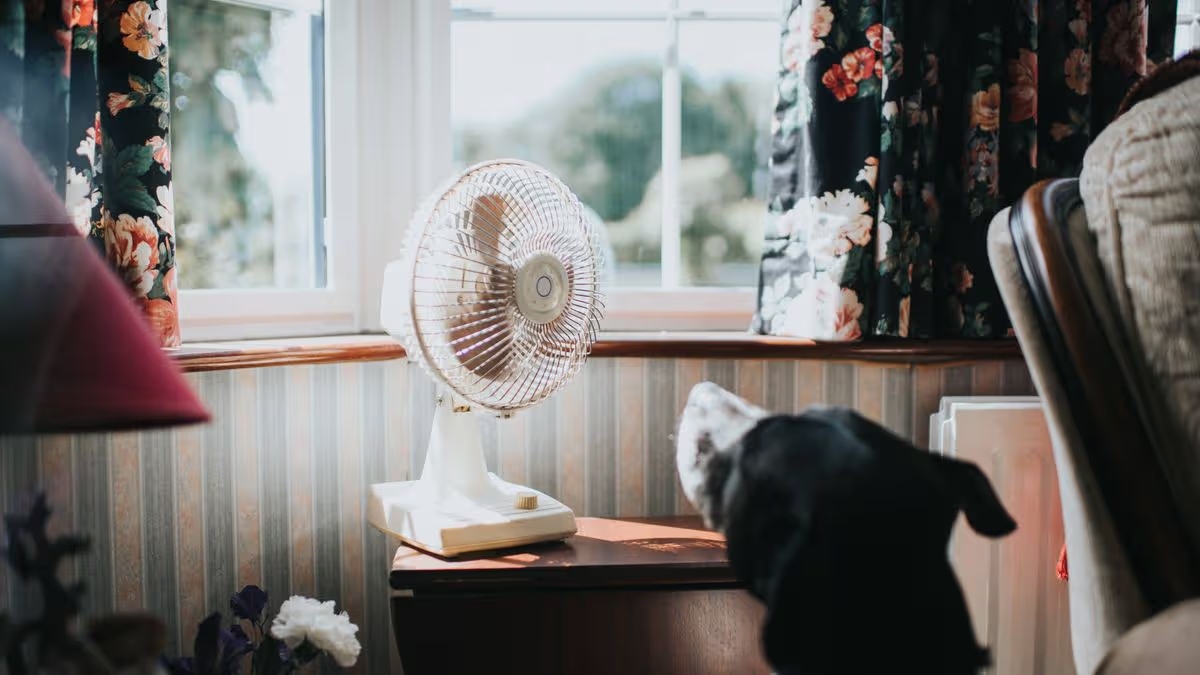
Britons frying in the scorching heat will have likely felt reprieve as this week's temperatures cooled down to the twenties after days of cooking in near 40-degree weather.However, experts have warned not to put the fan away or neglect your ice-tray making duties just yet, as another heatwave is set to hit the UK in just a few days.The UK Health Security Agency (UKHSA) has issued a yellow heat health alert for southern and eastern England and the East Midlands from Saturday until Wednesday, after the country's hottest May and June days on record.Met Office deputy chief forecaster Tony Wisson said: 'The forecast for this weekend suggests that temperatures could approach high 20Cs across parts of England, perhaps 30C in parts of the South East, with values of mid to high 20Cs in Wales.'Earlier this month, some Britons scrambled to get their hands on air conditioning, while others shared their sun tanning nightmares following the UK's first and second heatwave. But thankfully, experts have shared what you can do now to avoid sweltering for yet another week. Read their ultimate guide below... Britons frying in the scorching heat will have likely felt reprieve as the weekend temperatures cooled down to the twenties (with a peak of 26C) - after days of cooking in near 40-degree weather. Pictured, people in Saint James's Park relaxing in the shade last weekOPTIMISE YOUR FURNITURE SET UP FOR COOLNESS Even the place you put your furniture in could make a big difference.'Large, solid furniture like wardrobes in the direct path between windows stifle natural air circulation so a quick fix can be moving these pieces,' Nancy explained.'Air needs space to move, especially around naturally cooler areas like walls and floors so ensure you maintain a clear pathway for cool breezes.' SEAL ANY GAPS 'Gaps around windows and doors can let in heat during summer just as they let out heat in winter,' Chris Michael explained.It's an easy job to get out of the way - and could make a bigger difference than you think. 'Sealing these gaps is a quick, cost-effective way to keep your indoor space cooler with less effort,' he added.INSTALL AWNINGSNancy Emery, home expert at Toasty.co.uk, told the Daily Mail that there are different installations you can consider. 'Outside your home, you might also want to consider installing awnings or shutters to help block the direct rays of the sun before they even hit the glass as this is often the greatest source of heat entering a property,' she shared.Nancy also added that knowing how to dress your windows properly is key. 'Your windows are the primary way heat gets into your home, so this is the very first thing you want to tackle,' she shared.'Blackout blinds or curtains are your best bet for helping to keep your room cool during the day (keep them closed to prevent sunlight entering).'PUT AWAY ANY THICK RUGS 'Carpets and heavy rugs are brilliant insulators which is why they are a highly effective way to trap warmth in the winter,' Nancy advised.'However, leaving them out during the summer turns your floor into a massive heat trap.'To cool your space, roll up the thick pile rugs and opt for lightweight, flatweave styles instead.'If you have stone or ceramic floors underneath, expose them! These materials stay cool to the touch and act as a natural heat sink.'STRIP OUT HEAVY TEXTILES Lots of the small fabrics in your living spaces - from pillows to throws - could be trapping heat in your home without you realising.Nancy said: 'Lots of textiles in synthetic fabrics are likely to make your room uncomfortable to live in.'Bedding and sofas in fabrics made of materials such as polyester reflects heat and humidity back which can make you feel warmer. HACKS FOR WHEN THE HEATWAVE COMES MAKE USE OF A COLD WATER BOTTLE 'If you love a hot water bottle to keep you warm in winter, try bringing it out of hibernation for summer,' Tattersall advised.'Fill it with cold water and put it into the fridge or freezer a few hours before bed.'You can either pop it between the sheets to cool them down before you get in or keep it close to your body as you sleep for instant cooling.'If you find it's too cold, try wrapping it in extra fabric.'TAKE WARM SHOWERSChris Michael also shared a shower hack that could help amid the next heatwave.'Although it seems counterintuitive, a warm shower before bed helps the body regulate its temperature more effectively,' he suggested.'Cold showers can trigger the body to generate heat, whereas a warm shower encourages the body to cool down naturally.' 'Strip back the heavy accessories and switch to natural fabrics, which have far greater breathability and won't trap your body heat.'OPEN YOUR WINDOWS - BUT ONLY AT NIGHT Speaking to the Daily Mail, Chris Tattersall, a sleep expert and managing director of Woolroom, explained that while it's tempting to let the air in during the heat of the day, it could make the situation worse.'Opening windows in the heat of the day and letting more hot air into your house is a common mistake to make,' he shared.'I advise opening your bedroom windows for as long as possible only once the sun has passed to ensure that cool air flows in. When doing so, make sure to leave your bedroom door open to create a cooling cross breeze.'He added that even the window height could make a difference. 'Heat also rises, so ensure the highest window in your house is open throughout the evening,' he explained. 'If you have an attic or loft with a window, leaving this open can be particularly effective in allowing the heat to rise up and out of your home.'Chris Michael, of UK air treatment brand Meaco added: 'Direct sunlight through windows quickly heats up your home.'Keep blinds, curtains and windows closed during the hottest part of the day, especially those facing south. Once the temperature drops in the evening, open them to let cooler air in.'SWAP YOUR MATTRESS OUT If you're thinking of swapping your mattress out - a heatwave may be a good time to do it, Tattersall said.And if you've got memory foam, it may be time to ditch it. 'Memory foam was invented in the 60s by NASA scientists looking to keep their test pilots safe and to absorb some of the G-force on lift off,' he shared. 'It is, by design, dense and highly energy absorbent.'This explains why it reduced the shock so well, but it's also why your memory foam mattress gets too hot. Essentially, it reflects the heat from your body, making for a hot – and sometimes sweaty – sleeping environment.'Ultimately, opting for a natural fibre mattress and pillows such as wool, will provide the perfect sleep environment to help you achieve a better, cleaner and more sustainable night's sleep in the heatwave.'PUT YOUR AC AND FAN ORDERS IN NOW One of the most effective things you can do now, Chris Michael of Meaco advised, is to put your orders in for fans and aircons now - ahead of the rush.He explained: 'As soon as warm weather is forecast, fans start to sell out quickly. 'Buying a high-quality air circulating fan in advance ensures you're ready. Look for reputable brands with strong reviews and clever features like ECO mode to save energy.'For bedroom use, choose a quiet fan. Loud fans can disturb sleep, so consider models that are Quiet Mark accredited and include Night Mode for uninterrupted rest. Low energy consumption is also key, especially if you plan to run the fan all night.' ... AND HOW TO MAKE THE MOST OF YOUR AIR-CON IF YOU HAVE IT If you've managed to beat the queues and waiting lists, and have yourself an aircon - the battle is only half won.Now, an expert has revealed how to use it to the best of its ability, optimising the coolness without affecting the bills. Saif Derzi, Founder of Property Buyers Today, said that while it's increasing in popularity year by year, many Britons are buying units for the first time ever, and advised against common mistakes...Keep the heat out before trying to cool the roomThe most efficient way to keep indoor temperatures as low as possible is to stop the heat from entering the house in the first place. During the hottest hours of the day, make sure to keep curtains, blinds and windows closed, opening them on opposite sides of the property only when temperatures begin to drop in the evening to create cross ventilation.Avoid creating extra heat indoorsMake sure to avoid using appliances throughout the day, as ovens, tumble dryers, dishwashers and so on can gradually raise room temperatures. If possible, cook later in the evening, switch to lighter meals, and leave larger appliances until temperatures begin to fall.Use your AC unit to cool smarter, not longerIf you have a wall-mounted or portable AC unit, avoid setting it to the coldest possible temperature and leaving it running overnight. Instead, cool the room to between 22 and 24°C for around 60-90 minutes before bed, with doors and windows closed and make sure to set sleep mode or a timer so it will turn off on its own after a while.Modern air conditioning systems typically cost between around 20p and 70p per hour to run, depending on size and efficiency, meaning leaving one on overnight for eight hours could cost anywhere between roughly £1.60 and £5.60 in a single night. At the higher end, that could mean almost £40 for a single week of overnight use.
How to make sure your interiors are ready for ANOTHER heatwave
As last week saw Europeans scrambling to get their hands on air conditioning - with some forced to seek refuge in hotel rooms - here are the things you can do now...
1,595 words~7 min read