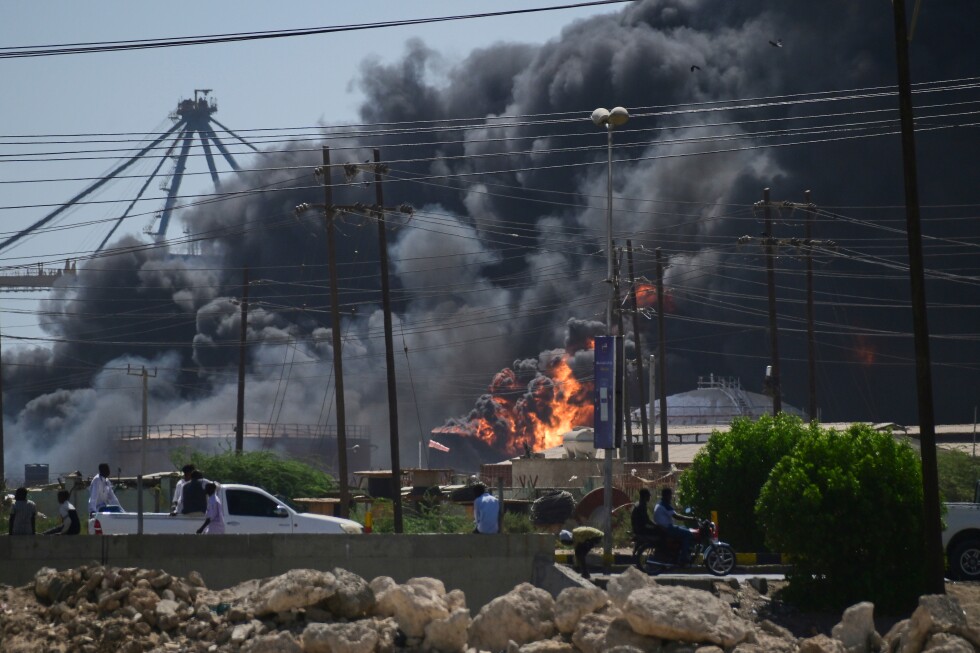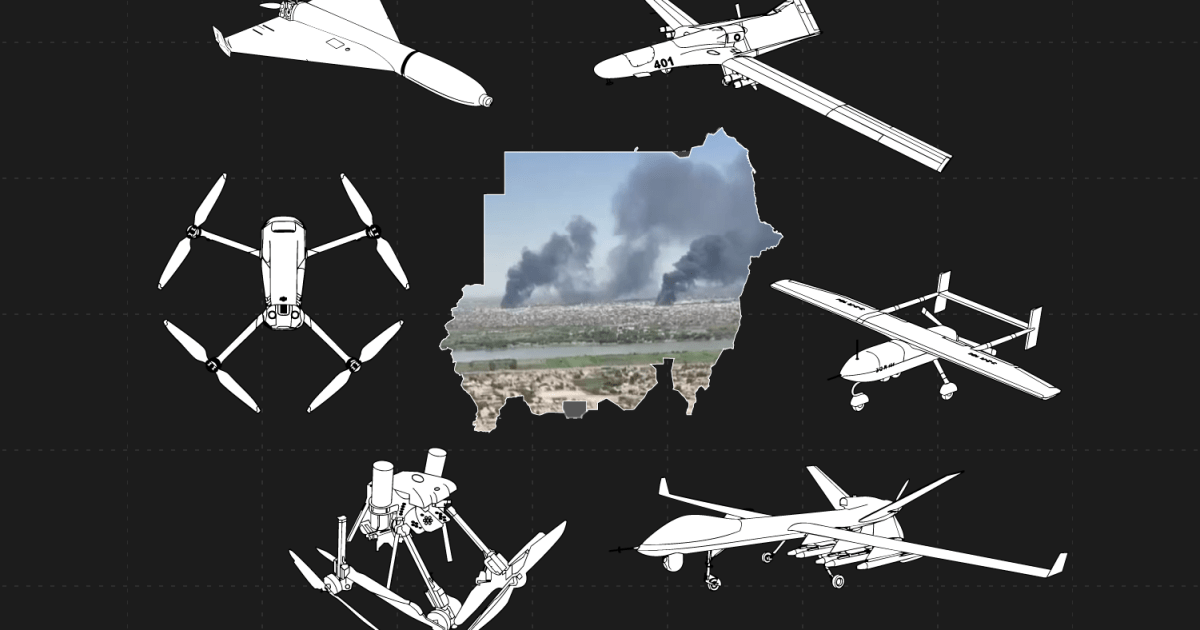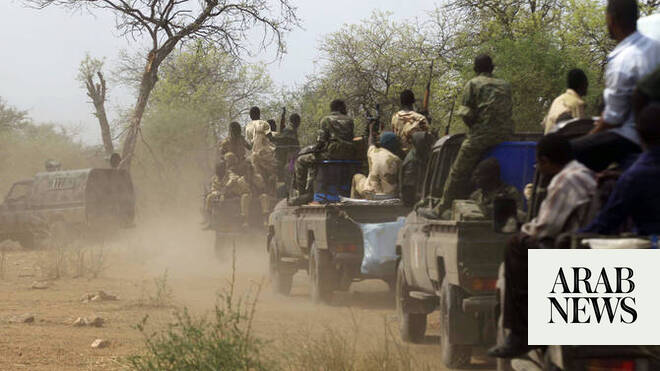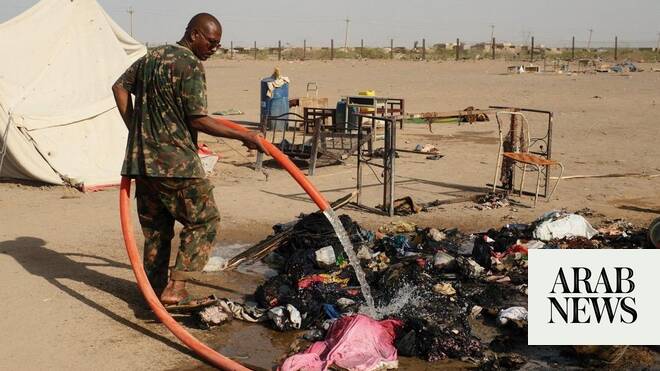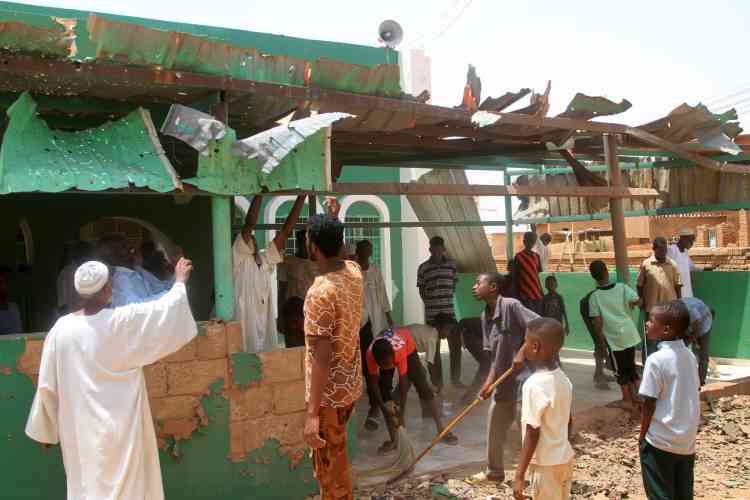
Sudan's civil war has entered a new phase over the past year, one defined less by ground offensives and more by drones and a rapidly escalating technological battle between the Sudanese Armed Forces and the paramilitary Rapid Support Forces.After more than three years of fighting, analysts say the rival sides are increasingly relying on unmanned aircraft to offset mounting battlefield losses, while maintaining pressure across a vast country where front lines stretch for hundreds of kilometres.UN officials say drone strikes have become the leading cause of civilian deaths, with more than 1,000 civilians killed during the first five months of this year, about 80 per cent of all conflict-related civilian deaths recorded this year.The fighting began in April 2023 after a power struggle between the SAF, led by Gen Abdel Fattah Al Burhan, and the RSF, commanded by Gen Mohamed Dagalo, erupted into open war. The conflict has displaced about 14 million people, including nine million inside Sudan, according to the UN, which describes it as the worst humanitarian crisis globally. The Armed Conflict Location and Event Data (Acled), a global war monitor in the US, estimated in April that at least 59,000 people had been killed, although the toll is believed to be far higher and continues to rise.“The war has morphed from direct ground confrontations into a contest of technology and the race to achieve air superiority, after heavy casualties and the prolonged conflict eroded the morale of fighters,” said Adel Abdel Latif, a retired Sudanese air force brigadier and military analyst.“The army's reliance on traditional fighter jets has become increasingly unsustainable because of the difficulty of replacing aircraft lost in battle, the complexity of maintenance and the high cost involved,” he told The National, referring to the heavy use of piloted warplanes by the army during the opening months of the war.Instead, the two sides have turned to drones, which are cheaper to acquire, easier to operate and capable of flying long distances while conducting reconnaissance and attack missions.“Their light weight and relatively low cost have made them indispensable,” said Mr Abdel Latif. However, he said that neither side can use the drones to achieve victory or gain a clear edge over the other, which can only mean that, barring a negotiated end to the conflict, the war will continue.No rear linesThe growing use of drones has transformed the geography of the conflict, with the acquisition of comparable drone capabilities reducing the frequency of large-scale ground battles, allowing rival forces to preserve increasingly depleted manpower while striking targets hundreds of kilometres away. Some military drones used in the conflict can remain airborne for up to 30 hours, making them particularly effective across Africa's third-largest country.Recent data from Acled showed the SAF's expanding arsenal – including Iranian-made Mohajer-6 and Ababil-3 drones, Turkish-Pakistani YIHA-III loitering munitions and Turkish Bayraktar systems – has enabled it to project air power across several fronts simultaneously.It also reported that Ukrainian, Spanish and Colombian operators have been embedded with RSF units since mid-2025, probably to support drone operations.The aftermath of a drone strike on Port Sudan. AFPInfoRecent UN reports show that drone strikes have hit fuel stations, power infrastructure, transport routes and densely populated urban areas, particularly in key contested zones such as North Kordofan.The army-held city of Al Obeid in the North Kordofan region, in particular, has become a focal point of this aerial contest. In recent weeks, repeated drone attacks have disrupted electricity and fuel supplies, while the RSF builds up forces around the city, raising warnings of an imminent escalation.The battle for Al Obeid forms part of an intensifying campaign across Kordofan, where the RSF and allied groups already control large areas. Analysts warn the city could face a fate similar to El Fasher, the army's last stronghold in Darfur, which fell to the RSF last year after a prolonged siege. The UN said its capture unleashed “a wave of intense violence … shocking in its scale and brutality”. Several governments have since warned that a full assault on Al Obeid could trigger another humanitarian catastrophe.Mohammed Nour, a retired Sudanese army general and military strategist, said the capture of El Fasher marked a turning point in the conflict. “Both sides are exhausted after three years of war,” he said. “Now that drones are being used so extensively, no place, however distant, is safe.”He said the SAF had relied heavily on combat aircraft during the first 18 months of the war, but shortages of spare parts forced it to reduce their use. “But, generally speaking, it is virtually impossible to win a war without infantry,” he said.In addition to the capital, the army controls the nation's eastern, northern and central regions. The army-backed Sudanese government is based in Port Sudan on the Red Sea, while a parallel government formed by the RSF last year has its headquarters in Nyala, Darfur.The RSF controls Darfur, parts of Kordofan and the southern region of Blue Nile. International efforts to stop the fighting have so far failed, with the rival generals repeatedly blocking any viable path to peace.The next frontThe technological competition now extends beyond offensive capabilities.According to Acled, both sides are also investing in air-defence systems to counter frequent drone attacks. While neither possesses sophisticated integrated air defences, the group's data show a clear imbalance.Over the past year, SAF air defences intercepted nearly 13 per cent of RSF drone attacks, compared with only 2.3 per cent of SAF drone operations intercepted by the RSF.Experts say sustaining this drone war has become dependent on Sudan's natural resources. “They are using Sudan's riches to finance their war,” said Sami Saeed, a US-based Sudan expert. “Revenue from gold, livestock and gum Arabic is being channelled into buying drones, which reduce casualties among ground forces while providing an effective military advantage.“So much money is being spent that an entirely new class of Sudanese middlemen has emerged, profiting from procuring weapons on the shadowy international arms market for both sides.”More than a dozen countries are believed to be arming the two sides of Sudan’s war. Al Shafie Ahmed contributed to this story from Kampala, Uganda
Sudan's war becomes drone-driven tech race with civilians caught in the crossfire | The National
Experts say growing reliance on drones is allowing warring sides to preserve dwindling manpower
1,015 words~5 min read