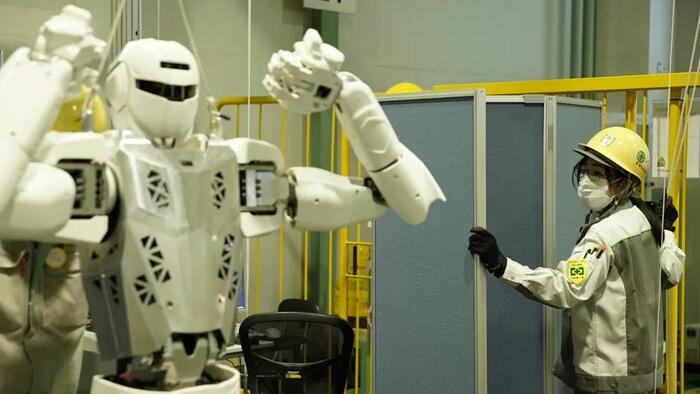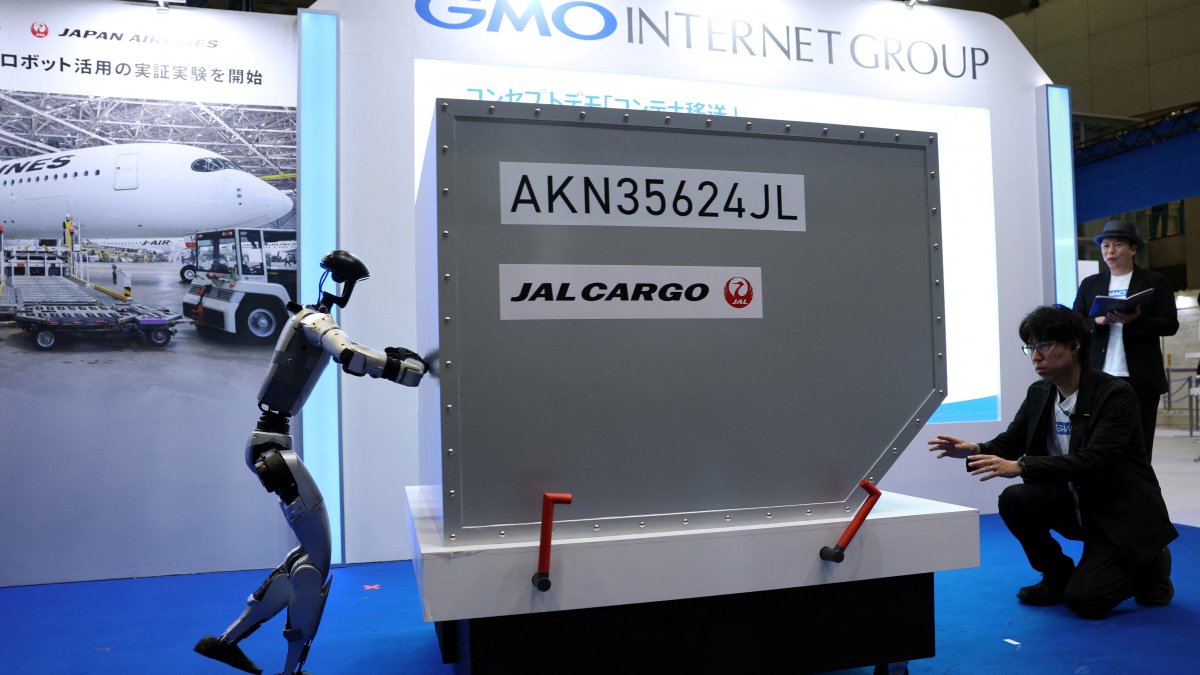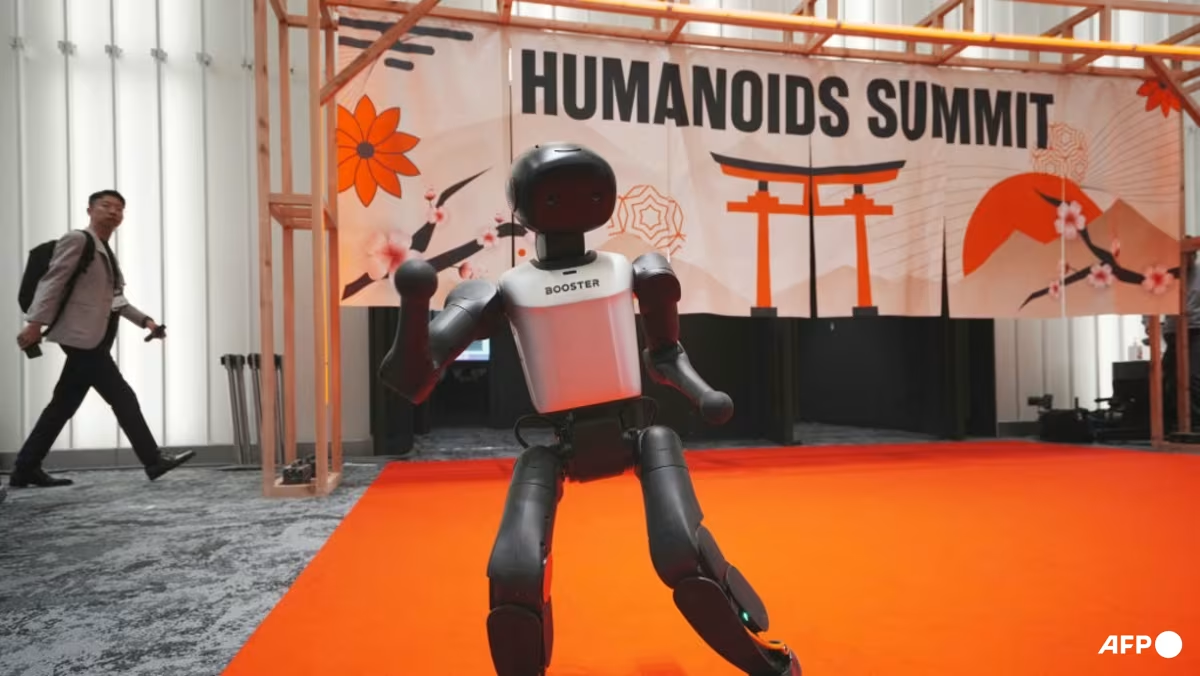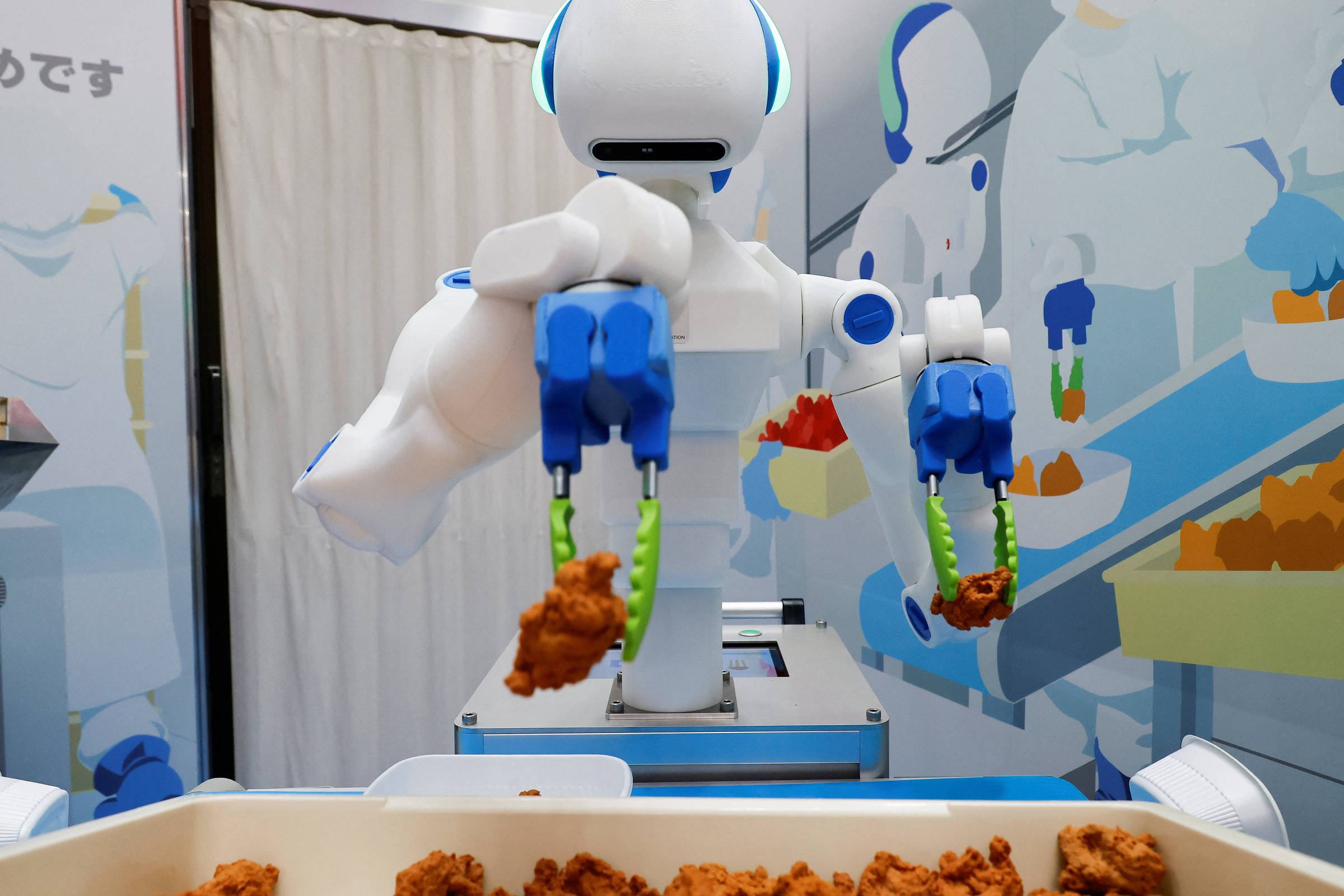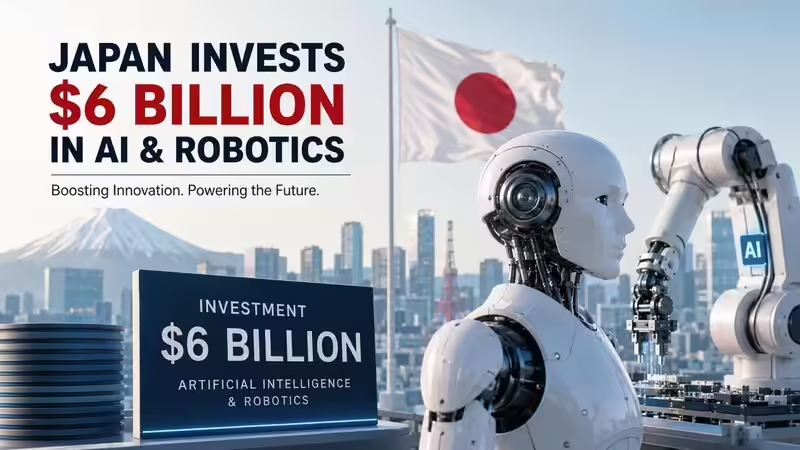
Japan is preparing a major strategic shift in its technology policy with a planned investment of around $6 billion in artificial intelligence development, aiming to strengthen its position in the global AI race. The initiative includes building a sovereign AI model, expanding domestic AI infrastructure, and accelerating the development of robotics systems capable of working alongside humans in industry and daily life. According to government-linked reports, the long-term vision also targets the deployment of nearly 10 million AI-enabled robots by 2040.This move reflects Japan’s growing urgency to cut back on dependence on foreign AI systems , especially those from the United States and China, but also kinda to keep showing leadership in robotics and advanced manufacturing. The money will be pushed through a consortium of companies and research institutions, aimed at so-called “physical AI” uses that are more hands-on, or at least that’s the idea.Key TakeawaysJapan plans an estimated $6 billion AI investment over five yearsA sovereign AI model will be developed domestically by a consortium of firmsThe country aims for 10 million AI-powered robots by 2040Focus is shifting toward physical AI robots interacting with the real worldStrategy is driven by concerns over technological dependence on US and ChinaBuilding a Sovereign AI Ecosystem: How Japan Plans to Execute the $6 Billion PushThe money isn’t going to just one place though, it’s planned through a consortium with big Japanese firms across electronics, automotive, and tech. The government is expected to backstop funding, while private players help with compute infrastructure, datasets, and robotics know how. One big pillar is making a homegrown large language model, trained on Japanese language plus industrial data, and they’re doing it alongside spending on AI chips, cloud systems, and robotics platforms.In other words, public oversight plus private innovation, all mixed together, to speed up deployment at a national scale.Why Japan Is InvestingJapan’s motivation is clear, AI is seen as a strategic asset, not just a commercial gadget. But since US and Chinese AI systems are dominating, Japan worries about dependency for critical infrastructure, manufacturing, and defence work. At the same time, policymakers also connect it to domestic pressures like population decline and labour shortages.So, by building its own sovereign model, Japan wants data security, cultural relevance, and more economic staying power. And there’s the ambition part too, they want to be a global competitor in next gen AI, especially when it comes to robotics and industrial automation.Why the Number of Companies Investing in AI Ecosystem Platforms Like Noetra Is RisingThe growing interest in AI ecosystem platforms, like Noetra, reflects a broader shift in how enterprises think about adopting artificial intelligence. As AI stops being just experimental and starts to show up in large-scale deployment, companies are looking more and more at middleware platforms that tie models to actual, everyday applications. And yes, these firms also end up offering infrastructure for data handling, workflow automation and various integrations across robotics, manufacturing, and enterprise systems.The uptick in investments is mostly pushed by the desire to dial down deployment complexity and, at the same time, speed up commercialization of AI technologies. In places like Japan, where industrial robotics is kind of central, these platforms are turning into important enablers for scalable, real-world AI rollouts.How Robotics Integration Will WorkJapan’s roadmap keeps circling back to robotics, and not in a small way. The vision is AI systems tucked into machines that can do real physical tasks, from factory assembly lines to healthcare assistance, and elderly care. Robotics firms are expected to work with AI developers to design systems that can sense the environment, decide, and act more or less on their own.Factories are the first big testing grounds, then logistics, retail, and service industries follow. Long term, the goal is less “standalone robots”, and more networked AI agents that work alongside humans, boosting productivity, while dealing with the workforce squeeze from Japan’s aging population.What Does Physical AI Do?Physical AI is artificial intelligence that isn’t boxed into screen only life. Instead, it lives in real physical spaces, powered by robots and automated machines. This is different from software-only models, because physical AI can see, move, handle objects, and react when the environment changes. In Japan’s framing, it includes humanoid robots, industrial robotic arms, and autonomous service machines.These systems lean on sensors, vision models, and reinforcement learning to do things like moving goods, helping elderly individuals, or keeping factory operations stable. Physical AI is viewed as necessary for economies dealing with labour shortages because it moves AI from pure data processing into actual physical execution.Where the $6 billion goesThe $6 billion is expected to be split across phases and stakeholders, mixing government funding with private-sector involvement. A consortium structure will manage development, pulling in companies from robotics, automotive, semiconductor, and electronics. Some portion will fund computing infrastructure like high-performance GPUs and cloud setups used to train large AI models.Another portion goes to robotics R&D and pilot programs meant to run in real environments, not just labs. Universities and research institutes are also set to get money for talent pipelines. This blended approach is meant to share risk, while pushing commercialization of AI across industries faster.Why Japan’s Strategy Focuses on Robots Over Pure Software AIMany countries are prioritizing software-based generative AI, but Japan is pushing hard on robotics and physical automation. That fits with its manufacturing strengths, and its long history of robotics innovation. With a shrinking workforce and a growing elderly population, Japan sees robots as practical necessity, not some far-off futuristic fantasy.By putting AI into machines that do physical tasks, Japan aims to directly handle labour shortages in healthcare, logistics, and elder care. The “robot-first AI strategy” also helps Japan stand out globally, leaning into applied AI rather than only digital intelligence systems.How Japan Plans to Scale to 10 Million AI Robots by 2040Reaching 10 million AI robots by 2040 is planned as a gradual scale up, using government incentives plus mass adoption across public and private areas. The early stages focus on factories and warehouses, then it moves into hospitals, elderly care facilities, and urban services. Standardisation of robotics platforms should lower costs and make interoperability easier between systems.Japan also wants domestic AI chips and training datasets designed specifically for robotic work. With manufacturing know-how plus AI innovation together, Japan’s idea is to build a large-scale robotics economy where machines become part of daily economic and social infrastructure, more and more.FAQs1. What is Japan’s $6 billion AI investment about ? It seems like a government-backed push to build its own sovereign style AI systems, and also grow robotics as well as the AI infrastructure over the next several years. Kinda like, less dependency and more building.2. What is a sovereign AI model ? So, it’s an AI system developed domestically, basically trained and run using local data, local infrastructure, and local governance. This approach reduces reliance on foreign AI providers, so the decision making stays more under control.3. Why is Japan focusing on robots ? Japan has labour shortages and an aging population , so robotics becomes kind of essential for healthcare, manufacturing, and even day to day services. You know , when the workforce is shrinking, robots fill gaps.4. What is physical AI ? Physical AI is when AI is placed inside robots, so it can engage with the real world . It can do things like perceive using sensors, move, and carry out tasks , not just answer questions in a screen.5. When will Japan deploy 10 million AI robots ? The plan targets 2040, with a gradual rollout that starts in industrial and service sectors first, before it expands nationwide.end of article
Japan to Invest $6 Billion in AI Push, Plans Sovereign Model and 10 Million AI Robots by 2040
Japan is launching a massive $6 billion AI push, aiming to build its own AI models and boost robotics for industry and daily life. This strategic move seeks to reduce reliance on foreign tech giants and deploy nearly 10 million AI-powered robots by 2040. The focus is on 'physical AI' to tackle labor shortages and secure technological independence.
1,263 words~6 min read