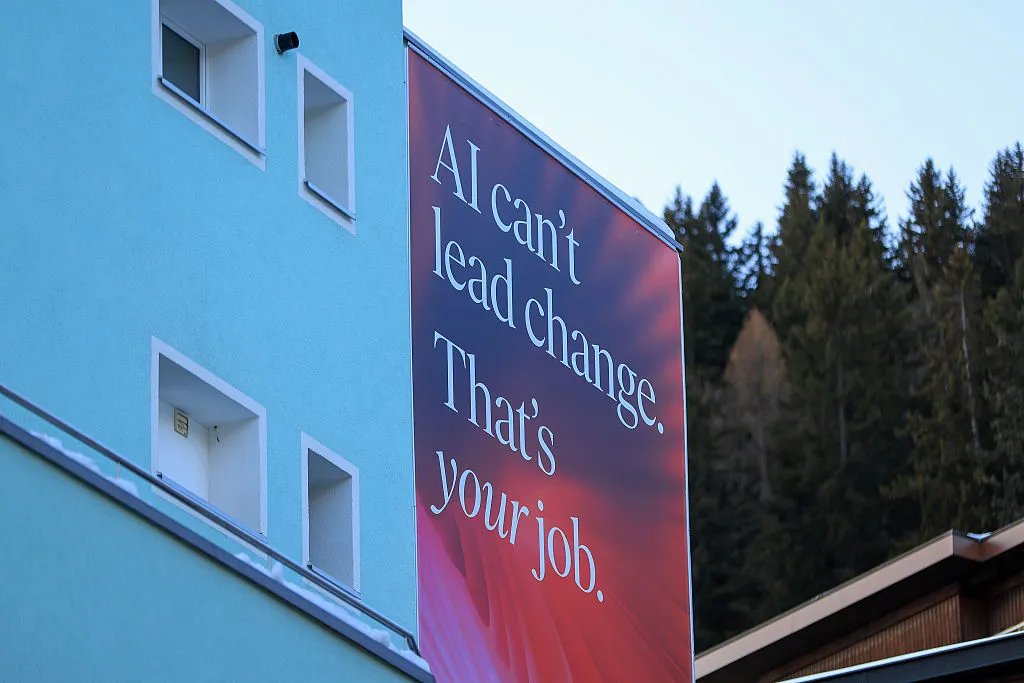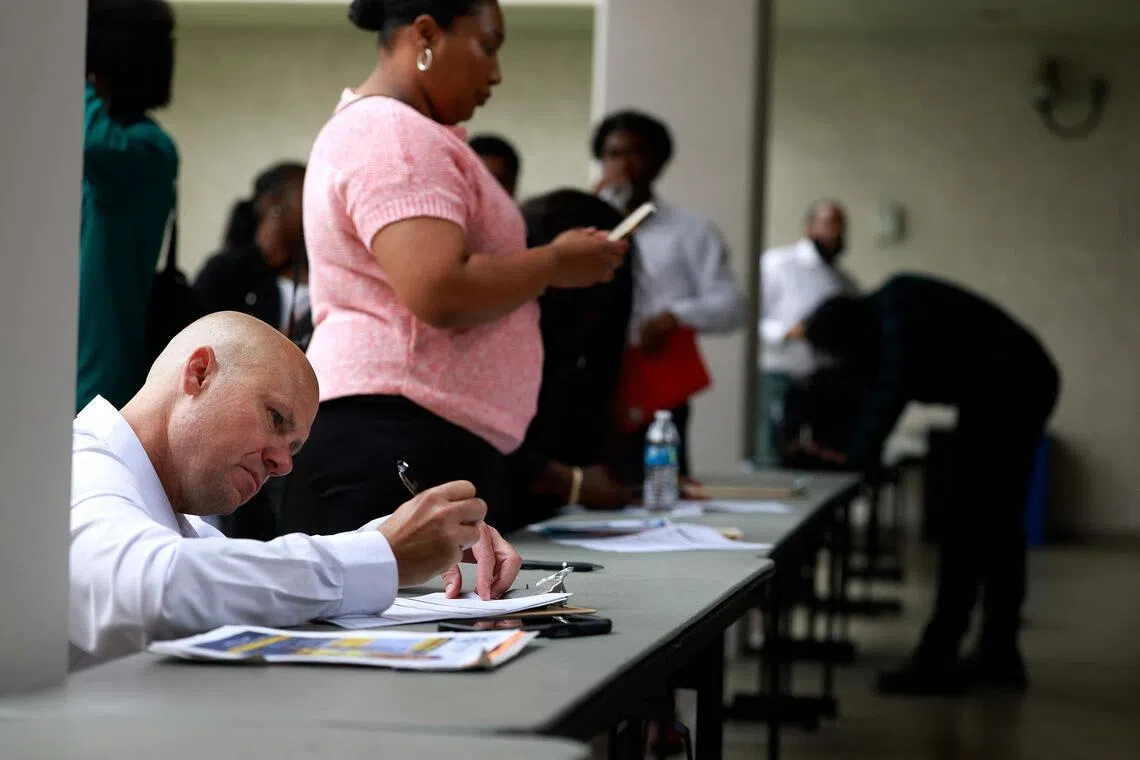
Whether artificial intelligence will cause mass workforce cuts over time remains up for debate, but it is starting to leave an imprint on US employment data. A decline in payrolls in the financial-activities and information sectors – where AI adoption rates have been fastest – has accelerated in 2026, to 28,000 a month on average based on government data.The weakness stands out against an otherwise robust labour market that created more than 113,000 jobs monthly in 2026 through May – a number that would have been much higher if the banking and tech industries had not dragged down the overall total. June payroll data set to be released on July 2 is expected to show another month of solid gains.After investing heavily in artificial intelligence, tech companies are now increasingly citing AI as a factor for cutting their workforce. Top bankers at JPMorgan Chase, Citigroup and Goldman Sachs Group have also said the technology will eliminate some jobs.“It’s certainly making an impact as we speak in a way that no technology has before,” said John Challenger, chief executive officer at Challenger, Gray & Christmas. His firm, which tracks layoff plans, found almost 102,000 announced job cuts attributed to AI so far in 2026.Overall, the tech sector accounted for a third of all layoffs announced in 2026. “Finance might be the next big sector that’s most affected,” Challenger said.Research suggests AI’s impact on the labour market depends on how companies deploy the technology. A study from Stanford’s Digital Economy Lab found employment has weakened in occupations where the technology automates tasks, while holding up in roles where AI helps employees in their job.Finance may be especially vulnerable because of its workforce composition. Office and administrative support occupations – including customer service representatives, bank tellers and insurance claims processors – account for about a quarter of employment in financial activities, according to Bureau of Labor Statistics (BLS) data compiled by Bloomberg. That share is larger than in any other major industry.And those office occupations are projected to experience some of the largest employment declines over the next decade, in part because of AI, the BLS said its latest projections.A tracker of unemployment data developed by the California Policy Lab found finance and insurance had the highest concentration of unemployment claims in the state coming from workers in highly AI-exposed occupations, while information and professional services also recorded persistently elevated claims among AI-exposed workers.Researchers at California Policy Lab said in a report that those findings suggest AI’s effects “may be starting to surface”, even though statewide unemployment claims do not yet indicate widespread AI-related job losses.At the macroeconomic level, it remains too early to detect broad effects, economists say.“Some of this could genuinely be productivity replacing workers,” said Pooja Sriram, senior US economist at Barclays. “But the narrative that keeps coming up is really a cost-cutting exercise by a lot of firms, given the amount of investments they have committed towards AI.”Ryan Nunn, director of research for the Yale Budget Lab, said he does not see an impact yet. Layoff data for the financial-activities industry showed no unusual increase in 2026, suggesting AI may be affecting employment first through slower hiring and attrition rather than broad-based job cuts, Nunn said.For workers in the industry, whether AI is cited as the reason for their job loss or not, the uncertainty is already real.Bill Matonte, a software engineer, is struggling to find employment after being laid off in April by Citigroup. Back in March 2025, it took him just six weeks to land the job at Citigroup in Jersey City after losing the previous one at JPMorgan, he said. This time, he began interviewing six months ago, anticipating layoffs, and has gone through multiple interview processes without getting an offer.“It’s really stressful,” he said. BLOOMBERG
Tech, finance sectors in US losing 28,000 jobs monthly show AI impact on labour
A decline in payrolls in the financial-activities and information sectors has accelerated in 2026. Read more at straitstimes.com. Read more at straitstimes.com.
630 words~3 min read