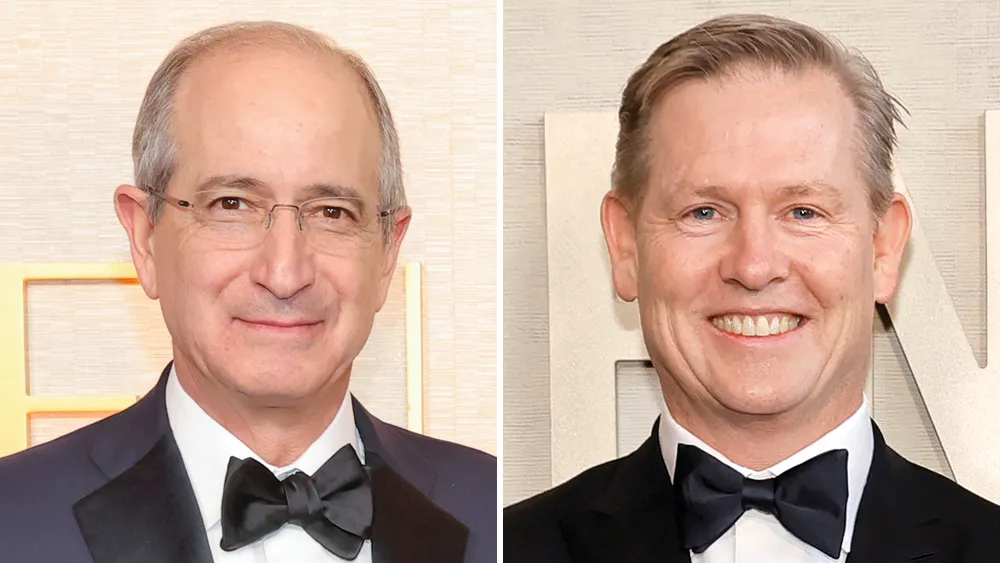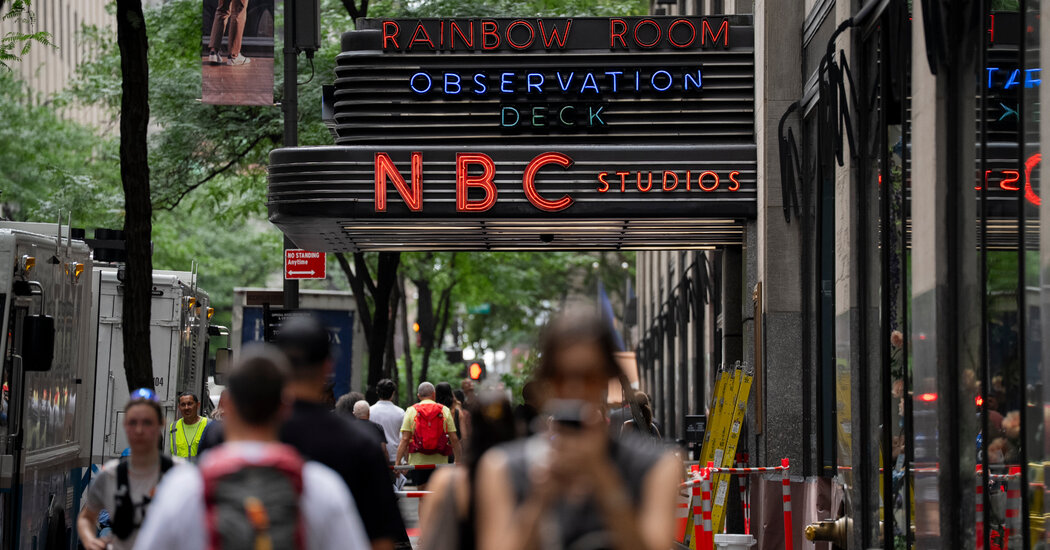
LOS ANGELES, CALIFORNIA - JUNE 29: Comcast announced plans to split into two publicly traded companies by spinning off NBCUniversal and Sky into a separate media company, pending regulatory and board approvals. (Photo by Justin Sullivan/Getty Images)Getty ImagesWhen Brian Roberts announced on June 29 that Comcast would spin off NBCUniversal and Sky into a separate public company, an analyst asked the question behind the transaction: was this a step toward a sale?His answer was two words: “Absolutely not.”Pay less attention to the denial than to the admission beside it. Co-CEO Mike Cavanagh told analysts the company had “changed our mind” about whether broadband and media still belonged under one roof.That is the more useful piece of information. The people who built a 15-year convergence bet were acknowledging that its logic no longer held.The Convergence Bet Comes UndoneComcast bought NBCUniversal more than 15 years ago on a simple theory: own the pipe into the living room and the programming that travels through it, and you sit on both ends of the relationship with the viewer.MORE FOR YOUThat theory held while the cable wire was the gatekeeper. Streaming dissolved it.Once any studio can reach a television over the open internet, owning the wire no longer confers the same advantage over owning the content, and the two businesses no longer share the same reason to sit together.The market had already reached this verdict. Comcast shares had fallen about 32% over the year, to roughly $23 in the days before the announcement, down from the mid-$30s last summer. Investors had been valuing the company at a discount to the sum of its parts.Comcast is keeping the word “converged” for the part that still works, describing its broadband-and-mobile network as the largest converged platform in the country.The convergence that failed was the holding-company kind, distribution married to content. The kind that survives lives inside the wires.A Script Warner Bros. Already RanComcast had already rehearsed the move with Versant, the cable-network separation that pulled slower-growth linear assets away from the rest of NBCUniversal.The fuller template was set by Warner Bros. Discovery. It reorganized into two divisions in December 2024, then announced a full tax-free split into two public companies in June 2025, with David Zaslav describing each as built to succeed on its own terms.The framing was standalone strength, not sale preparation.Within months the company had a buyer and then a fight over it.Netflix agreed on December 4 to buy the Warner Bros. studio, HBO and HBO Max, the content jewel, taken only after the linear networks were carved off, at an enterprise value of about $82.7 billion.Paramount Skydance came over the top with a hostile all-cash offer, raised it to $31 a share with a personal financing guarantee from Larry Ellison, and won the contest in February at roughly $110 billion. Netflix, which had held the board’s recommendation, declined to match.The Justice Department cleared the antitrust review in June, and the transaction is set to close this quarter.Read the arc plainly: split into two, sell it as independence, deny any deal, and within a year there is an auction.Comcast has just finished the first step using the same language. The denial is not the data point. The script is.Why NBCUniversal Does Not Cleave As CleanlyThe flexibility Comcast keeps invoking is already being read as a deal signal. The sharper question is not whether the pieces draw buyers but which ones, because the Warner Bros. ending does not transfer cleanly to NBCUniversal.Netflix could buy Warner Bros. because Warner Bros. had already been separated from its cable networks. NBCUniversal is being spun off whole: Universal’s studios, Peacock, NBC, Telemundo, major sports rights, Sky and theme parks, all in one company.A content buyer that wants the studio and the streamer may not want a capital-heavy theme-park business, a broadcast network with FCC licenses or the linear exposure Netflix tried to avoid. For a clean sale of the jewel, NBCUniversal would most likely have to split a second time.The behavior on the call already points that way. Comcast is keeping up to 19.9% of NBCUniversal to sell down over time.Cavanagh matched the denial with his own “Definitely not,” then in the same answer claimed the freedom to go after “adjacent businesses where we have the right to play,” a denial of being a seller and an announcement of being a buyer, one sentence apart.The analysts ended the call on the one soft question: whether each smaller company keeps the scale it needs with content partners and distributors. For NBCUniversal, that question lands hardest on the sports rights, whose escalating cost rests on the balance sheet it is about to lose.The convergence era is not ending with one sale. It is ending with a sequence of separations that make sales easier to imagine, even when companies insist that is not the plan.The old argument joined distribution to content. The new one prices them separately.
Comcast Denies NBCUniversal Split Is M&A Prep. WBD Offers A Precedent
Comcast says NBCUniversal split is not a prelude to M&A. But Warner Bros. Discovery just ran the same split-deny-sell script to a sale, and NBCUniversal may follow.
814 words~4 min read