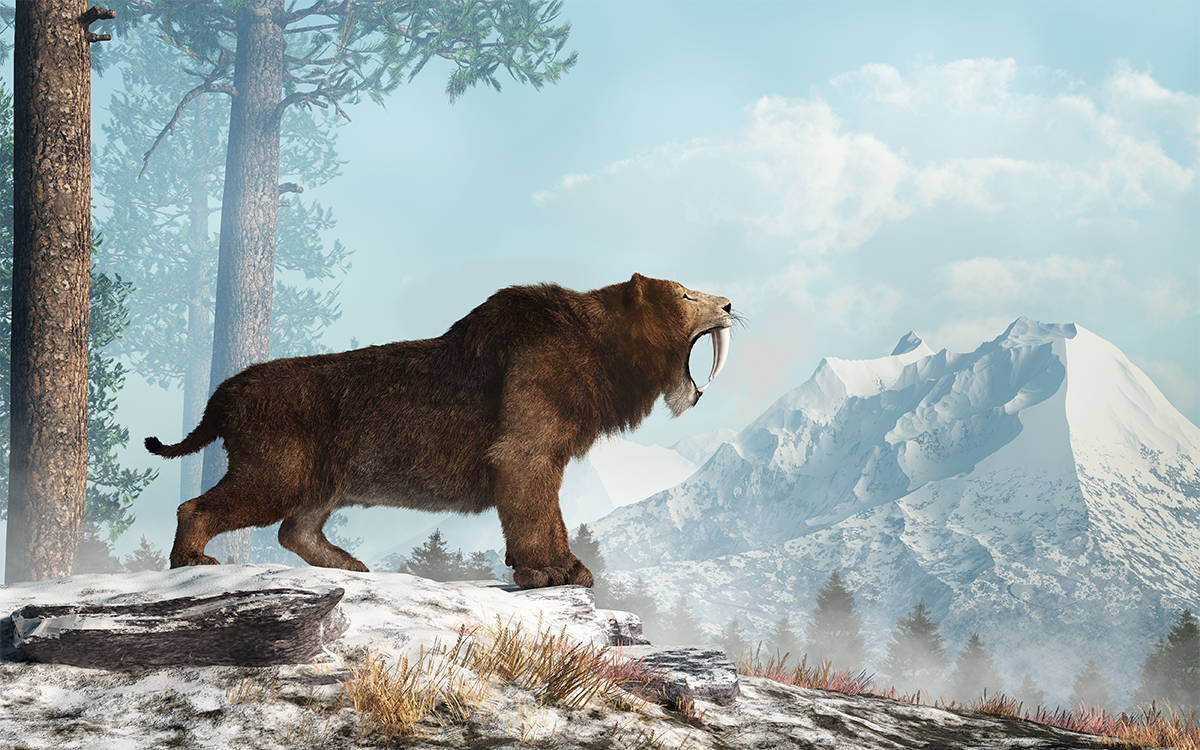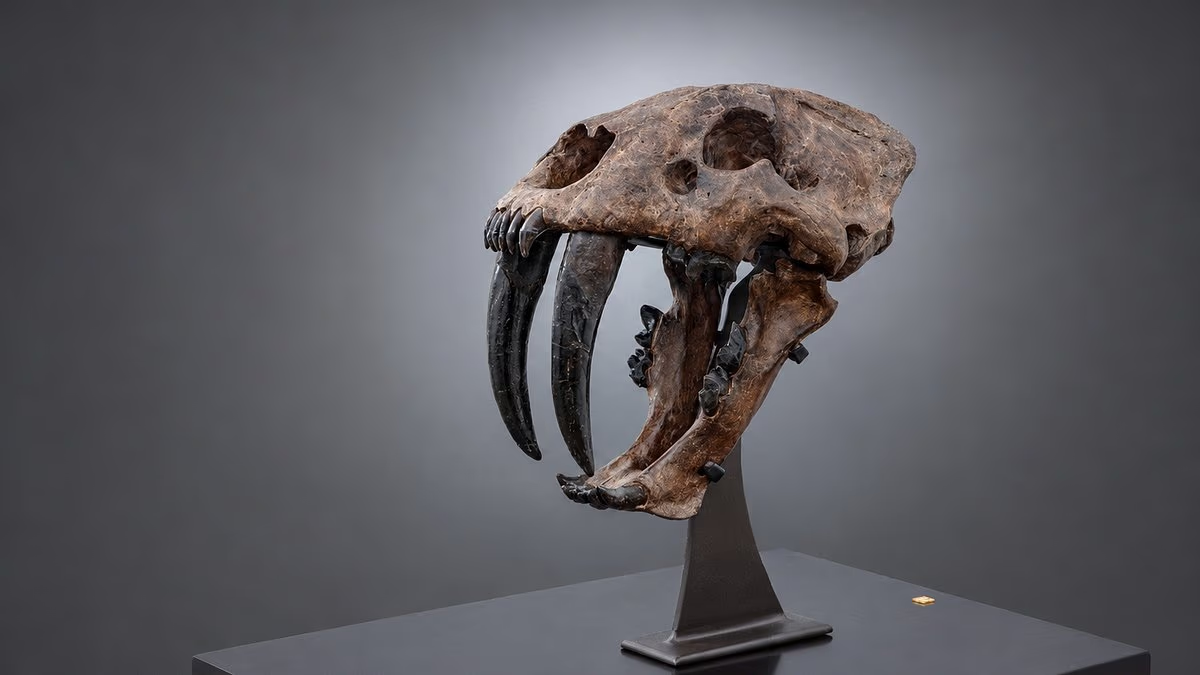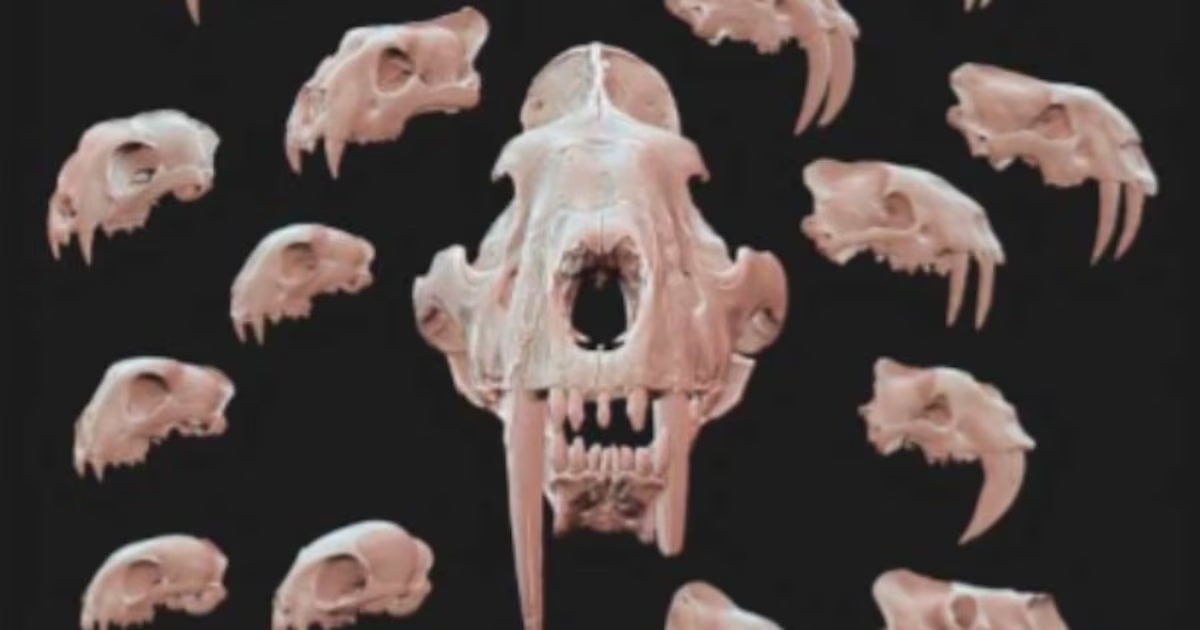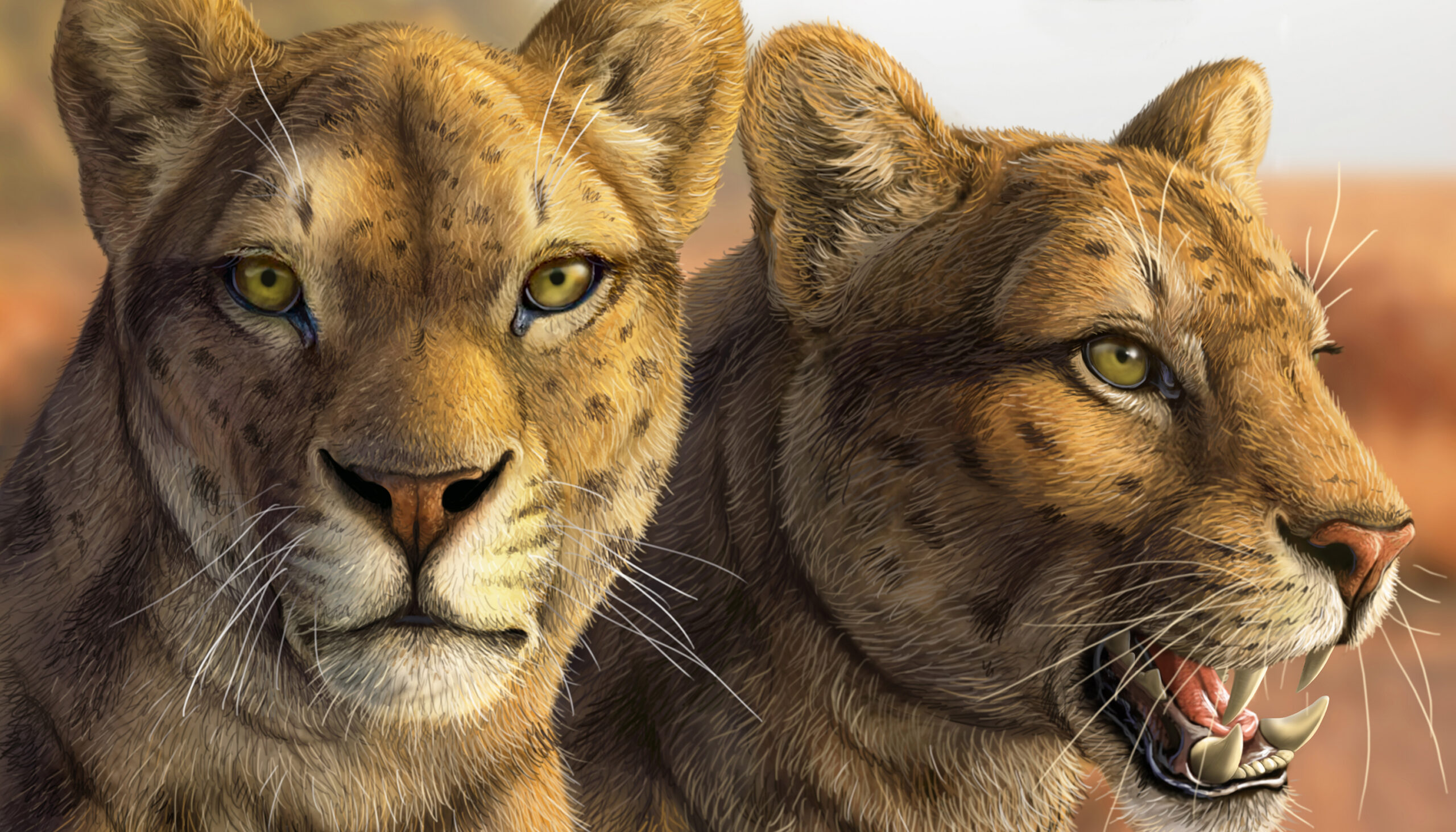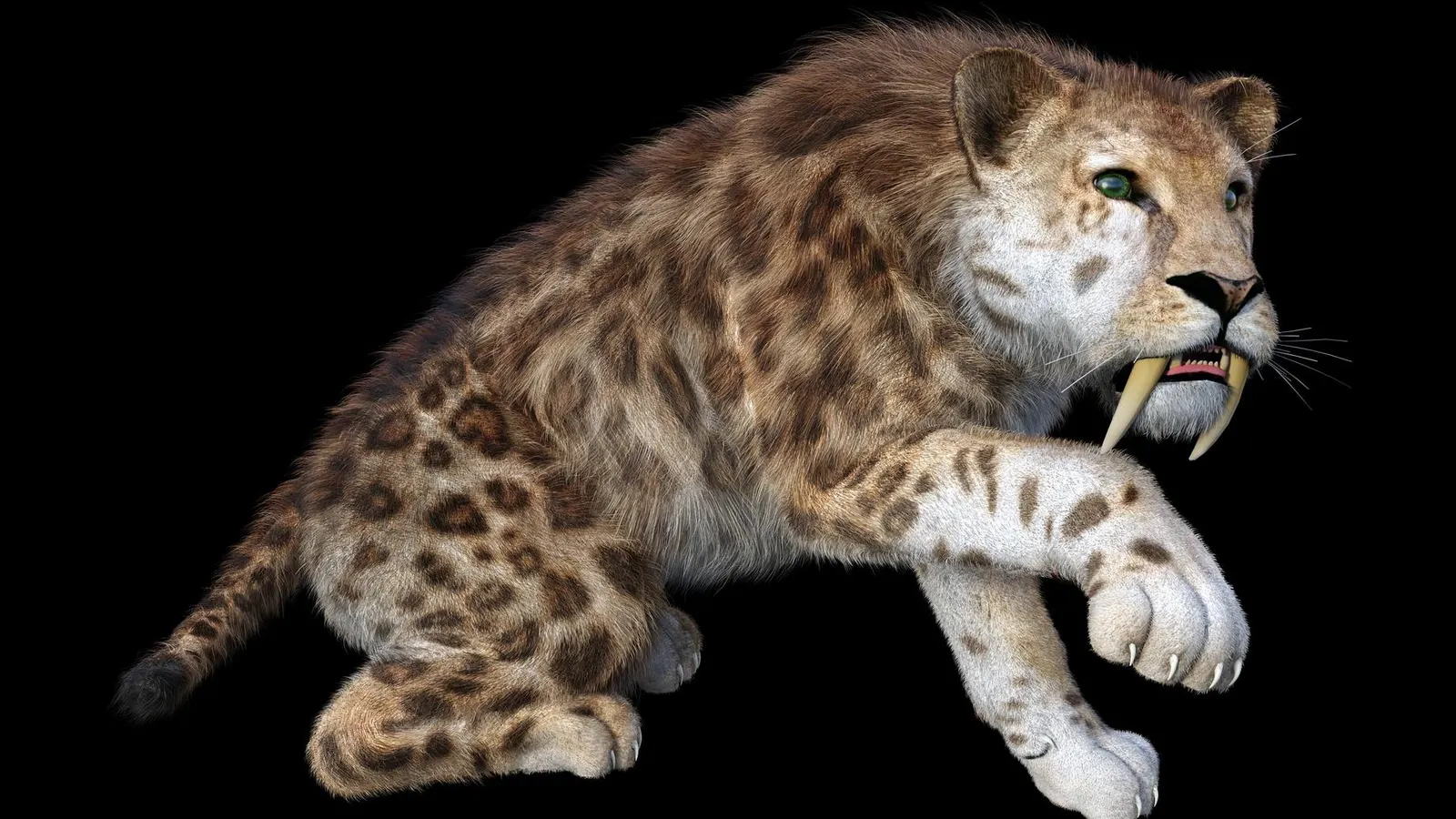
The Ice Age’s most famous predator, Smilodon, killed with muscle, not jaw strength, and figuring that out took a wrecking-ball myth to the ground.gettyWhen picturing the saber-toothed cat and one often imagines a mouth built to crush with those two canines, up to 7 inches long, driving down like ice picks through bone. It’s the image every museum diorama and prehistoric documentary has sold for a century. But when biomechanists actually modeled the skull of Smilodon fatalis, reconstructing its jaw muscles, its skull shape, the leverage its bite would have generated, the number that came back was almost embarrassing. A landmark 2007 study published in PNAS found that, muscle for muscle, its jaws could generate only about a third the bite force of a similarly sized lion, on the order of a much smaller jaguar’s, and by some estimates not far off a large house cat’s once you account for the size difference. The most terrifying face in the fossil record turns out to have had a surprisingly gentle bite.Smilodon Was Built Around Its Arms, Not Its JawsThe resolution to that puzzle is a lesson in how evolution builds a killer: it doesn’t have to load all the power into one weapon. Skull and limb studies of Smilodon consistently point to an animal whose real weaponry was its forelimbs that were unusually robust, heavily muscled and closer in build to a bear’s than a modern big cat’s. Biologists think Smilodon used that upper-body strength to physically wrestle down prey many times its own size like ground sloths, ancient bison and young mammoths, pinning them so they couldn’t move.Only once the animal was immobilized did the jaws come into play, and even then, likely not for a crushing kill. The leading interpretation is that Smilodon delivered a single precise bite to the throat or belly, severing something vital in a target that was already helpless. That’s a fundamentally different hunting strategy than a lion’s bone-crushing takedown bite, and it explains the paradox: those 7-inch canines were never meant to survive a fight. They were precision instruments, and a weak, narrow jaw gape with modest bite force was actually the safer design with less torque and a lesser risk of snapping a canine on a thrashing, half-ton animal.This division of labor between power up front, precision at the back end is a case of what biologists call convergent evolution: unrelated lineages independently arriving at the “saber-tooth” body plan because it solves the same problem. Smilodon wasn’t even a close relative of today’s cats; and remarkably, an entirely different branch of mammals, the marsupial predator Thylacosmilus in South America, evolved almost the same elongated-canine, weak-bite architecture on its own. A 2013 study published in PLOS ONE put both animals through the same biomechanical modeling and found the pattern held for Thylacosmilus too, millions of years apart and continents away, two unrelated lineages had converged on the same odd solution.MORE FOR YOUWhat The Tar Pits Actually Tell Us About SmilodonMuch of what we know about Smilodon comes from one extraordinary source: the La Brea Tar Pits in Los Angeles, where more than 2,000 individual Smilodon have been pulled from sticky asphalt seeps, among millions of fossils preserved there over tens of thousands of years, according to the La Brea Tar Pits and Museum’s own excavation records. That density of fossils is what let researchers move past guesswork. So, comparing dozens of skulls and limb bones is what turned the big prehistoric cat into a testable biomechanical model in the first place.Smilodon ranged across the Americas through the Pleistocene and vanished around 10,000 years ago, part of the broader wave of megafauna extinctions that also claimed mammoths and giant sloths. The causes are still debated. A 2018 study published in Nature Communications modeled Smilodon’s population history alongside other Ice Age giants and found its decline tracked more closely with human hunting pressure, while some of its contemporaries’ declines lined up better with climate shifts at the end of the last Ice Age, serving as a reminder that the question, “what killed off the Ice Age megafauna?” may not have one answer.There’s also genuine debate over exactly how weak that bite really was and how much it varied between individuals of Smilodon; not every biomechanical model agrees on the precise numbers, only on the broad pattern. What isn’t in serious dispute is the bigger picture: this was an animal whose killing power lived in its shoulders and forearms, with the jaws serving as a scalpel rather than a bear trap.That’s the real correction Smilodon offers, beyond trivia. A weapon doesn’t have to be the biggest or strongest part of an animal to be lethal. It just has to be paired with the right supporting machinery. Convergent evolution keeps producing that same lesson across the animal kingdom, in unrelated lineages, because specialization is rarely about one heroic trait. It’s about a whole body organized around making that one trait work.Think you know how evolution builds a killer like Smilodon? Test how sharp your instincts really are with this science-backed quiz: Evolution IQ Test
Meet ‘Smilodon’ — The Sabertooth Cat With A Bite Weaker Than A House Cat’s
New biomechanical research shows Smilodon's legendary saber teeth came with a surprisingly weak bite — and reveals the real weapon it used to kill instead.
846 words~4 min read