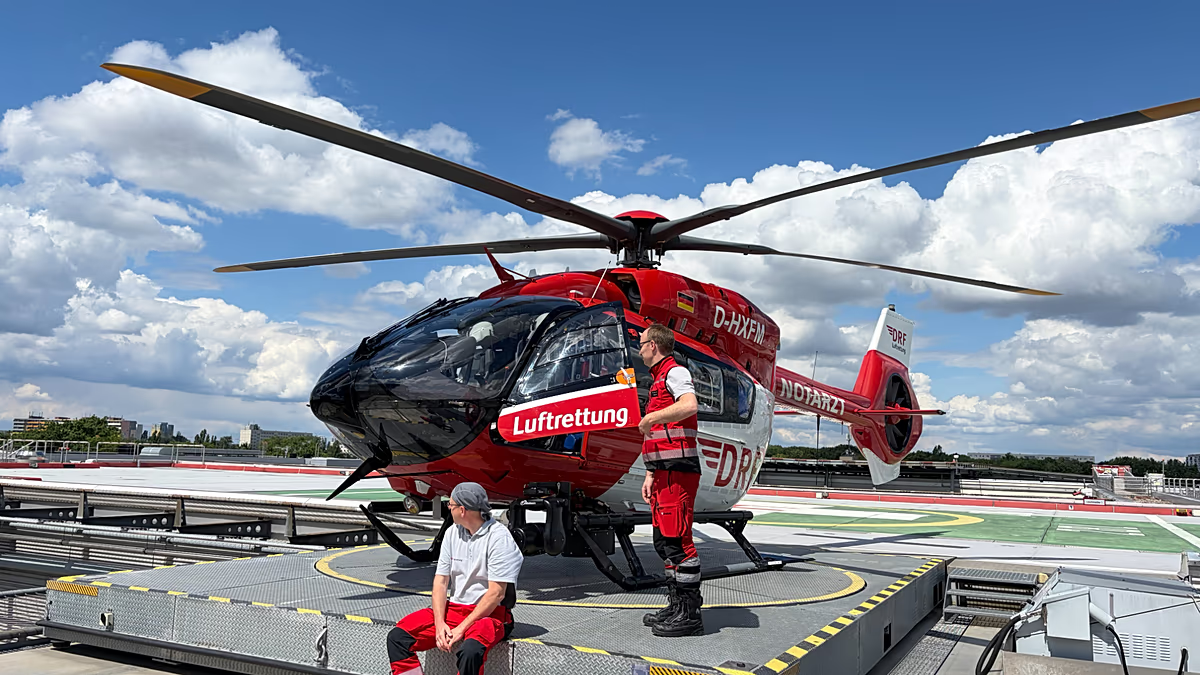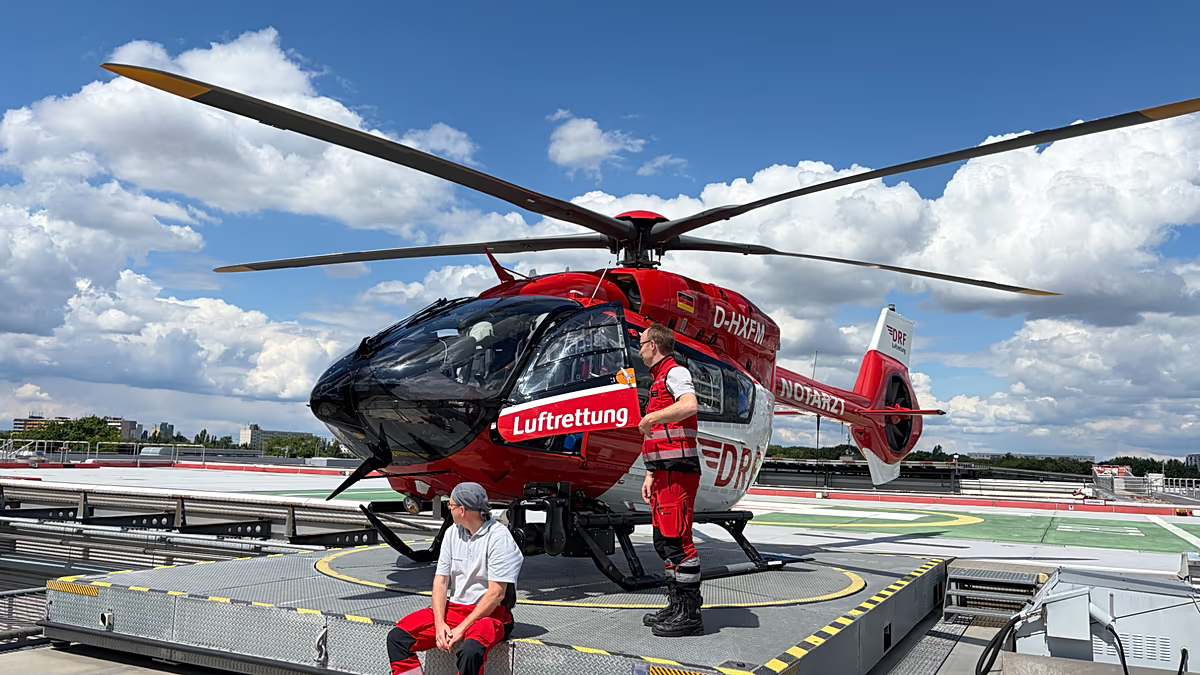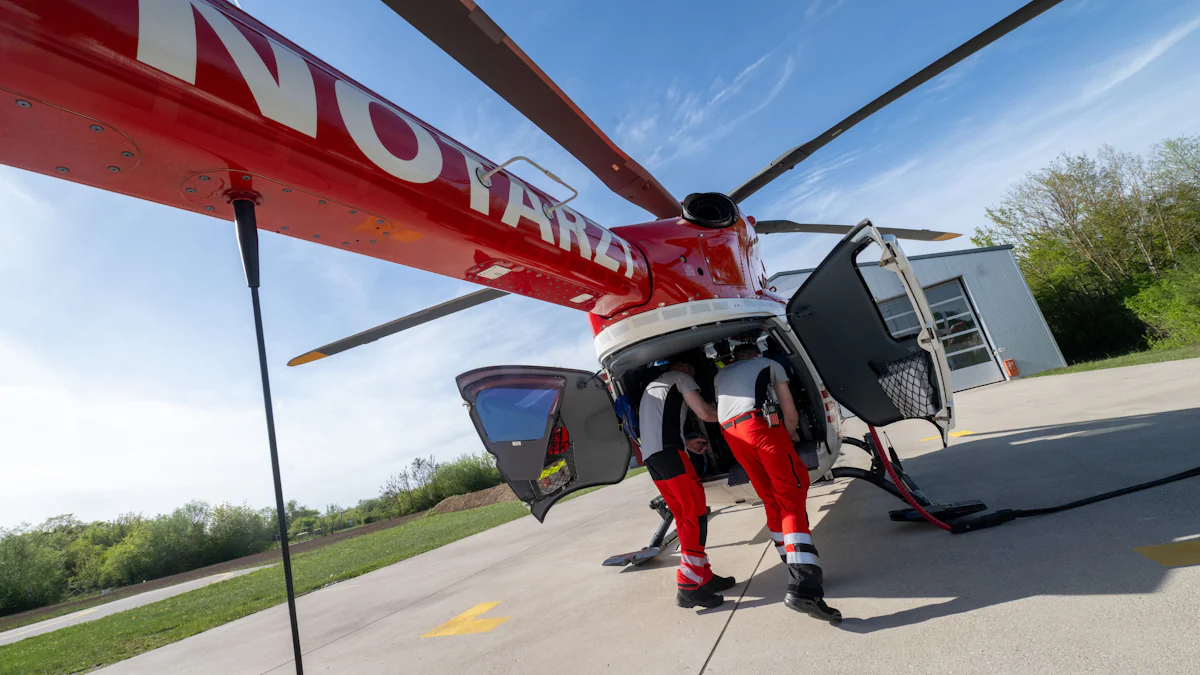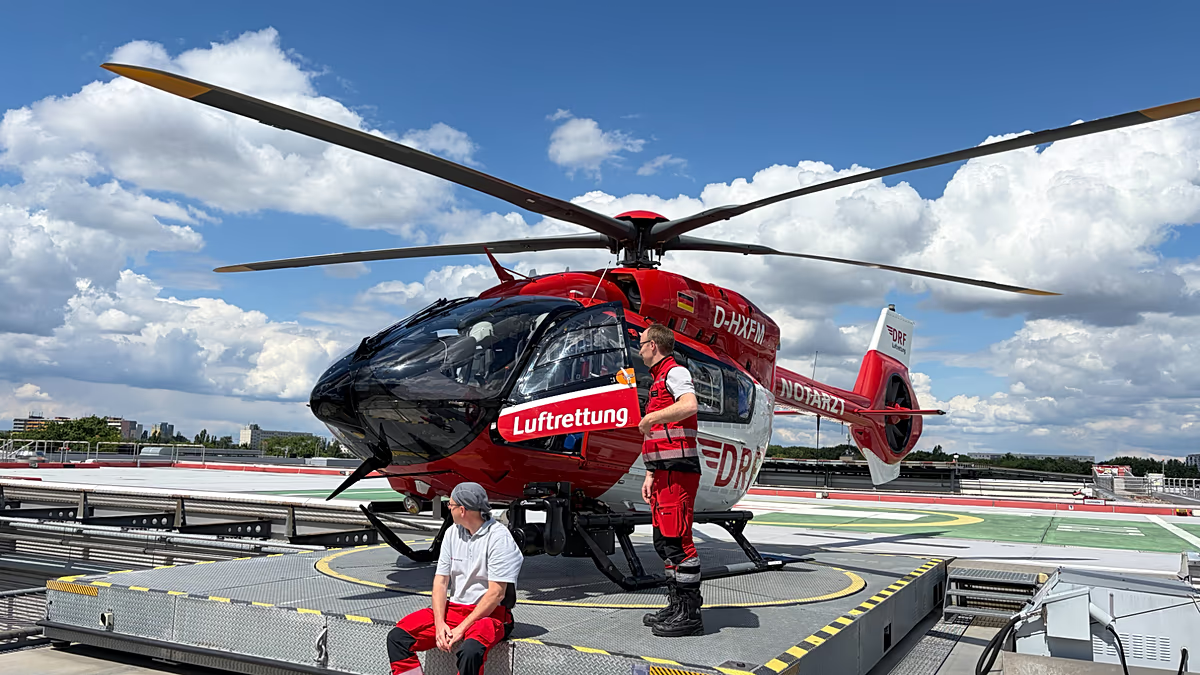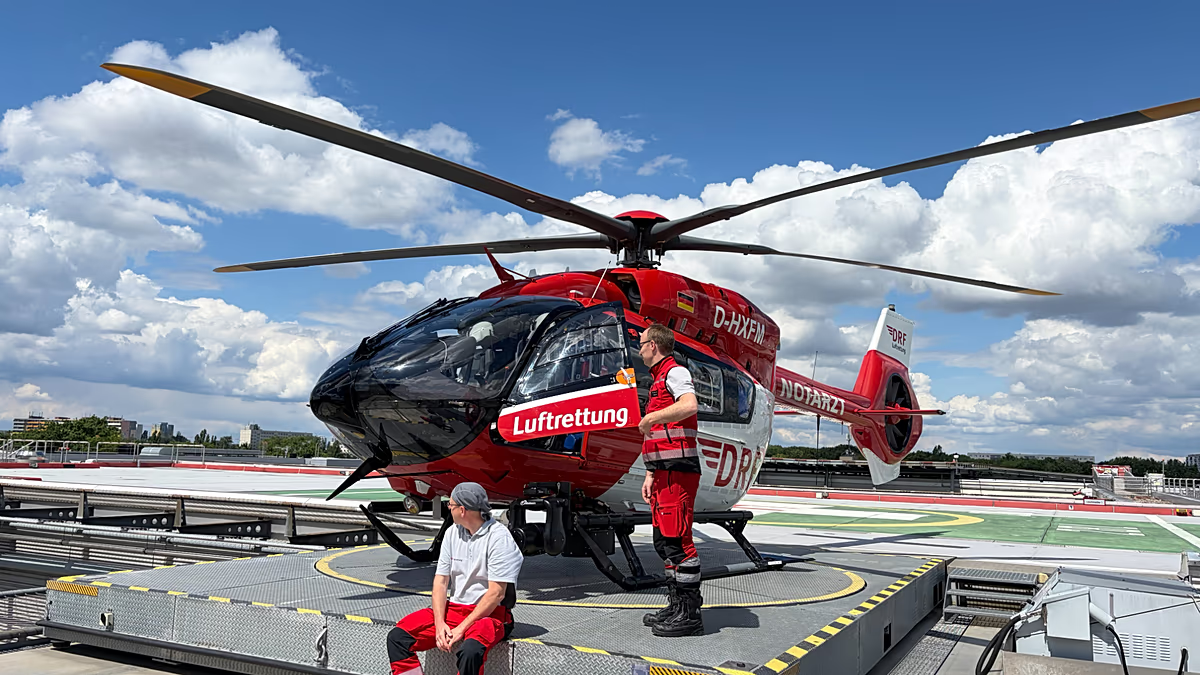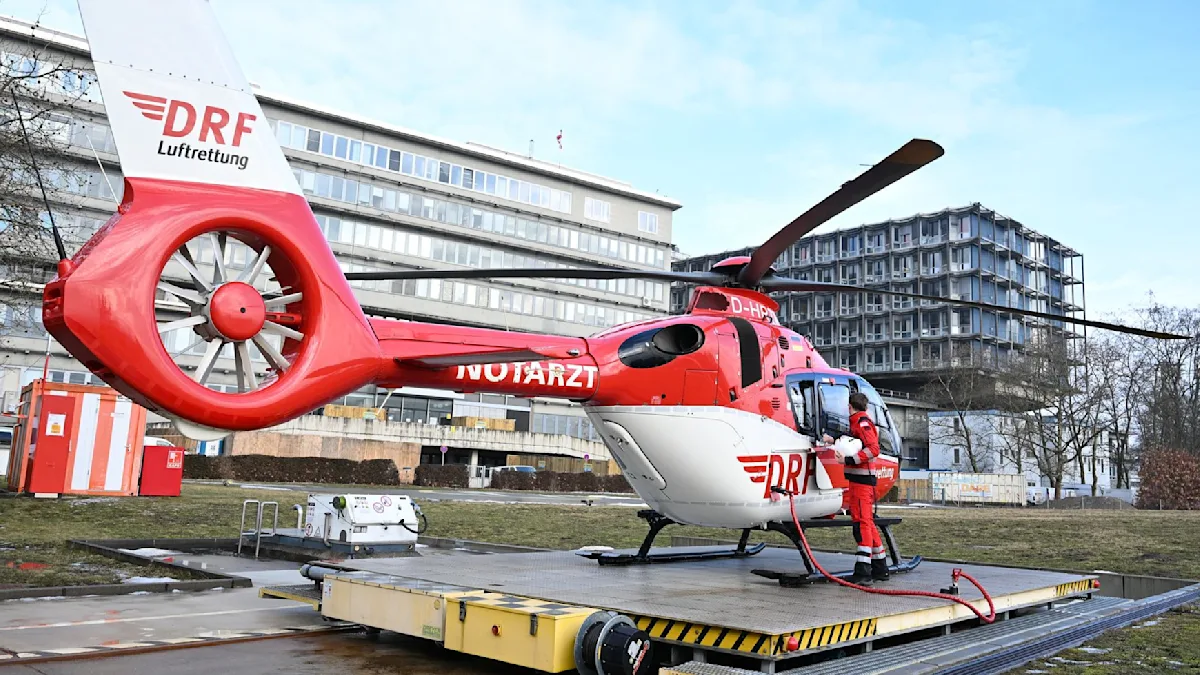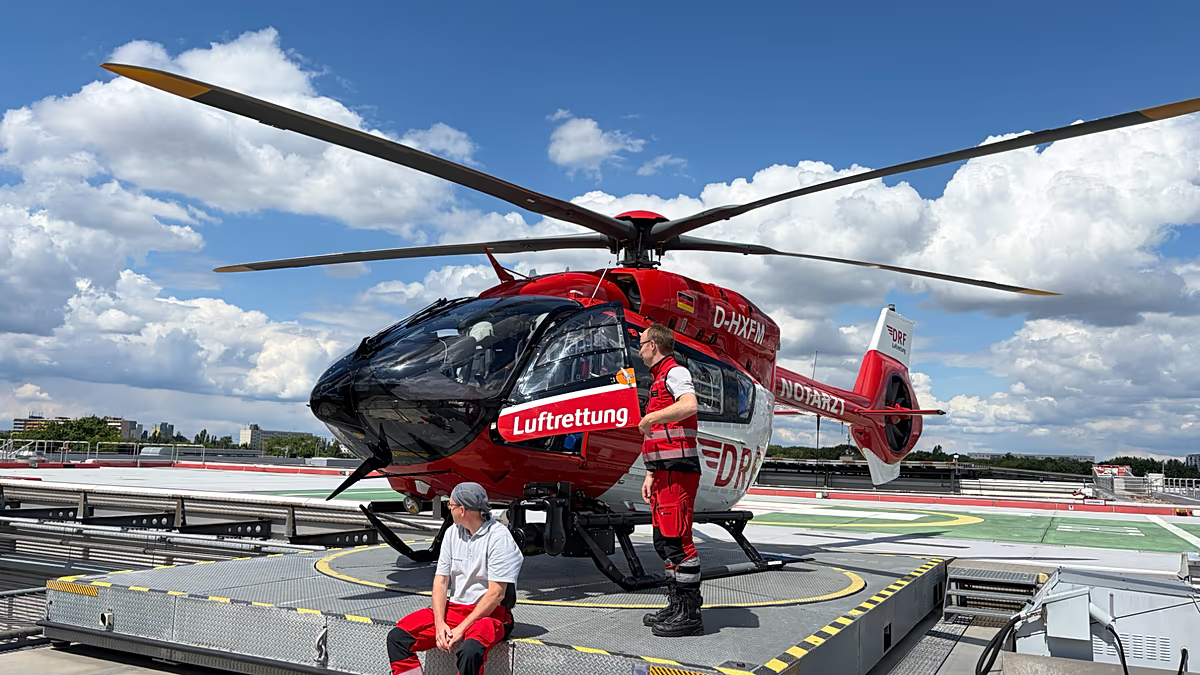
An emergency call comes in. Shortly afterwards an air ambulance helicopter lifts off from Berlin Accident Hospital (ukb) in Marzahn. On board are a pilot, an emergency doctor and an emergency paramedic – a well-practised team for missions where routine, precision and time can be decisive.
The destination is the small town of Lübben in Brandenburg. There a patient with severe burns is waiting. He needs to be transferred quickly to the ukb’s specialised burns centre. For the crew this is a familiar routine.
“When an emergency call comes in, every moment counts,” says emergency doctor Jan Martin. “In particular with heart attack or stroke patients, tissue is lost with every minute that passes without treatment.” That is why everything has to be prepared at the start of the shift so that the crew can take off immediately. From the alarm being raised to take-off usually takes no more than two minutes.
Where air rescue becomes especially important
Air rescue does not replace the ground-based emergency services; it complements them. It becomes particularly important where distances are long, hospitals are far apart or specialised treatments are available only at a few sites. In such cases the time gained by using a helicopter can be crucial – both for initial treatment and for transfers.