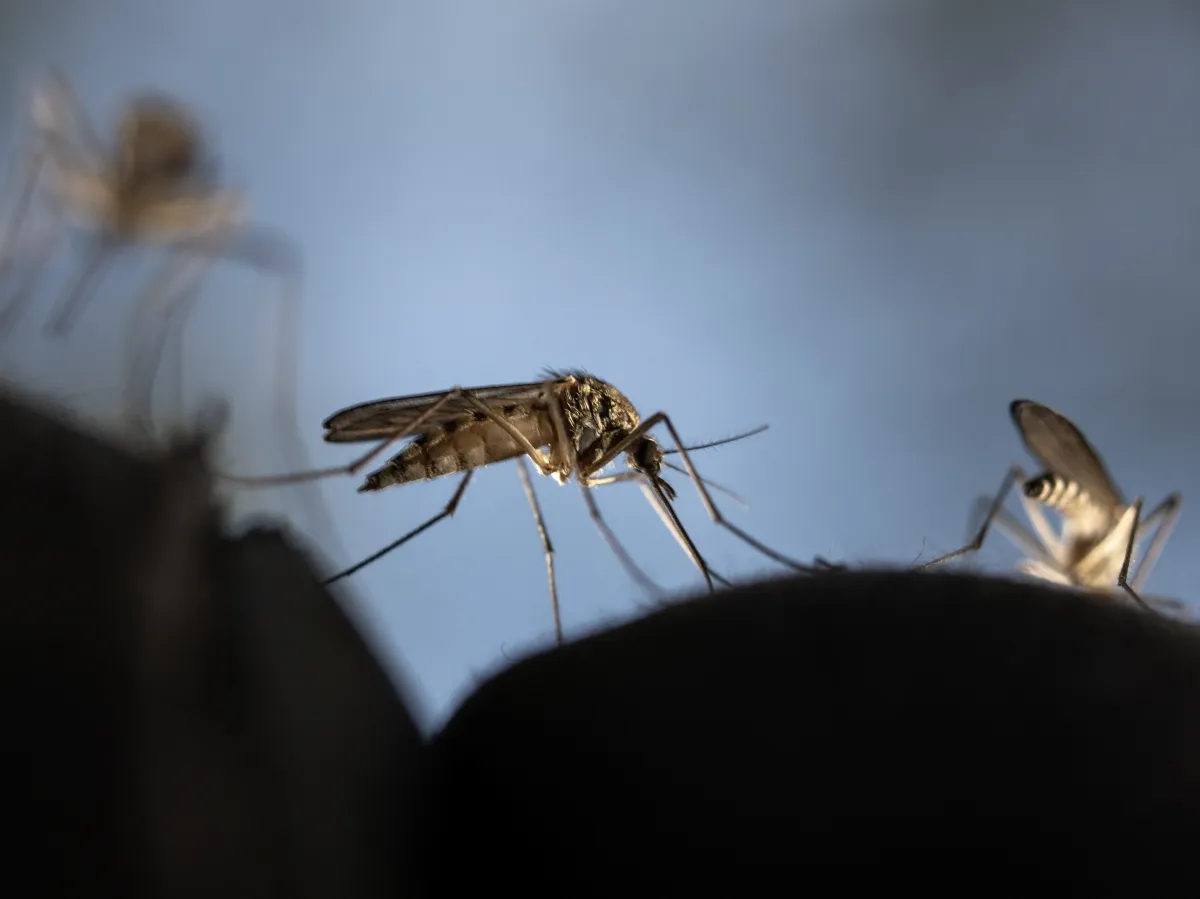
Skip to Content Subscribe Our Offers My Account Manage My Subscriptions FAQ Newsletters Canada Canadian True Crime Canadian Politics Health World Israel & Middle East Financial Post NP Comment Longreads Puzzmo Diversions Comics NP News Quiz New York Times Crossword Horoscopes Life Eating & Drinking Style Sponsored Play for Ontario Travel Travel Canada Travel USA Travel International Cruises Travel Essentials Culture Books Celebrity Movies Music Theatre Television Business Essentials Advice Lives Told Tails Told Shopping Buy Canadian Home Living Outdoor Living Kitchen & Dining Tech Style & Beauty Personal Care Entertainment & Hobbies Gift Guide Travel Guide Amazon Prime Day Deals Savings National Post Store More Sports Hockey Baseball Basketball Football Soccer Golf Tennis Driving Vehicle Research Reviews News Gear Guide Obituaries Place an Obituary Place an In Memoriam Classifieds Place an Ad Celebrations Working Business Ads Archives Healthing Epaper Manage Print Subscription Profile Settings My Subscriptions Saved Articles My Offers Newsletters Customer Service FAQ Newsletters Canada World Financial Post NP Comment Longreads Puzzmo Diversions Life Shopping Epaper Manage Print Subscription HomeNP CommentJamie Sarkonak: The progressive, anti-science surrender to mosquitosEdmonton's pullback from mosquito control is as irrational as Europe's rejection of air conditioningLast updated 5 minutes ago You can save this article by registering for free here. Or sign-in if you have an account.Mosquitoes trying to sting through a glove in a deep forest near Sundom, western Finland, on June 18 2023. Photo by Olivier MORIN / AFP via Getty ImagesIn 2022, when Edmonton decided to stop airdropping mosquito-larva-eating bacteria into bodies of water and opt for more “natural” methods of pest control, experts warned that mosquito populations in the city could double. Well, anyone in the city who walked in grass last weekend will tell you that this grim prophecy has come true: we’re in a mosquitopocalypse.Enjoy the latest local, national and international news.Exclusive articles by Conrad Black, Barbara Kay and others. Plus, special edition NP Platformed and First Reading newsletters and virtual events.Unlimited online access to National Post.National Post ePaper, an electronic replica of the print edition to view on any device, share and comment on.Daily puzzles including the New York Times Crossword.Support local journalism.Enjoy the latest local, national and international news.Exclusive articles by Conrad Black, Barbara Kay and others. Plus, special edition NP Platformed and First Reading newsletters and virtual events.Unlimited online access to National Post.National Post ePaper, an electronic replica of the print edition to view on any device, share and comment on.Daily puzzles including the New York Times Crossword.Support local journalism.Create an account or sign in to continue with your reading experience.Access articles from across Canada with one account.Share your thoughts and join the conversation in the comments.Enjoy additional articles per month.Get email updates from your favourite authors.Create an account or sign in to continue with your reading experience.Access articles from across Canada with one accountShare your thoughts and join the conversation in the commentsEnjoy additional articles per monthGet email updates from your favourite authorsSign In or Create an AccountorIt’s a pattern that plays out time and time again in Canada, and indeed, the West. Bored government officials develop romantic notions that non-interference is always best when it comes to the environment, convince their colleagues that convenience, comfort and health must be sacrificed for the organic lifestyle, and, finally, impose their views on the general public.This newsletter from NP Comment tackles the topics you care about. (Subscriber-exclusive edition on Fridays)By signing up you consent to receive the above newsletter from Postmedia Network Inc.We encountered an issue signing you up. Please try againThe worst of this foolishness can be found in Western Europe, where the masses who are suffering through an intolerable heatwave are expected to just deal with it.Germany’s English-language public broadcaster warned last week that air conditioning could make the world hotter because it uses — gasp — energy. In France, where hundreds of people were estimated to have died from the heat last week, climate activists take the position that AC is a distraction from the fight against global warming, as well as a source of heat and emissions; their desires are reflected in the built environment. Britain, meanwhile, has regulated air conditioning to the point where it has been tearing air conditioning units from homes amid the brutal heatwave.These policies aren’t completely detached from hard science. For example: because air conditioning excretes warmer air from the home into the environment, it is, as a matter of physics, heating the environment. Activists who complain of this tend to leave out the extremely small effect size, however: one Arizona State University study estimated the difference was merely 1 C to 1.5 C at night, and 0.25 C to 0.5 C during the day (based on reducing home temperatures to 25 C in a week of daytime temperatures surpassing 40 C). For one degree outdoors, that’s likely hundreds of lives saved.Europe’s AC-phobia stems from the same climate anxieties that have prompted coal and nuclear plant shutdowns across the continent. The result has been a slew of punishments upon regular citizens: higher energy costs, higher blackout risk, higher dependence on warmongering Russia, all to satisfy the feelings of those who can’t bear the thought of sustaining their own existence.We can laugh from the comfort of our cooled homes, but North America falls for the same trends. Some cities have pulled back on herbicide application and basic mowing in ditches, claiming to do it for biodiversity; native plants help native insects, was the idea. In practice, it meant ceding once-neat greenspace to nuisance and noxious weeds, giving them the appearance of neglect. Others — including Portland and Edmonton — have taken that same organic philosophy to mosquito control.Until 2022, Edmonton used a mosquito management strategy that mostly involved spraying a bacteria that destroyed the gut of mosquito larvae into standing water from a helicopter. The remaining small fraction of treatments involved spray trucks and individual pesticide applicators walking around and hand-spraying.That was the fateful year that one city councillor, Michael Janz, became convinced that spraying was an unnatural disturbance to the environment. He got it in his head that the city should be “reintroducing bats, reintroducing natural predators of mosquitoes like dragon flies” instead of reaching for the bacterial treatment. Following his lead, the city suggested a captive breeding program for bats, which has never been shown to work for the species we have here.You can see how little thought he put into his grand plan because it wasn’t based in facts to begin with. Adult mosquitoes aren’t an important food for the much bigger insectivores out there. A study of Alberta’s dragonflies found their diet primarily consists of flies, with mosquitoes making up as much of 19 per cent of gut contents. This happens because the two are active at different times: dragonflies are active during the day when it’s warmest, while mosquitoes prefer morning and evening: “Relatively little diminution in the numbers of adult mosquitoes can be expected to occur as a result of dragonfly predation, because of the different conditions required for flight by dragonflies and mosquitoes.”Bats, meanwhile, eat moths three-quarters of the time, with one-fifth of their diet consisting of spiders. Mosquitoes, found one Alaska study, only accounted for 1.8 per cent of a little brown bat’s diet — bycatch, that’s it. Nighthawks prefer beetles, and purple martins prefer butterflies and crane flies. The spindly mosquito doesn’t have enough nutrition to make it a worthy meal for animals this big.When mosquitoes do matter is during their larval phase, where they serve as food for minnows, tadpoles, dragonfly larvae, and much more. Controlling them can have an effect; one study out of Europe found, for example, that newt populations were affected by the treatment because they depended on midges for food, which in turn depended on mosquito larvae. But considering how Edmonton had been using the bacterial treatment since the 1980s, there should have been local data to support the hypothesis of local food chain collapse if it was indeed happening.Instead of data, the city appears to have based its decision to subject its million-plus inhabitants to swarms at the insistence of a handful of anti-pesticide activists who showed up to the relevant committee meeting, who brought exaggerated claims about how much birds like to eat skeeters. It planned to spend thousands of dollars on “education” and building bat boxes — fine, if you like bats, but bound to be ineffective in controlling mosquitoes.Statistics from the city’s app showed that feedback from the public afterwards was overwhelmingly negative. A new wave of anger should be expected this Canada Day; those who try to enjoy the outdoor festivities are in for a plague-like experience.Which brings us to midsummer 2026: Edmonton has been weathering a monsoon for weeks now, and biblical swarms are starting to rise from the multitude of pools that hand-sprayers will never be able to effectively treat. It’s worst in the parks, but it’s unusually bad in yards and even parking lots. Stores are running out of bug spray. These numbers could never be prevented in full, but aerial treatments would have certainly helped.There are always trade-offs to any intervention. The risk of a little less biodiversity in a limited city region is arguably well worth the benefit to public health — from allowing for more outdoor recreation to reducing the risk of West Nile virus as its host migrates to Alberta (already, it’s suspected to have killed some zoo animals in Calgary). To submit to the wacky theories of the anti-pesticide crowd is little different than refusing to get air conditioning in the summer.National Post Join the Conversation This website uses cookies to personalize your content (including ads), and allows us to analyze our traffic. Read more about cookies here. By continuing to use our site, you agree to our Terms of Use and Privacy Policy.
Jamie Sarkonak: The progressive, anti-science surrender to mosquitos
Edmonton's pullback from mosquito control is as irrational as Europe's rejection of air conditioning
1,634 words~7 min read