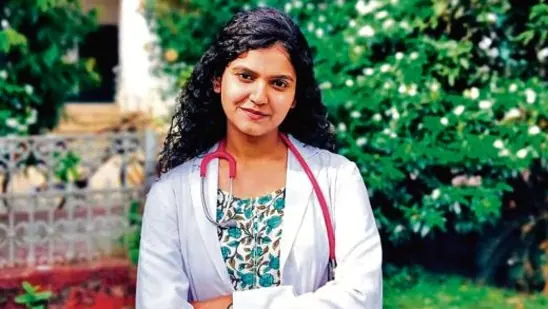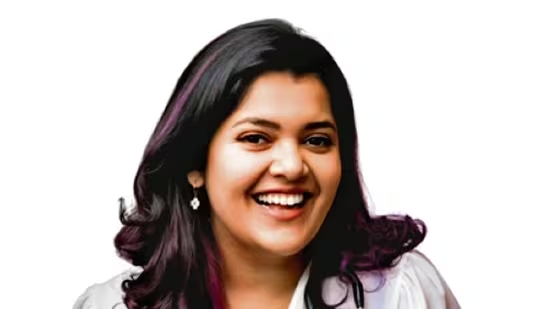
Dr Tanaya Narendra is a sexual medicine doctor, embryologist and science communicator who has helped make conversations around sexual and reproductive health more accessible through social media. Better known online as Dr Cuterus, the 32-year-old uses evidence-based content to bust myths, answer taboo questions and promote comprehensive sex education. Alongside her clinical work, she has emerged as one of India's most recognisable digital health educators, bridging the gap between medicine and the public.Dr Tanaya Narendra, popularly known as Dr Cuterus is a sexual medicine doctor and influencer.Q. What does it mean to be a doctor in your generation?A. To be a doctor in this generation, you have to be multi-faceted. You can't just go to the clinic, see your patients and come back home. Doctors as public personalities were never really a thing unless you were a television doctor. Building a personal brand is probably one of the biggest changes in medicine today. There's a lot we have to learn outside medical school—how to market ourselves, how to speak on stage and how to communicate with people.Earlier, doctors were often deified. There was this belief that "doctors are like God", and that put immense pressure on them. Today, doctors are seen as people, and I think that's healthier. There's no need to put them on a pedestal. It allows us to treat medicine as a profession without taking every outcome personally. I also feel the playing field has levelled. Compared to the arrogance with which some doctors from earlier generations interacted with patients, today's doctors approach them with much more empathy and humanity.Q. What irritates you the most as a doctor?A. One thing that genuinely irritates me is the violence against doctors. People often dismiss it as a minor issue, but it's very real. Many doctors live with the constant fear that an angry patient or attendant could turn violent. It almost becomes a trauma response—you instinctively prepare yourself to defend yourself physically because you never know when someone might throw something at you or assault you. I come from Uttar Pradesh, so there have even been instances where doctors have feared being shot.It's shocking when you think about it. You spend years studying, invest enormous amounts of time, money and effort into your profession, and in a single moment someone can destroy your career—or even take your life. Hospitals have been vandalised and set on fire. It's deeply frustrating, disturbing and, for me, one of the hardest parts of being a doctor today.
National Doctors' Day | Sexual health educator Dr Tanaya Narendra : Violence against doctors is horrible
On National Doctors' Day, sexual medicine doctor Dr Tanaya Narendra shares how medicine has evolved over years and the one thing that still gets under her skin.
414 words~2 min read