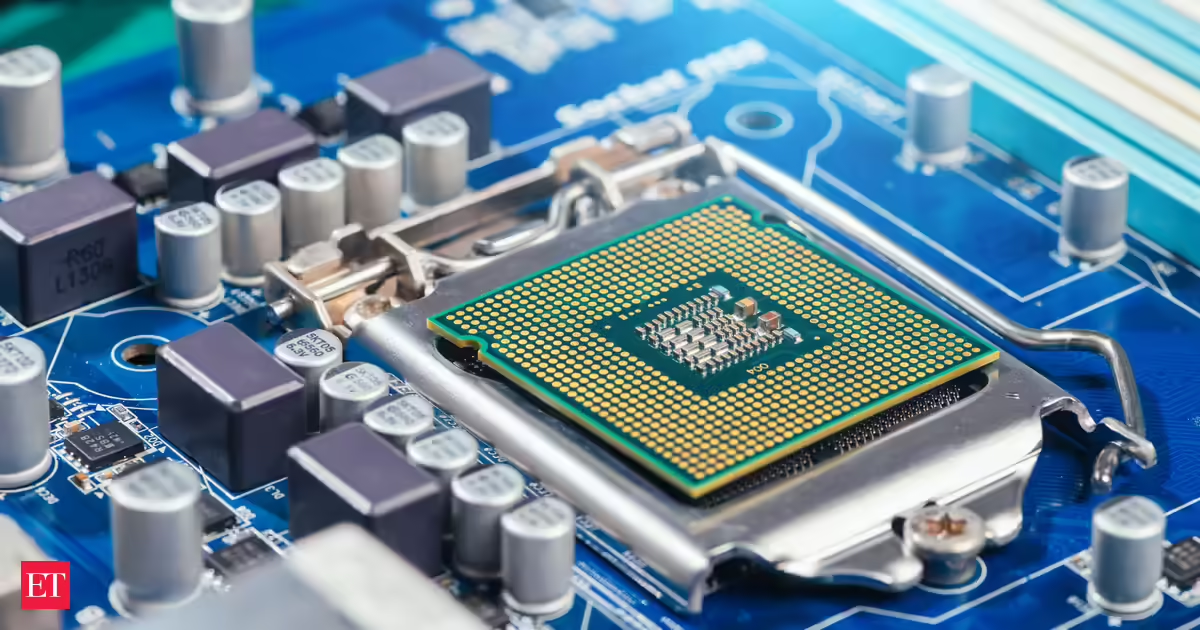
SynopsisFlash storage maker MiPhi is capitalizing on the global memory chip shortage to secure lucrative deals in India's electronics and automotive sectors. The joint venture between Taiwan's Phison and India's Micromax is supplying high-density storage solutions, leveraging Phison's micro-controllers. AgenciesMiPhi says it is leveraging the ongoing shortage of memory products to expand its footprint in India's automotive, electronics and enterprise storage markets. (Representative image)New Delhi: Flash storage manufacturer MiPhi is aggressively leveraging the current shortage in memory products to position itself in high-margin electronics and automotive manufacturing supply chain in India, top executives of the Bengaluru-based company said.MiPhi has secured long-term deals with top local automotive manufacturers and set-top box makers, and signed enterprise storage partnerships with major cloud providers in India, cofounder Rahul Sharma said.The company, a joint venture between Taiwan’s Phison and India’s Micromax formed in 2024, is using memory micro-controllers that Phison makes to supply high-density storage and embedded memory sticks to manufacturers, at a time when industries are struggling to get access to memory chips."We are the only Indian company capable of making sovereign memory," Sharma said. He expects the company to cross Rs 1,000 crore in revenue in FY27, a ten-fold increase from Rs 100 crore it booked in last fiscal year. It has already crossed Rs 250 crore in the June quarter, he told ET.“The customer-side relationship has changed a little bit recently. Earlier, manufacturers were shopping around...but now allocation has become very important. The advantage for us is we have the allocations,” MiPhi executive director Borris Chang said.“Right now, instead of pricing, the whole question is how much the allocation will be. It’s more about allocation rather than pricing,” he added.Customers are asking for 1 million units of memory chips a month, but can only secure an allocation of 200,000 due to the shortage, he said.Supply chain tracker Trendforce reported that even older-generation DRAM components are now facing a shortage, predicting prices to rise further in the coming quarters as major suppliers continue to prioritise advanced-node production of memory to support growing demand from AI infrastructure investments.Chang warned that while larger players operating with high margins such as automobile companies can absorb the price hike, the smaller ones making products such as set-top boxes and smartphones may face a shutdown soon if memory prices remain as high as they are right now.The executive, who is also the chief of staff at Phison’s headquarters in Taiwan, said 40% of all memory wafers being manufactured is allocated to AI data centres. This share, he said, is set to increase more.“Enterprise AI applications require enormous storage capacity. With a single AI server consuming 100-150 terabytes, and specialised storage servers packing up to three petabytes in a single system, manufacturers are heavily deprioritising consumer memory to fulfil this high-margin enterprise demand,” Chang said.This strategic reallocation limits the overall supply available for non-enterprise electronics, inherently driving up prices across the board, he added.Read More News on...moreless
MiPhi bets on memory products shortage to expand auto, electronics business in India
Flash storage maker MiPhi is capitalizing on the global memory chip shortage to secure lucrative deals in India's electronics and automotive sectors. The joint venture between Taiwan's Phison and India's Micromax is supplying high-density storage solutions, leveraging Phison's micro-controllers.
488 words~2 min read