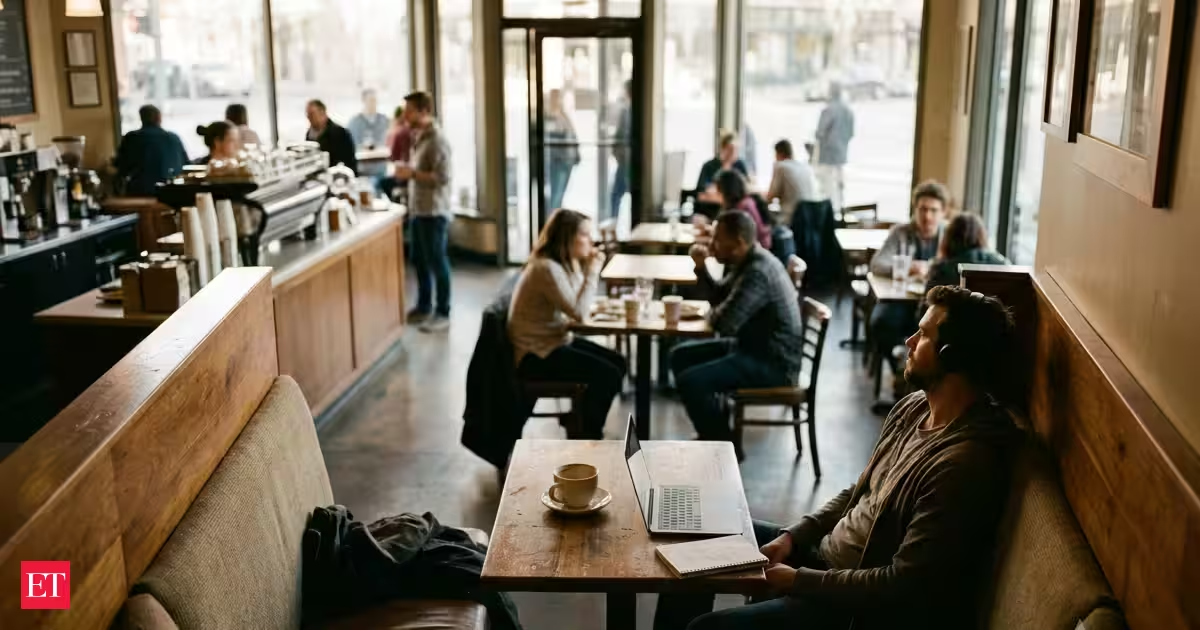
Psychology explains why some people sit in coffee shops for hours without really buying much, sometimes not even finishing their drink, and what it reveals about how humans regulate stress, attention, and social connection in modern life.Imagine someone opening their laptop in a café with no urgent work deadline. They aren’t meeting anyone. They didn’t even really need coffee. Yet they stay for hours, feeling oddly focused, calm, and “in the zone.” While this might look like a simple habit or aesthetic preference, psychologists say it reflects something deeper about how the brain responds to environment, sound, and subtle social presence.According to environmental psychology and urban sociology, coffee shops function as what researcher Ray Oldenburg called “third places”, spaces that are neither home nor work, but psychologically essential for everyday well-being. Over time, research has shown that these environments can reduce stress, improve mood, and even enhance creativity.Psychology explains that humans are not just social at home or at work, we are socially wired to benefit from neutral public spaces where we can exist without pressure.According to sociologist Ray Oldenburg in his book The Great Good Place (1989), third places like cafés, bookstores, and neighborhood hangouts provide a sense of belonging without obligation. You are surrounded by people, but not required to interact deeply.This matters because research in social psychology shows that humans have a fundamental need to belong.According to psychologists Roy Baumeister and Mark Leary in their landmark 1995 paper The Need to Belong: Desire for Interpersonal Attachments as a Fundamental Human Motivation, people are psychologically driven to maintain at least minimal social connections. Even passive social environments, like sitting in a café, can satisfy part of that need.Why café noise actually helps people think betterOne of the most surprising findings in psychology is that coffee shops may improve creativity rather than hinder it.According to marketing researcher Ravi Mehta and colleagues in their 2012 study Is Noise Always Bad? Exploring the Effects of Ambient Noise on Creative Cognition published in the Journal of Consumer Research, moderate background noise (around 70 decibels, similar to a busy café) improved performance on creative tasks compared to both silence and loud environments.Participants exposed to moderate noise performed better on abstract thinking and idea generation tasks.The explanation is that a certain level of distraction forces the brain to think more broadly rather than focusing too narrowly, which encourages creative associations.This helps explain why people often feel unexpectedly productive in cafés: the environment is not silent enough to over-focus, but not chaotic enough to overwhelm.The science of “soft fascination” and mental recoveryAnother reason coffee shops feel strangely relaxing is that they provide what psychologists call “soft fascination.”According to environmental psychologists Rachel and Stephen Kaplan in their Attention Restoration Theory (ART), environments that gently hold attention without demanding effort help restore mental energy.According to Stephen Kaplan and Rachel Kaplan in their 1989 book The Experience of Nature, restorative environments help reduce mental fatigue caused by sustained concentration.So when someone says, “I get more done at a coffee shop,” psychology suggests it may be because their attention system is quietly recovering while staying lightly engaged.Why being around strangers still feels comfortingOne of the most overlooked aspects of cafés is that they offer social presence without social demand.According to psychologist Gillian Sandstrom and Elizabeth Dunn in their 2014 study Social Interactions and Well-Being, even small interactions, like talking to a barista or being around familiar strangers, can significantly improve daily mood and sense of belonging.
Psychology explains why people love sitting in coffee shops even when they don’t need coffee, and what they’re really getting from it
Psychology reveals why coffee shops become productive havens. These 'third places' offer a unique blend of ambient noise that boosts creativity and 'soft fascination' which restores mental energy without demanding focus. Being around strangers provides social presence without pressure, fulfilling a fundamental human need for connection and reducing stress, making these spaces vital for modern well-being.
577 words~3 min read