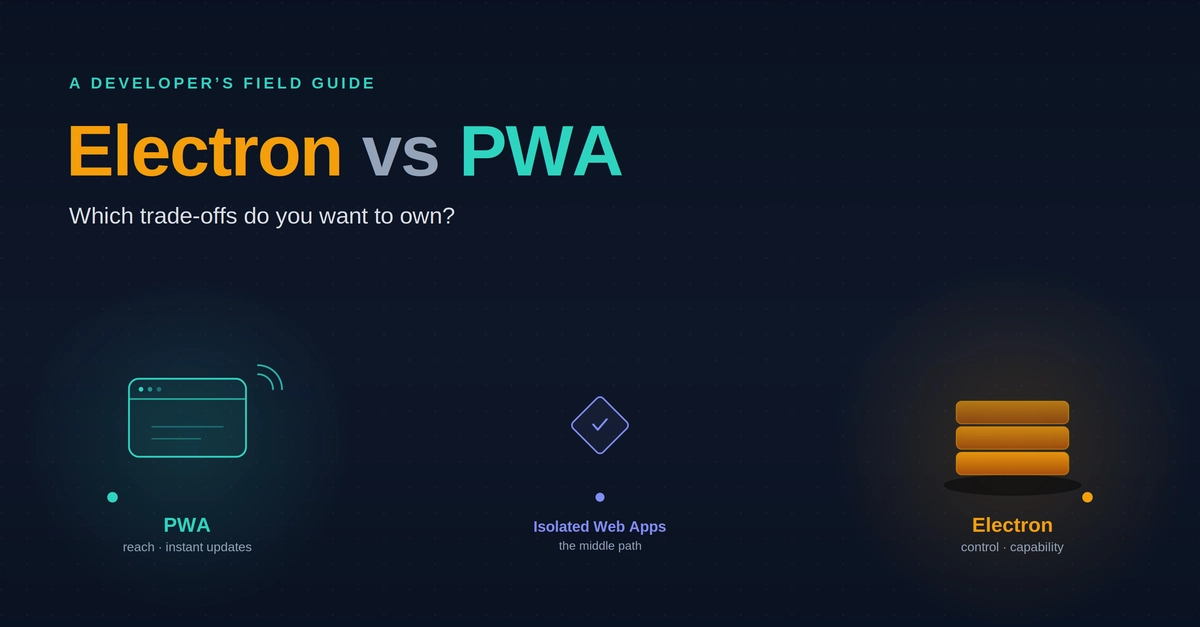
Almost every "Electron vs PWA" article ends up at the same tidy verdict: PWAs are lightweight, Electron is heavy, choose accordingly. It's true enough to be useless. If you've actually shipped either one, you know the decision is never about a bundle-size number. It's about which set of long-term trade-offs you're willing to own for the next few years — runtime control, security maintenance, hardware access, distribution, and the quiet platform politics that decide what your code can do on someone else's device.
So let's skip the table you've already seen and talk about the parts that actually bite. I'll assume you know HTML, CSS, and JavaScript, that you've heard of service workers and BrowserWindow, and that you want to make a real architectural call rather than win an internet argument.
The one mental model worth keeping
Both Electron and PWAs are the web platform wearing different clothes. The difference is who owns the runtime and how the app reaches the user.
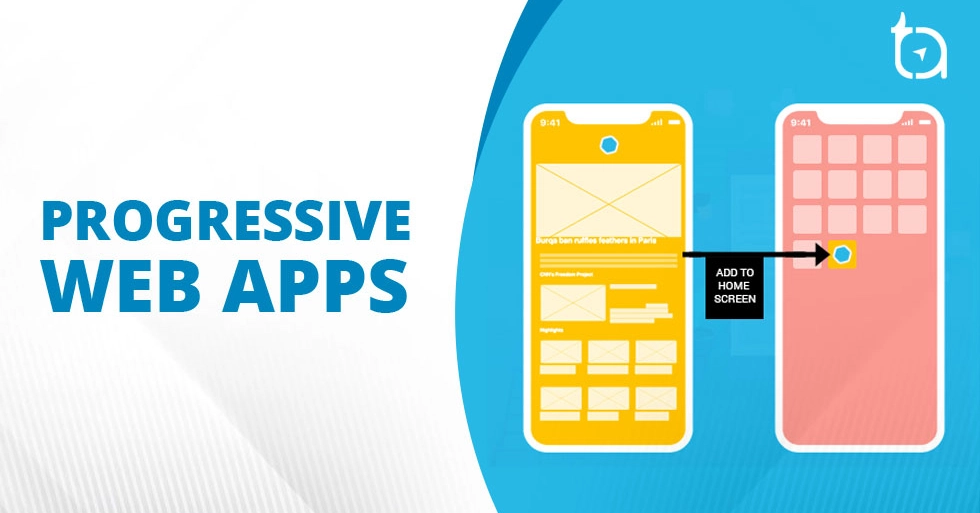
A PWA is your web app, enhanced with a service worker and a web app manifest, installed straight from the browser. It runs inside whatever engine the user already has — Chromium on most desktops and Android, WebKit on every iPhone. You ship a URL; the platform supplies the runtime.