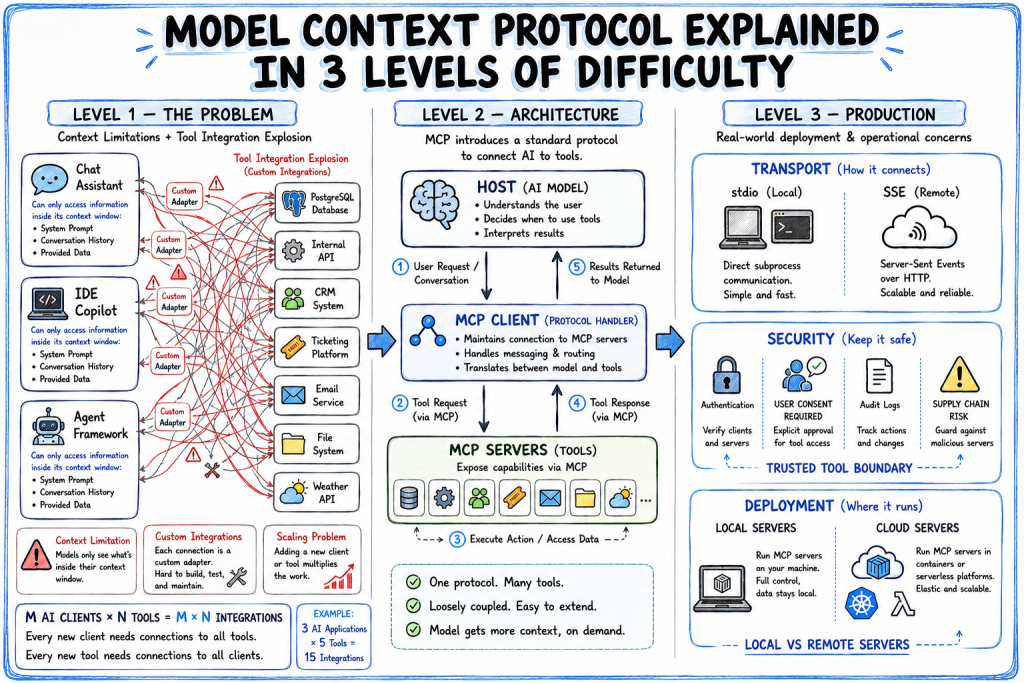
TL;DR: An MCP registry is a centralized catalog of MCP servers - what they do, how to connect, what tools they expose, and who's authorized to call them. Without one, every developer and agent maintains their own copy of that information, credential rotation breaks everything, and access control is nonexistent. With one, tool discovery is dynamic, credentials are managed centrally, and RBAC governs what each agent can see and call. This post covers what it is, how it works, and the specific failure modes it prevents.
There's a pattern I've seen play out in almost every team that scales past a handful of MCP servers.
The first few connections feel like magic. You run npx @modelcontextprotocol/server-github in a terminal, point Claude Code at it, and your agent can suddenly search repositories. Clean, fast, no glue code. Then you add Jira. Then Confluence. Then a Slack MCP server and an internal data API. Now you have six servers and twelve developers, and each developer has their own ~/.cursor/mcp.json or .claude/settings.json with hardcoded connection details and credentials.
When a server endpoint changes, you update twelve config files manually. When a credential rotates, you hunt down every developer who cached it. When a new engineer joins, you spend half a day walking them through which servers exist and how to connect. When someone leaves, you hope you remembered to revoke their individual tokens on each of the six systems.