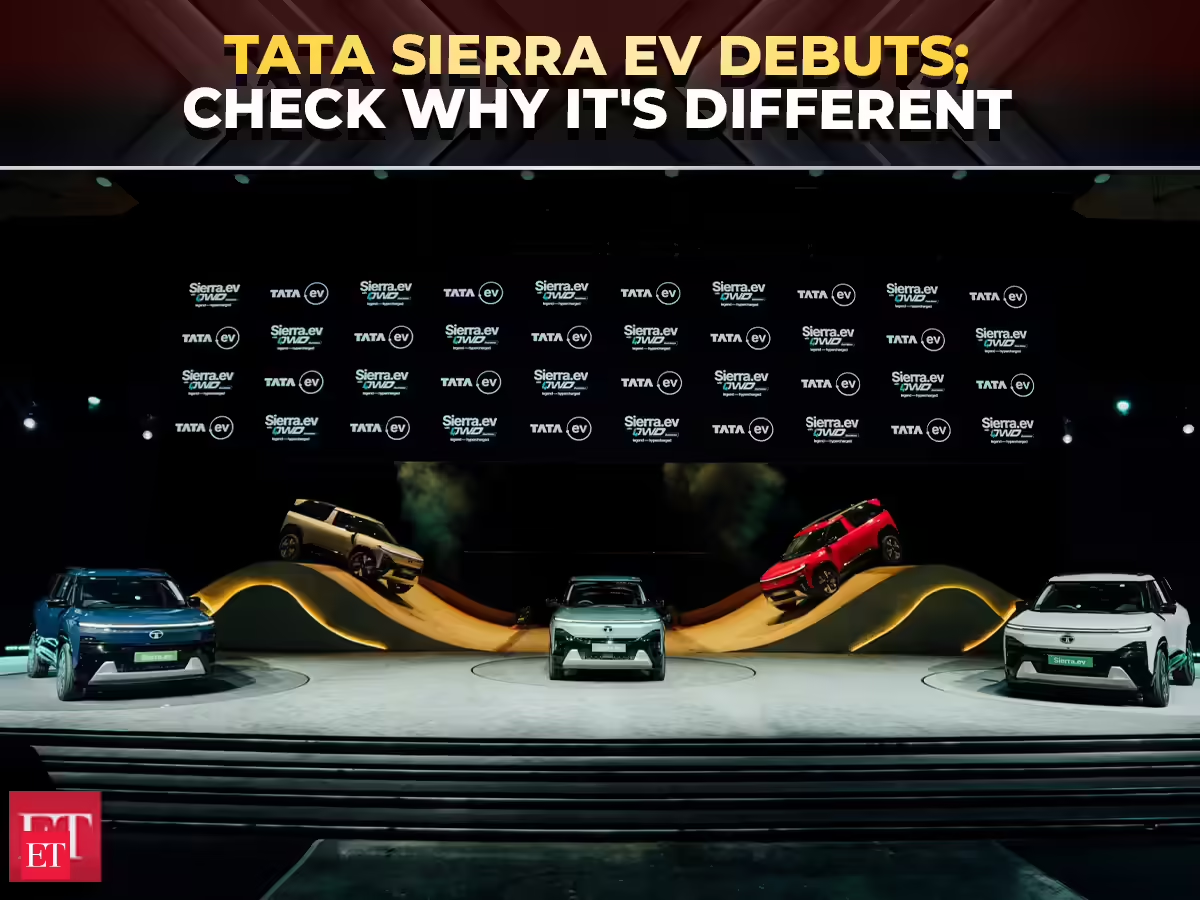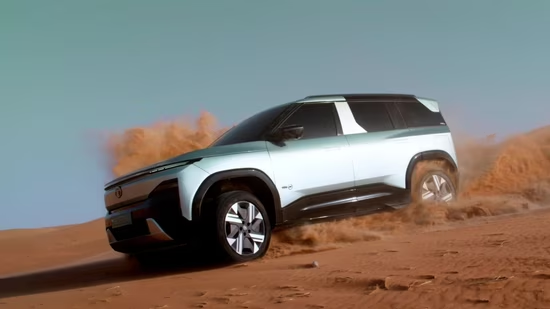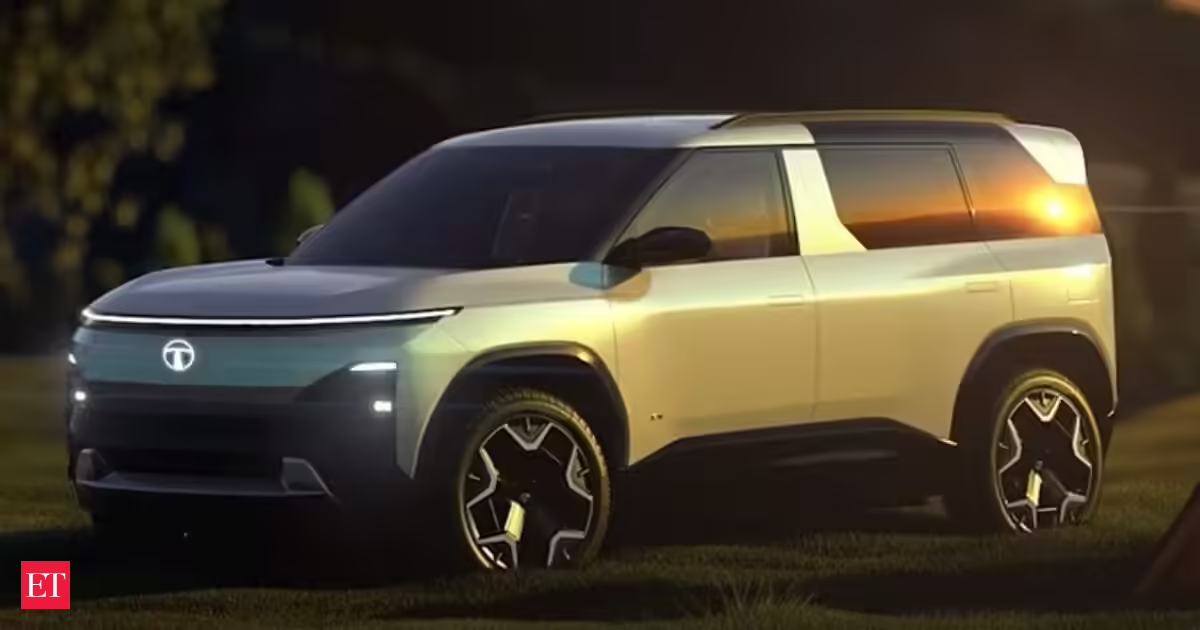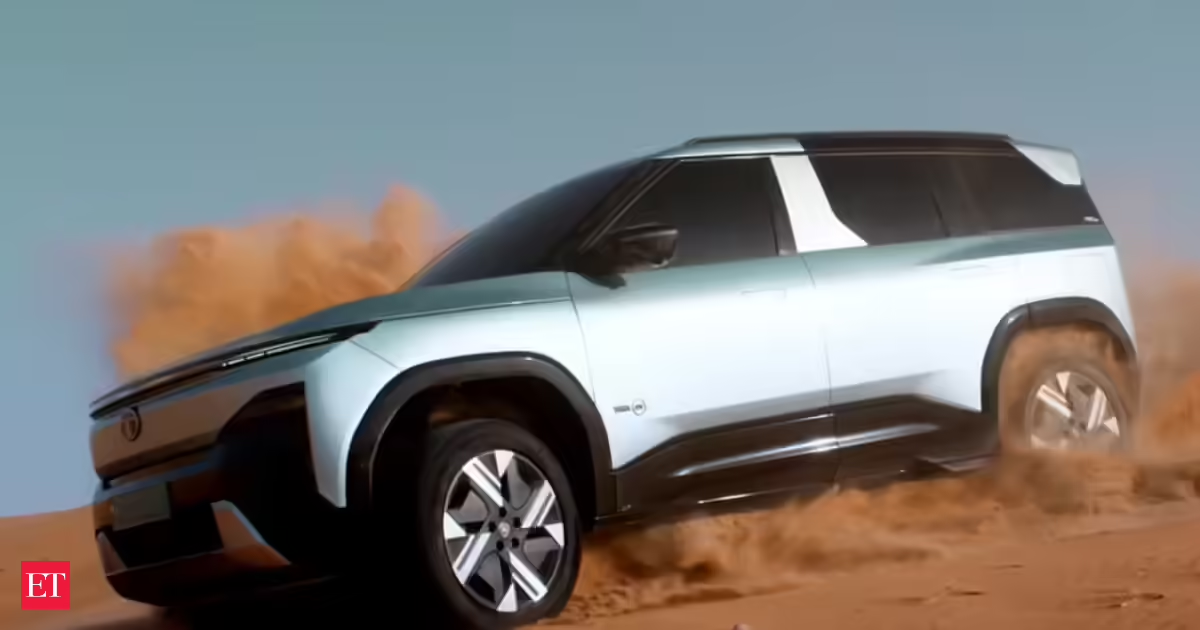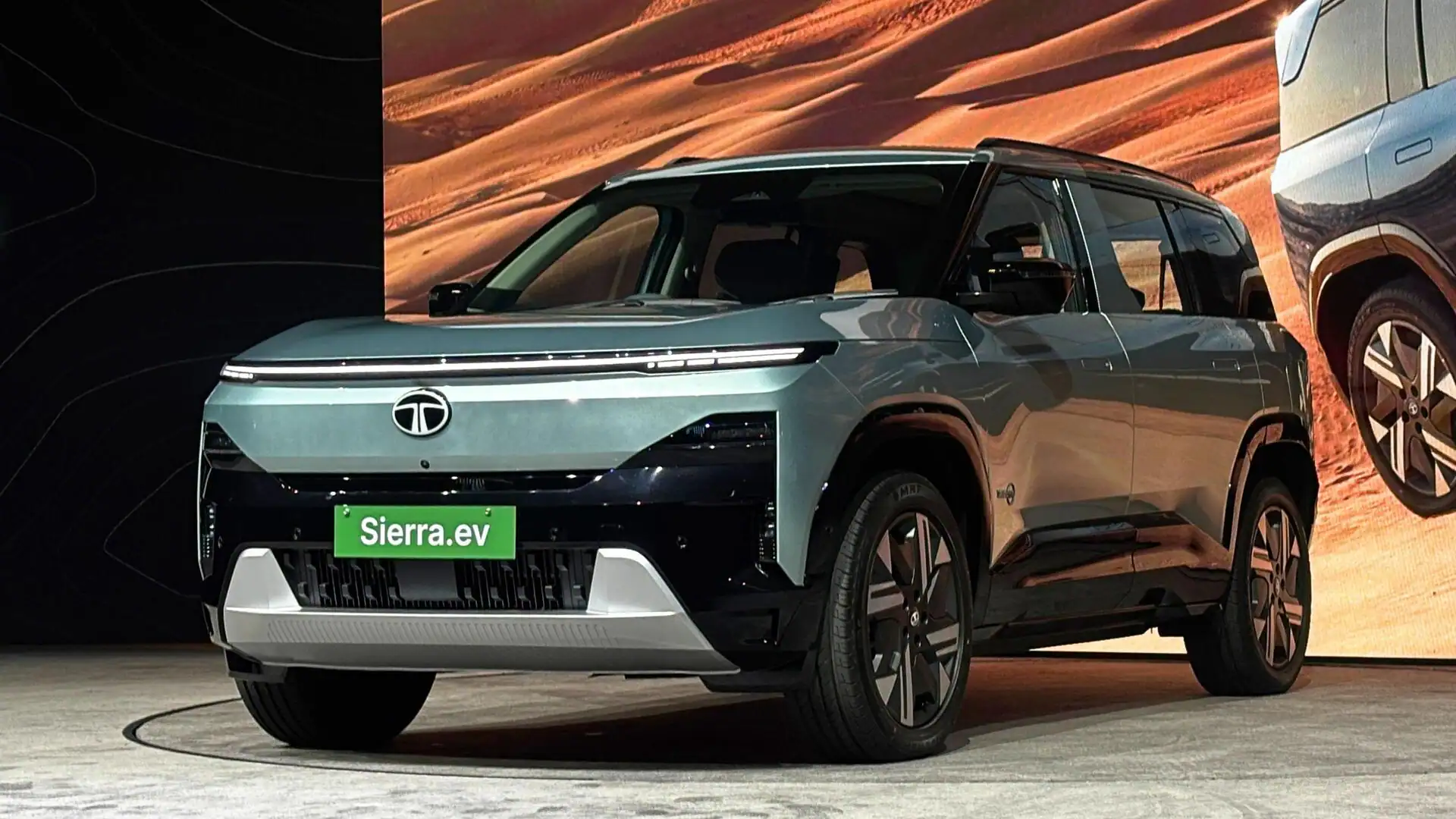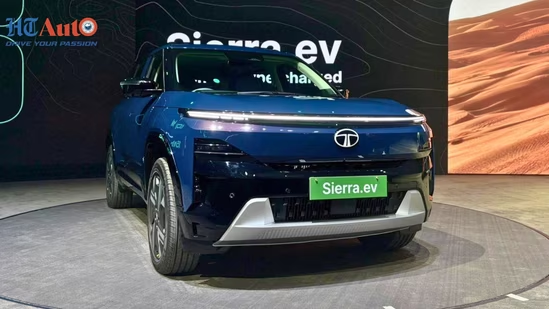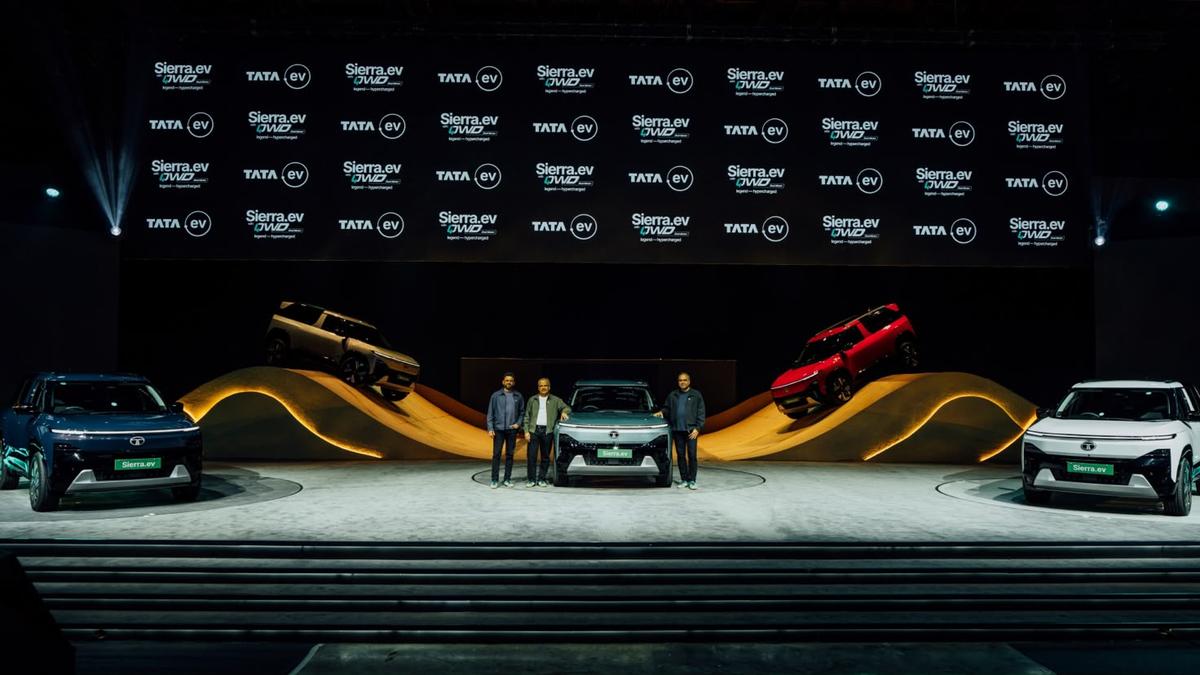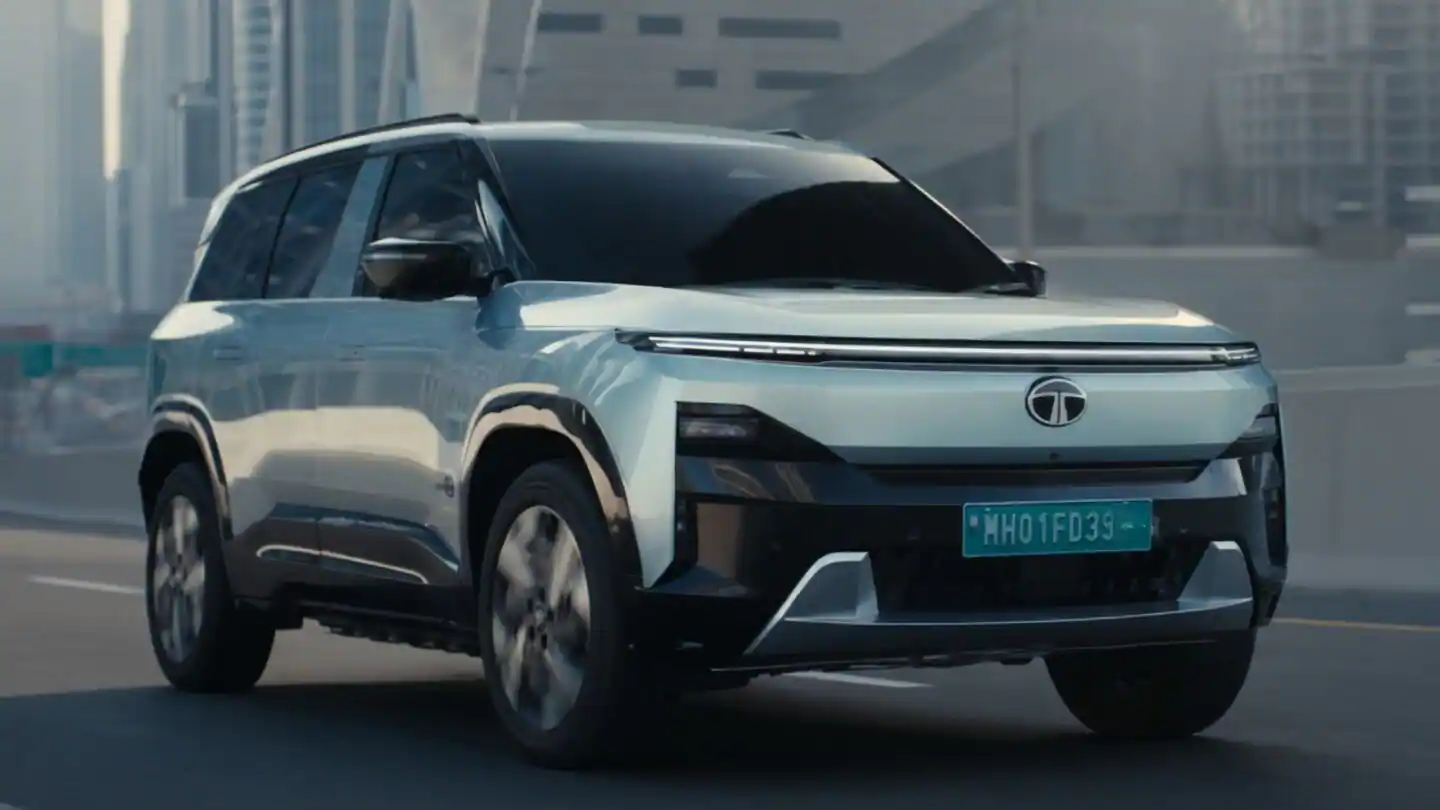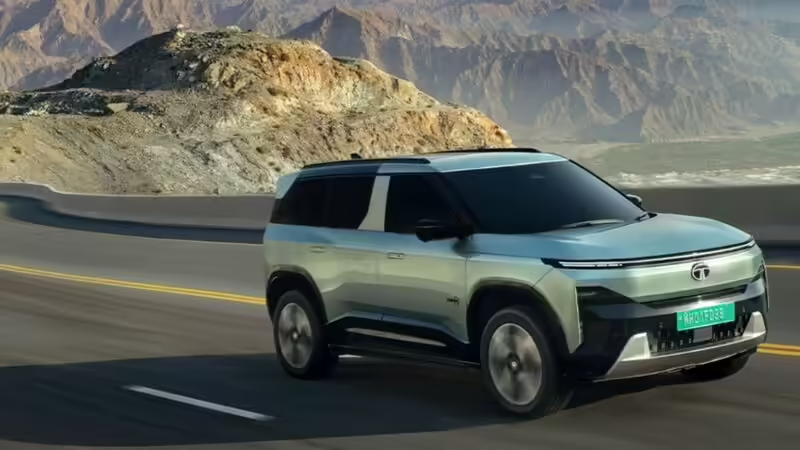
The Tata Sierra EV has arrived at a moment when Indian electric SUVs can no longer rely on a large battery, a dramatic front light bar and a claimed range number to make their case. Buyers now expect the complete package: usable charging, realistic range, proper cabin space, credible software, safety equipment and a price that remains defensible once insurance, registration, charger installation and finance costs enter the conversation.Tata Motors has launched the Sierra EV in India at an introductory ex-showroom price of Rs 18.79 lakh. The electric SUV sits above the Curvv EV and below the Harrier EV in Tata’s wider battery-electric range, but its role is more pointed than its placement suggests. It is meant to be Tata’s answer to buyers who want a midsize electric SUV with the upright shape and room of a family car, rather than the coupe-like silhouette of the Curvv EV or the larger footprint and higher price of the Harrier EV.About The AuthorJournalist and a writer with a strong interest in news, culture, technology, and human-interest stories. Passionate about making complex topics accessible and engaging.Bookings are open, and customer deliveries are scheduled to begin from July 15. Prices extend to Rs 25.99 lakh, ex-showroom, for the fully loaded 75kWh all-wheel-drive version. The optional 7. 2kW AC home charger and its installation cost another Rs 49,000, a detail buyers should include before comparing the Sierra EV with similarly priced rivals. The headline figures are substantial. Tata offers the Sierra EV with 63kWh and 75kWh lithium iron phosphate battery packs, a claimed MIDC range of up to 665km, DC charging at up to 120kW, vehicle-to-load and vehicle-to-vehicle capability, a triple-screen dashboard and an all-wheel-drive version that Tata calls QWD, or Quad Wheel Drive.But the 665km number needs context. It applies to the 75kWh rear-wheel-drive Sierra EV, not the QWD version. The all-wheel-drive model carries a 624km MIDC claim, while the 63kWh rear-wheel-drive Sierra EV is rated at 535km. Tata’s figures may make the Sierra EV a long-distance proposition on paper, but real-world range will vary with ambient temperature, speed, air-conditioning use, elevation, payload, tyre pressure and driving style. That distinction is central to whether the Sierra EV makes sense for a family planning regular intercity travel. Key TakeawaysTata Sierra EV prices start at Rs 18.79 lakh and rise to Rs 25.99 lakh, ex-showroom.The SUV gets 63kWh and 75kWh battery options, with claimed MIDC range figures of 535km, 624km and 665km depending on battery and drivetrain.The 665km claim belongs to the 75kWh rear-wheel-drive Sierra EV, while the QWD all-wheel-drive version is rated at 624km.Tata’s QWD version uses two motors, produces a claimed 504Nm of torque and has a claimed 0-100kmph time of 5.8 seconds in Boost mode.The Sierra EV supports DC charging at up to 120kW, with Tata claiming up to 263km of range can be added in 15 minutes.A triple-screen dashboard, 12-speaker JBL Black audio system, Level 2 ADAS, 540-degree camera, powered tailgate and V2L capability are available depending on variant.The Sierra EV is more expensive than the Tata Curvv EV but undercuts the larger Harrier EV, placing it directly against the Mahindra BE 6, Hyundai Creta Electric, Maruti Suzuki e Vitara, VinFast VF6 and MG ZS EV. Tata Sierra EV price in India: full variant-wise listMore articles by AuthorTrending StoriesThe Sierra EV is offered across five broad trims: Pure, Pure S, Adventure, Empowered and Empowered A. The exact drivetrain and battery availability changes with the trim.VariantBattery and drivetrainEx-showroom pricePure63kWh RWDRs 18.79 lakhPure S63kWh RWDRs 19.99 lakhAdventure63kWh RWDRs 20.99 lakhAdventure75kWh RWDRs 22.19 lakhEmpowered63kWh RWDRs 22.79 lakhEmpowered75kWh RWDRs 23.79 lakhEmpowered A75kWh RWDRs 24.79 lakhEmpowered A75kWh QWDRs 25.99 lakhAll prices are ex-showroom and exclude the optional 7. 2kW home charger plus installation package, priced at Rs 49,000. That table matters because the Sierra EV’s Rs 18.79 lakh starting price is only part of the story. The entry version gets the smaller battery and rear-wheel drive. Buyers looking for the 75kWh battery, the strongest range claim or QWD capability will enter a higher price band.At the upper end, the Sierra EV is close to the Mahindra BE 6 in price. Autocar India places the BE 6 between Rs 18.9 lakh and Rs 26.9 lakh, while the Hyundai Creta Electric sits between Rs 18.03 lakh and Rs 23.67 lakh in the comparison cited at launch. Tata’s Sierra EV is therefore not trying to win simply by being cheaper. It is trying to offer a particular combination of range, cabin room, family practicality and drivetrain choice. The more useful question for buyers is not whether the Sierra EV starts below Rs 19 lakh. It is whether the version they actually want remains good value once they add the larger battery, higher trim, home charger, insurance and accessories. Two battery packs, three range figures and why buyers should read them carefullyTata offers the Sierra EV with 63kWh and 75kWh LFP battery packs. LFP, or lithium iron phosphate, chemistry is generally valued in electric vehicles for thermal stability and durability, though it can be less energy-dense than some other battery chemistries. In simple terms, fitting a larger LFP pack can increase range, but it also adds mass and cost.The 63kWh Sierra EV is rear-wheel drive and has a claimed MIDC range of 535km. The 75kWh rear-wheel-drive Sierra EV carries the largest figure in the range: 665km. The 75kWh QWD model is rated at 624km because it powers both front and rear motors, which adds performance and traction but also uses more energy. The distinction corrects one of the most common errors in early Sierra EV coverage. The QWD model does not deliver 665km. The 75kWh rear-wheel-drive Sierra EV does.MIDC range is a laboratory-cycle figure. It provides a common benchmark for comparing cars, but it should not be treated as a guaranteed road-trip result. On an expressway with sustained triple-digit speeds, full air-conditioning and a car full of passengers, real-world range will be lower. Stop-start city traffic may improve efficiency because electric cars recover some energy through regenerative braking, though repeated acceleration, high cabin cooling demand and aggressive driving can reduce that advantage.CarWale reported that Tata estimates the 63kWh Sierra EV could deliver roughly 440km to 460km under its C75 real-world test framing. Tata has not publicly provided an equivalent C75-style figure for every Sierra EV configuration in the launch material cited here, so buyers should be cautious about extending that estimate directly to the 75kWh models. The practical takeaway is straightforward. The 63kWh Sierra EV may suit city use, weekend trips and regular highway travel with planned charging stops. The 75kWh rear-wheel-drive version makes the strongest case for buyers who cover long distances and want a wider buffer between charging sessions. The QWD version is for those who value performance and traction enough to accept a lower claimed range and higher price. What QWD means on the Tata Sierra EVTata calls its all-wheel-drive system QWD, short for Quad Wheel Drive. The name is marketing language, but the hardware is familiar: the Sierra EV QWD uses two electric motors, one on each axle.The rear-mounted motor produces 209hp and 315Nm, while the front motor adds 140hp. Tata quotes a combined peak torque figure of 504Nm. In Boost mode, the company claims the Sierra EV QWD can accelerate from 0-100kmph in 5.8 seconds. Torque in an electric vehicle is available quickly from low speeds, unlike in a petrol or diesel car where the engine must build revs and move through gears. That makes a dual-motor electric SUV feel strong in overtaking situations and when accelerating from a standstill. The appeal is not limited to traffic-light sprints. Extra traction can help on wet roads, loose gravel, steep inclines and uneven surfaces where a rear-wheel-drive vehicle may struggle to put down power cleanly.Tata has paired the QWD system with six terrain modes: Normal, Grass/Snow, Mud/Gravel, Sand, Rock Crawl and Custom. The SUV also gets low-speed cruise control and a 540-degree camera system, which combines the usual surround-view camera feed with an underbody view. These systems can help a driver judge wheel placement on broken roads, trail sections or tight urban parking ramps. They do not turn the Sierra EV into a hardcore off-roader, and buyers should not confuse terrain modes with the mechanical hardware of a traditional body-on-frame four-wheel-drive SUV. The Sierra EV’s 205mm ground clearance is useful for Indian roads, speed breakers and uneven driveway entries. But off-road capability depends on more than clearance. Approach angles, departure angles, tyre sidewalls, underbody protection, recovery points, water resistance and driver judgement matter too. The QWD Sierra may be more capable than a typical front-wheel-drive electric crossover, but Tata’s strongest advantage is likely to be confidence on poor roads and mixed conditions rather than extreme off-road use. Tata Sierra EV charging: how fast can it charge?The Sierra EV supports three primary charging routes: 3. 3kW AC charging, 7. 2kW AC charging and DC fast charging at up to 120kW.Tata claims that a 120kW DC charger can add up to 263km of range in 15 minutes. The company also says a 20 to 80 per cent charge can take around 26 minutes under suitable conditions. Those figures are useful, but only when read correctly. A car can draw its maximum advertised power only when the public charger can supply it, the battery is at an appropriate temperature, the battery state of charge is low enough, and the charging curve allows it. Charging naturally slows as a battery fills, particularly after about 80 per cent. For home charging, Tata quotes 10 to 100 per cent charging times of 8.9 hours for the 63kWh battery and 10.5 hours for the 75kWh battery using a 7. 2kW AC charger. That makes overnight charging the most sensible ownership pattern for buyers with private parking and a reliable electrical connection. This is where the Sierra EV’s buyer profile becomes clear. It is far easier to recommend to someone with a home charger than to an apartment resident who must depend entirely on public charging. A 665km claimed range is reassuring, but charging access remains more important than the headline number. An owner who can plug in overnight may rarely think about range. An owner who cannot may find even a high-range EV inconvenient after a few unplanned trips.The Sierra EV also supports vehicle-to-load and vehicle-to-vehicle functions. V2L lets the car power external equipment, while V2V allows it to transfer electricity to another compatible electric vehicle. CarWale reports that V2V output is rated at up to 5kW and V2L at 3. 3kW. That can be useful for camping equipment, tools, outdoor events, emergency lighting or charging another EV in a limited situation. It should be seen as an occasional utility feature, not a substitute for dependable charging infrastructure. Tata Sierra EV design: familiar Sierra shape, EV-specific detailsThe Sierra EV keeps the upright, boxy proportions of the internal-combustion Sierra. That is important because it distinguishes the SUV from the Tata Curvv EV, which has a more sloping roofline and coupe-SUV profile.At the front, the Sierra EV replaces the ICE Sierra’s gloss-black grille treatment with a closed-off body-coloured panel. The bumper design is different, with more gloss-black trim, while the front lighting arrangement and EV-specific badging make the electric version identifiable without abandoning the Sierra’s basic design language.The SUV measures 4,340mm long, 1,841mm wide and 1,715mm tall, with a wheelbase of 2,730mm. Tata quotes 205mm of ground clearance. Those numbers place the Sierra EV in the heart of the midsize SUV segment, where interior space and road presence matter as much as outright performance. The Sierra EV gets 18-inch alloy wheels on some variants, while higher trims move to 19-inch wheels. Larger wheels can improve visual presence and may sharpen steering response, but they can also make tyres more expensive and reduce ride compliance over rough urban roads. The better choice will depend on the specific tyre profile and suspension tune, which need a proper road test before a final verdict.Tata offers seven colour options: Rishikesh Rapids, Nainital Nocturn, Pristine White, Andaman Adventure, Pure Grey, Bengal Rouge and Coorg Cloud. Rishikesh Rapids and Nainital Nocturn are reserved for QWD variants, according to Tata’s launch information supplied with the announcement.The Sierra’s main design advantage is that it looks like an SUV with room for people and luggage. At a time when several electric SUVs use sharply raked rear glass and coupe-like silhouettes, that old-fashioned practicality may work in its favour.Triple-screen dashboard, but buyers should check the variant carefullyInside, the Sierra EV uses a technology-heavy dashboard led by three displays: a 10.25-inch digital instrument cluster, a 12.3-inch central infotainment touchscreen and a 12.3-inch passenger display.The triple-screen layout is central to the Sierra EV’s premium positioning. The driver gets vehicle information and navigation prompts. The central screen handles infotainment, settings and connected functions. The passenger display adds another layer of entertainment or information, though its real value will depend on how well Tata has controlled distraction and how many functions are genuinely useful during daily use.Tata says the cabin incorporates recycled plastic and other sustainable materials. That is relevant, but material claims need to be judged by finish quality, durability and how surfaces age in Indian heat, dust and high-use family conditions. A recycled surface deserves credit when it feels solid and lasts well. It should not receive a free pass merely because it has a sustainability label.Depending on variant, the Sierra EV offers ambient lighting, a panoramic sunroof, ventilated front seats, powered front seats, a powered tailgate, rear sunblinds, dual-zone climate control, a cabin air purifier, wireless charging, a head-up display, digital key support, connected-car technology and over-the-air software updates. It also gets a 12-speaker JBL Black sound system and Dolby Atmos support through Apple CarPlay. The feature list is long because Tata is trying to show that the Sierra EV belongs in the same conversation as premium electric SUVs from Mahindra, Hyundai and other rivals. Yet buyers should resist judging the cabin only by the number of screens and speakers. The bigger questions are whether the interface is quick, whether voice controls work reliably, whether wireless connectivity remains stable, whether the air-conditioning can cool the cabin effectively in peak summer and whether the software avoids the glitches that can quickly sour ownership of a connected car. Sierra EV safety: what is confirmed and what it does not meanTata has equipped the Sierra EV with six airbags as standard. Higher variants add Level 2 ADAS, a 540-degree camera system, electronic stability control, connected safety functions and other driver-assistance features.Level 2 ADAS does not mean autonomous driving. It usually refers to a combination of driver-support systems such as adaptive cruise control, lane-related assistance, collision warnings and emergency braking functions. The driver remains responsible for monitoring the road, steering environment and traffic conditions.That caveat is particularly relevant in India, where lane markings can be inconsistent, traffic may behave unpredictably and roads often combine pedestrians, two-wheelers, animals, parked vehicles and sudden construction diversions. ADAS can reduce workload in certain situations, but it is not a licence to disengage from driving.The Sierra EV also gets auto park assist, and Tata’s wider EV technology suite includes summon-style parking functions. These can be helpful in tight parking spaces, but the system should be treated as assistance rather than a replacement for checking surroundings. A 540-degree camera can improve visibility, particularly around kerbs, low obstacles and poorly lit parking areas, but the driver still needs to remain in control.Tata has not presented a new crash-test rating for the Sierra EV in the launch reporting reviewed here. Buyers should therefore avoid assuming any score from the ICE Sierra or another Tata product applies automatically to this exact electric version. Boot space, family use and why the Sierra EV may have a stronger case than the Curvv EVThe Sierra EV claims 622 litres of boot space when measured to the roof, or 450 litres to the parcel shelf. With the rear seats folded, total luggage space rises to 1,257 litres. For family buyers, that may be more useful than the headline acceleration figure. An electric SUV is often bought as the only car in a household. It must carry airport luggage, school bags, weekend shopping, a pram, office equipment and occasional relatives without making every journey feel like a packing exercise.The Sierra EV’s upright rear and boxier shape should make it easier to use than more style-led electric crossovers. It also provides Tata with a clearer internal division of roles. The Curvv EV remains the design-first choice. The Harrier EV is the larger, more expensive flagship. The Sierra EV sits between them as the practical, premium midsize electric SUV with a wider range of battery and drivetrain choices.That positioning is sensible, but it also means the Sierra EV faces pressure from both directions. Buyers who want the lowest Tata EV price may choose the Curvv EV. Buyers who want the largest Tata electric SUV may stretch to the Harrier EV. The Sierra EV must persuade buyers that its combination of practical shape, high claimed range and QWD option is worth choosing over both. Tata Sierra EV vs rivals: where it fitsThe Sierra EV enters a competitive part of the electric SUV market.The Mahindra BE 6 offers a dramatically different, more radical design approach and has become one of the strongest EV alternatives in this price range. Hyundai’s Creta Electric brings a familiar badge, widespread service network and conventional midsize-SUV packaging. Maruti Suzuki’s e Vitara arrives with the reassurance of a large dealer footprint and an established ownership proposition. The MG ZS EV has long been a known quantity for buyers wanting a practical electric family SUV. VinFast’s VF6 adds a newer brand to the discussion.Tata’s answer is breadth. The Sierra EV has a lower entry point than the Harrier EV, a more traditional SUV body than the Curvv EV, a 75kWh battery option, QWD capability, V2L and V2V functions, a feature-heavy cabin and a claimed range figure that is among the more attention-grabbing numbers in the segment. Still, buyers should compare like for like. A base Sierra EV should not be compared only with a top-end rival. The correct comparison is between the Sierra variant that has the battery, range, safety kit and charging equipment a buyer actually needs, and the equivalent version of the BE 6, Creta Electric, e Vitara or MG ZS EV.The Sierra EV’s strongest argument may be its 75kWh rear-wheel-drive version. It carries the highest 665km claimed range, offers a more practical body style than a coupe SUV and remains below the QWD flagship’s Rs 25.99 lakh price. The QWD version is more interesting for enthusiasts and buyers who regularly encounter poor roads, but its value depends on how much they actually need the extra traction and pace. Is the Tata Sierra EV worth buying?The Tata Sierra EV is compelling on paper because it addresses several of the questions Indian EV buyers now ask before they ask about range.Can it charge quickly on a highway? Tata says yes, at up to 120kW DC charging.Can it be charged at home? Yes, with 3. 3kW and 7. 2kW AC options.Can it work as a family vehicle? The upright body, 2,730mm wheelbase and claimed 622-litre boot suggest it can.Can it handle more than city driving? The 75kWh battery, 665km MIDC claim, 205mm clearance and QWD variant make a serious attempt at that brief.Can it feel premium? The triple-screen dashboard, JBL audio, ventilated seats, HUD and ADAS features clearly target that expectation.The unanswered question is how all of this behaves on Indian roads over time. Tata’s claimed range, charging performance, 0-100kmph time, feature operation and software functions need independent road testing. The Sierra EV should be judged on how efficiently it drives at highway speeds, how well its suspension handles broken roads, how stable its software is, whether its cabin remains quiet, how accurate its real-world range estimate is and how easy it is to charge away from home.For buyers with dependable home charging, the Sierra EV deserves a place on the shortlist. The 63kWh version may be enough for primarily urban use with occasional highway trips. The 75kWh rear-wheel-drive version appears better suited to those who want the most range. The QWD version is for buyers who value performance, traction, and additional all-weather confidence enough to spend more and accept the lower 624km claimed range.The Sierra name carries nostalgia. The Sierra EV cannot survive on nostalgia. It needs to prove that Tata can build an electric SUV that feels complete rather than merely well-equipped. On launch day, the numbers suggest the company has given itself a credible chance. Tata Sierra EV specifications at a glanceFeatureDetailsPriceRs 18.79 lakh to Rs 25.99 lakh, ex-showroomBattery options63kWh and 75kWh LFPDrivetrainsRear-wheel drive; QWD all-wheel drive on 75kWh flagshipClaimed range535km, 624km or 665km MIDC depending on versionHighest range version75kWh rear-wheel-drive Sierra EVQWD claimed range624km MIDCQWD torque504NmQWD claimed 0-100kmph time5.8 seconds in Boost modeDC fast chargingUp to 120kWClaimed DC range additionUp to 263km in 15 minutes20-80 per cent DC chargingAround 26 minutes, claimedHome charging3. 3kW and 7. 2kW AC7. 2kW charge time8.9 hours for 63kWh; 10.5 hours for 75kWhGround clearance205mmScreens10.25-inch driver display, 12.3-inch central display, 12.3-inch passenger displaySafety equipmentSix airbags standard; Level 2 ADAS and 540-degree camera on select versionsUtility featuresV2L, V2V, powered tailgate, digital key, OTA updatesDeliveriesFrom July 15 Frequently Asked Questions1. What is the Tata Sierra EV price in India?The Tata Sierra EV starts at Rs 18.79 lakh, ex-showroom, for the 63kWh rear-wheel-drive Pure variant. The range rises to Rs 25.99 lakh, ex-showroom, for the 75kWh QWD Empowered A variant. 2. Which Tata Sierra EV has the highest range?The 75kWh rear-wheel-drive Tata Sierra EV has the highest claimed range of 665km on the MIDC cycle. The 75kWh QWD all-wheel-drive version is rated at 624km, while the 63kWh rear-wheel-drive version is rated at 535km. 3. Does the Tata Sierra EV have all-wheel drive?Yes. Tata offers a 75kWh QWD version with a dual-motor all-wheel-drive system. It produces a claimed 504Nm of peak torque and can accelerate from 0-100kmph in 5.8 seconds in Boost mode, according to Tata. 4. What does QWD mean on the Tata Sierra EV?QWD stands for Quad Wheel Drive, Tata’s name for the Sierra EV’s dual-motor all-wheel-drive setup. It uses one electric motor at the front and another at the rear to improve acceleration and traction.5. How fast can the Tata Sierra EV charge?The Sierra EV supports DC fast charging at up to 120kW. Tata claims it can add up to 263km of range in 15 minutes and charge from 20 to 80 per cent in around 26 minutes under suitable conditions. 6. Does the Tata Sierra EV support V2L and V2V charging?Yes. The Sierra EV supports vehicle-to-load and vehicle-to-vehicle charging. V2L can power compatible external devices and appliances, while V2V can transfer energy to another compatible electric vehicle. 7. Is a home charger included with the Tata Sierra EV?The 7.2 kW AC home charger and installation are listed separately at Rs 49,000. Buyers should confirm installation requirements, local electrical capacity and final quotation with their Tata dealer. 8. Does the Tata Sierra EV have Level 2 ADAS?Yes, Level 2 ADAS is available on select Sierra EV variants. It remains a driver-assistance system, not autonomous driving. Drivers must remain attentive and in control at all times. 9. When will Tata Sierra EV deliveries begin?Tata Sierra EV deliveries are scheduled to begin from July 15. 10. Should I buy the Tata Sierra EV or the Tata Harrier EV?The Sierra EV is likely to suit buyers who want a practical midsize electric SUV with a lower entry price, strong claimed range and an available QWD option. The Harrier EV is larger and positioned higher in Tata’s EV line-up. The final choice should depend on the required cabin space, budget, battery option and whether all-wheel-drive capability is a real need.end of article
Tata Sierra EV launched at Rs 18.79 lakh: 665km range, QWD and the real reason it matters
Tata has unveiled the Sierra EV, an electric SUV priced from Rs 18.79 lakh. It presents two battery options, 63kWh and 75kWh, boasting an impressive range of up to 665km. Notable features include a sophisticated triple-screen dashboard, V2L/V2V functionality, and the choice of an all-wheel-drive QWD system. Deliveries are set to begin on July 15, targeting competitors such as the Mahindra BE 6 and Hyundai Creta Electric.
3,958 words~18 min read