1. The performance gap between top U.S. and Chinese AI models has largely closed, entering a phase of diminishing technological returns and resource concentration, per Stanford’s 2026 AI Index Report.[para. 1]2. The report highlights AI breakthroughs in scientific reasoning and coding nearing human levels, shifting focus from model scores to infrastructure growth, labor market changes, and environmental/safety challenges.[para. 2]3. Annual AI reports since 2017 show accelerated capabilities reaching wider demographics; industry leads with >90% of notable models, surpassing humans in doctoral science, multimodal reasoning, math, and coding (60% to nearly 100% of human baseline in one year).[para. 3]4. Gaps persist: AI wins IMO gold but reads analog clocks at 50.1% accuracy (vs. human 90.1%); robots hit 89.4% in simulations but 12% in real households.[para. 4]5. In science/medicine, specialized small models outperform massive LLMs in biology/genomics; AI aids healthcare but 50% of studies use exam questions, only 5% real patient data.[para. 5]6. Since 2025, U.S.-China models trade leaderboard tops: DeepSeek-R1 at 1,400 points trailed U.S. o1 by 0.4% (Feb 2025); by Mar 2026, Claude Opus 4.6 at 1,503 led Dola-Seed-2.0 by 2.7%.[para. 6]7. U.S. leads in top models (50 vs. China’s 30 in 2025) and high-impact patents; China excels in publications (41% of top 100 cited papers in 2024, up from 33% in 2021), citations, patents granted, robot installs; competition shifts to costs, reliability, specialization.[para. 7]8. U.S. has 5,427 AI data centers (>10x any other nation), but advanced chips depend entirely on Taiwan factories, exposing supply chain risks.[para. 8]9. U.S. appeal to global AI talent wanes: researcher/developer relocations down 89% since 2017, 80% drop in 2025 alone, lowest rate in over a decade.[para. 9]10. Global corporate AI investment doubled to $581.7B in 2025, generative AI at $170.9B (+200%); U.S. private $285.9B (23x China’s), China gov funds $184B (2000-2023); genAI adoption 53% population-level (Singapore 61%), faster than PCs/internet.[para. 10]11. Productivity rises 14-50% in customer support, dev, marketing, but erodes entry-level jobs; U.S. 22-25yo developers down ~20% from 2022 peak; 1/3 organizations anticipate AI-driven layoffs.[para. 11]12. AI’s environmental toll grows: Grok4 training emitted 72,816 metric tons CO2e; data centers at 29.6GW (NY state peak equivalent); GPT-4o inferencing water > needs of 12M people.[para. 12]13. AI incidents rose to 362 in 2025 (from 233 in 2024); safety/privacy gains trade off against accuracy/fairness; frontier models least transparent, hiding training code, params, datasets.[para. 13]AI generated, for reference only
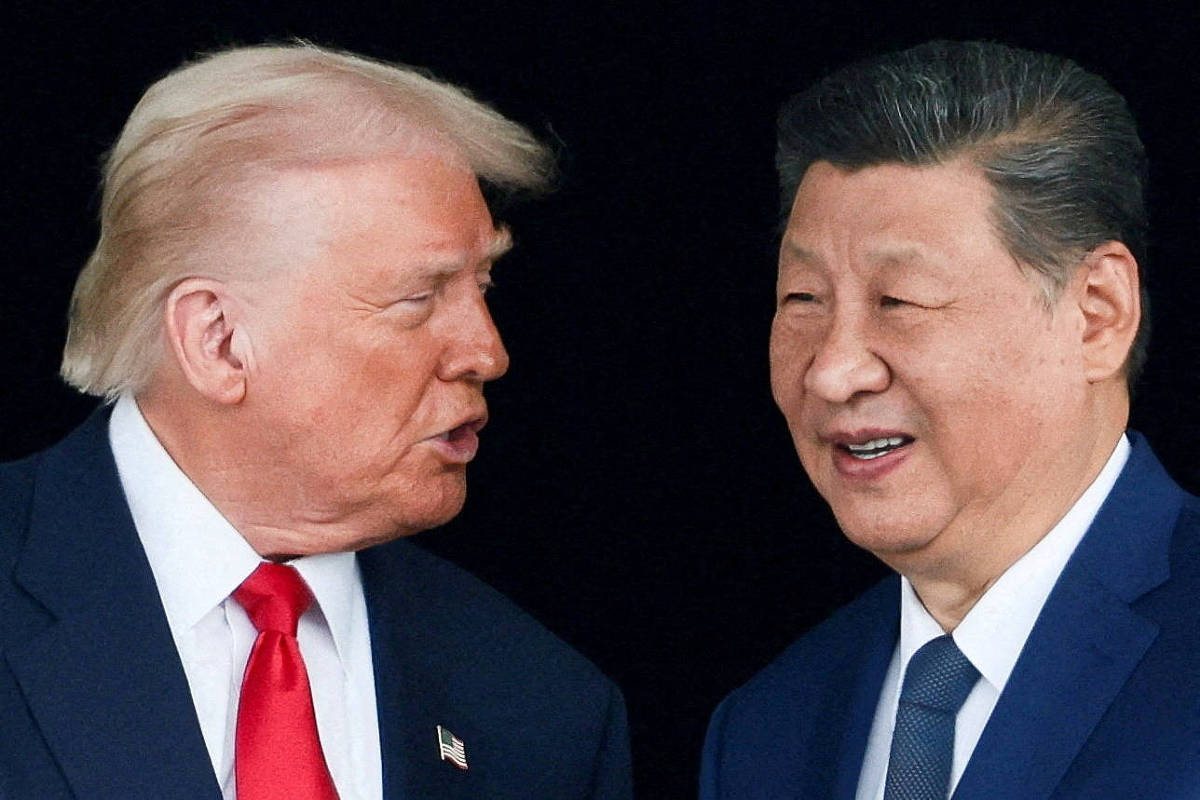
U.S. and China Reach Near-Parity in AI Model Performance, Report Finds
A new report from Stanford’s AI Institute reveals that the performance gap between leading U.S. and Chinese AI models has significantly closed
392 words~2 min read