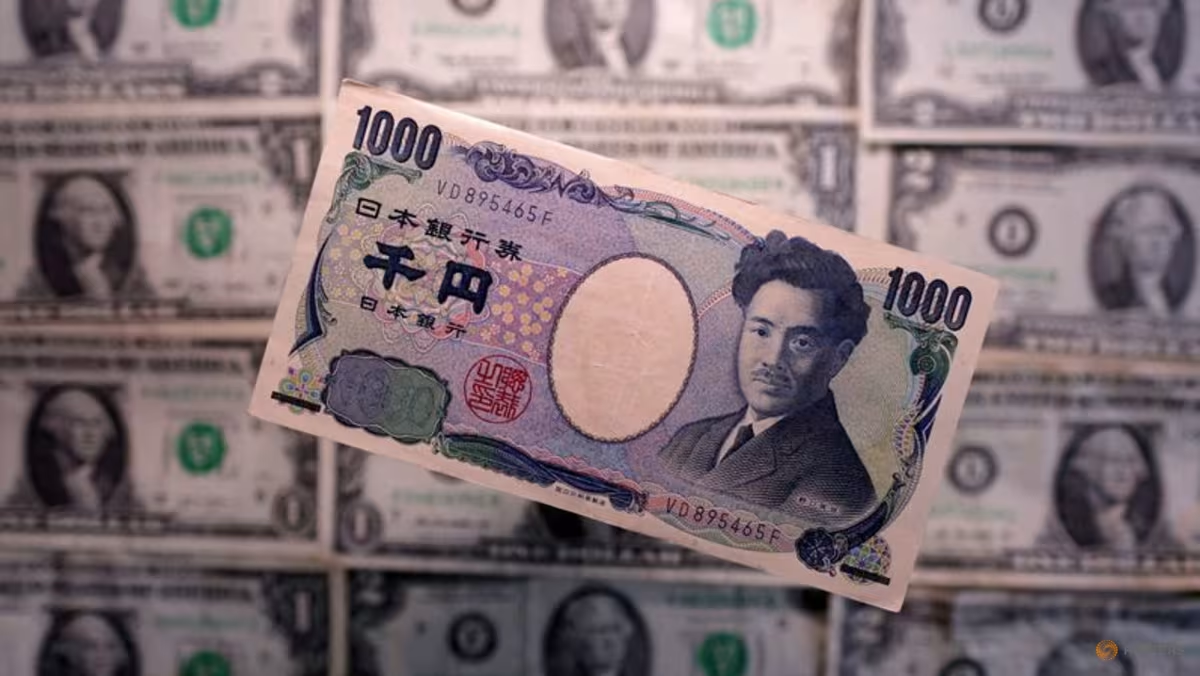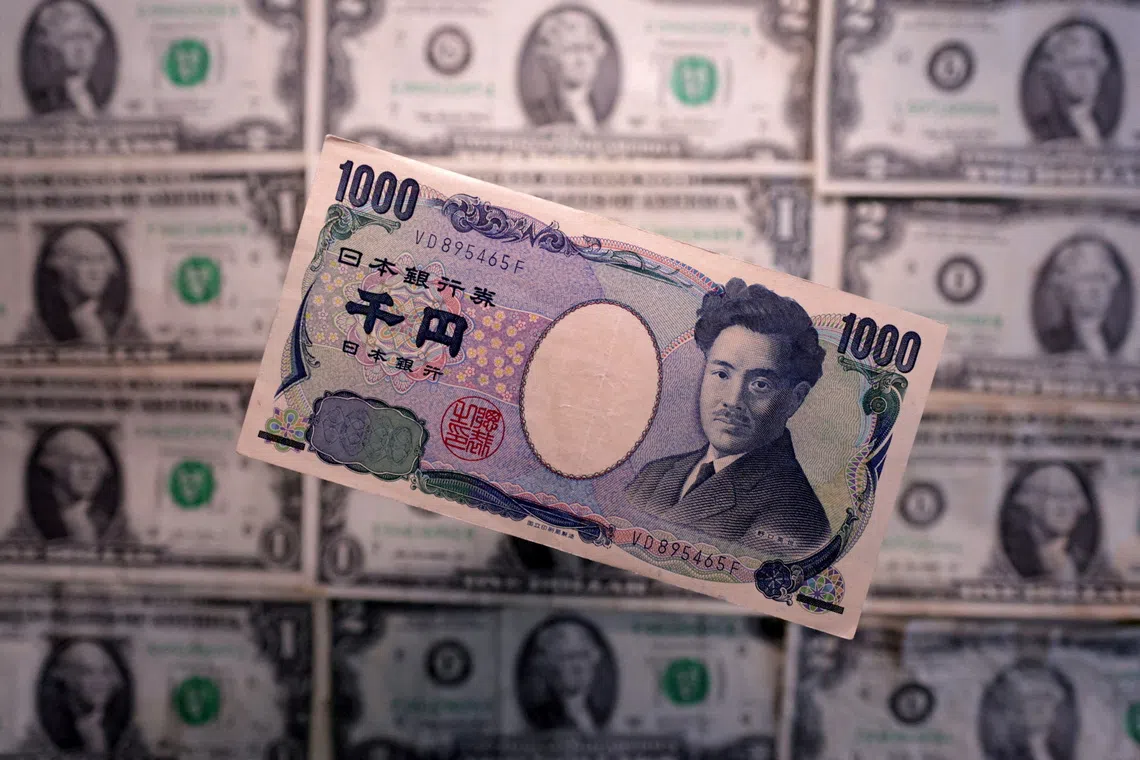
The yen rose on Monday, helped by comments from Bank of Japan Governor Kazuo Ueda who left the door open to a near-term rate hike. Javier Ghersi | Moment | Getty ImagesThe yen's slide to a fresh four-decade low is underscoring a difficult reality for Japan: it can spend billions defending its currency, but it may not be the Bank of Japan that ultimately pulls it out of the rut. The Japanese currency weakened to 162.83 against the dollar on Tuesday, its lowest level in 40 years, according to LSEG data. The drop has revived speculation that authorities could reenter the market after spending a record 11.7 trillion yen ($73.5 billion) in April and May buying their own currency.Yet investors and strategists told CNBC that intervention alone is unlikely to reverse the yen's decline as long as U.S. interest rates remain well above Japan's and the dollar stays broadly strong. The challenge for Tokyo lies less in its willingness to intervene than in the widening gap between the Federal Reserve and the BOJ. Stock Chart IconStock chart iconJapanese yen has weakened to a fresh 40 year low against the dollar"Intervention can slow a fall, punish speculative excess and signal official discomfort. But it cannot repeal arithmetic," said Christy Tan, global investment strategist at Franklin Templeton Institute. "As long as investors can borrow cheaply in yen and earn more in dollars, the carry trade will keep carrying the yen away," Tan added, referring to the strategy where investors borrow in low-yielding currencies such as the yen to buy higher-yielding assets, which has weighed on the Japanese currency. That arithmetic has become increasingly difficult for Japan to fight. The BOJ's latest rate hike to 1% marked a meaningful step in Japan's long exit from ultra-loose policy, but borrowing costs remain far below those in the U.S. A 'restrictive for longer' Fed?Markets are betting the Fed may keep monetary policy restrictive for longer, or even retain some room to tighten if growth and inflation pressures persist. "It appears that investors identify the core problem as the widening credibility gap between the Federal Reserve and the Bank of Japan," Tan highlighted.Currency moves appear to support that view. While the yen has weakened sharply against the dollar, the euro-yen cross has been relatively stable, suggesting that the latest pressure stems partly from broad dollar strength, rather than a loss of confidence in Japan's currency. Intervention can slow a fall, punish speculative excess and signal official discomfort. But it cannot repeal arithmetic.Christy TanGlobal investment strategist at Franklin Templeton InstituteThe yen has fallen about 3.9% against the dollar this year, compared with a decline of 0.9% against the euro, data from LSEG showed.Martin Schulz, chief economist at Fujitsu, said the dollar's strength has been an important driver of the yen's weakness."If we look at the yen-euro, for example, it is more stable," he said, adding that markets still view the BOJ as lagging behind other central banks. For Tokyo, that complicates the effectiveness of any unilateral intervention. Analysts highlighted that Japan can curb speculative positioning and slow the speed of the move, but without a shift in U.S. rates or a coordinated response involving Washington, any rally in the yen could prove short-lived.Vincent Chung, co-portfolio manager for diversified income bond strategy at T. Rowe Price, said markets are likely watching the 162-163 range for signs of intervention, which he believes will happen soon."If intervention comes only from Japan while the dollar remains broadly strong, I think it may have limited effectiveness," Chung said. "Historically, coordinated intervention involving other central banks, particularly the U.S., has tended to create a much stronger reaction in the yen." Tokyo wants a stronger yen without fully accepting the policy costs of one.Christy TanGlobal investment strategist at Franklin Templeton InstituteAlexandre Drabowicz said a similar threshold may be forming around 164 or 165, but also warned that past interventions had not been very effective. "To be really effective, you need coordination between the U.S. and Japan," he said. The yen's weakness is not necessarily a straightforward negative for Japan Inc. A cheaper currency boosts the value of overseas earnings and benefits exporters, helping explain why Japanese stocks have remained resilient despite the currency's decline. Schulz said Japanese manufacturers continue to benefit from the weak yen, while the latest BOJ's quarterly Tankan survey, which measures business sentiment, pointed to stronger-than-expected confidence among large manufacturers.But the costs are mounting. A weaker yen lifts import prices, squeezes household budgets and risks fueling inflation expectations.That creates a difficult policy tradeoff for Prime Minister Sanae Takaichi's government, which is pushing investment and growth while relying on subsidies to cushion households from higher energy and food costs."Tokyo wants a stronger yen without fully accepting the policy costs of one," Franklin Templeton Institute's Tan said.
Japan spent $74 billion propping up the yen. Investors say the real battle is with the Fed
Yen intervention alone is unlikely to reverse losses while wide U.S.-Japan rate differentials keep supporting the dollar, said analysts.
794 words~4 min read