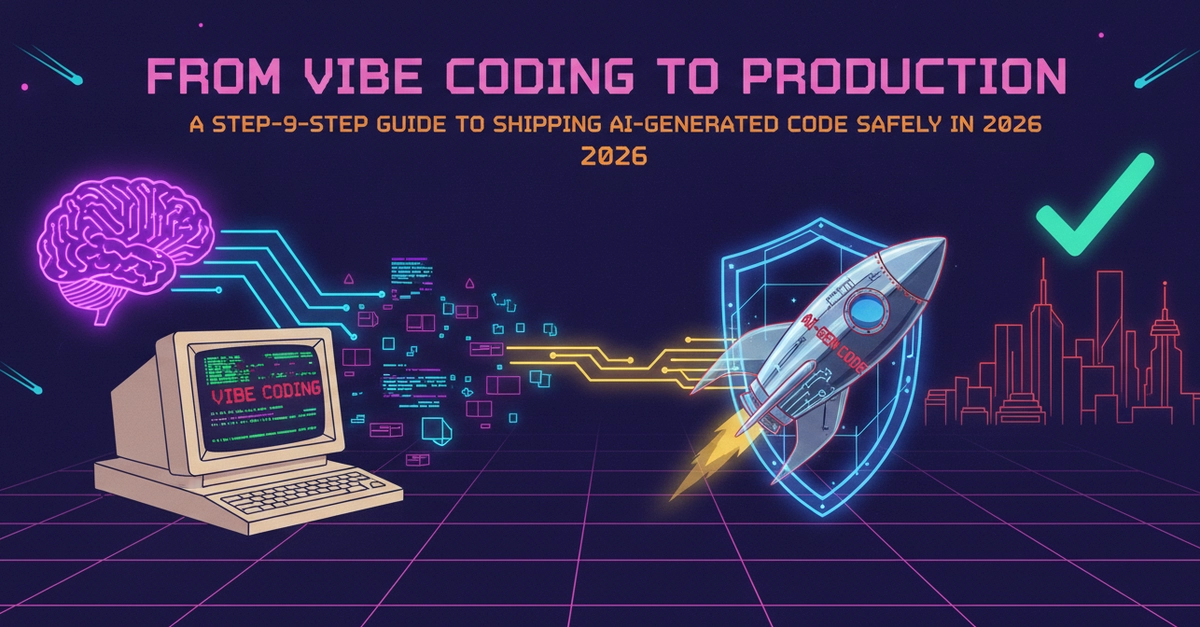
Here's an uncomfortable truth nobody wants to admit out loud: most teams can generate a working app in minutes now, but almost none of them can ship it to production without breaking something important. Only a small fraction of organizations have actually moved their AI-built systems past the pilot stage. The gap between "it works on my machine" and "it works for real users" has never been wider, and closing that gap is quickly becoming the single most valuable skill a developer can have this year.
If you have been prompting your way to a working prototype and then hitting a wall when it's time to actually deploy, this guide walks through exactly how to close that gap, with working examples at every step.
Why This Matters Right Now
Vibe coding, meaning describing what you want in plain language and letting an AI model scaffold the implementation, has gone from a novelty to a default workflow. Developers are shipping REST APIs, auth flows, and full CRUD apps with a single well-written prompt. But speed of generation is not the same as readiness for production. Untested edge cases, missing validation, weak error handling, and security gaps show up constantly in AI-generated code because the model optimized for "looks correct" rather than "survives real traffic."