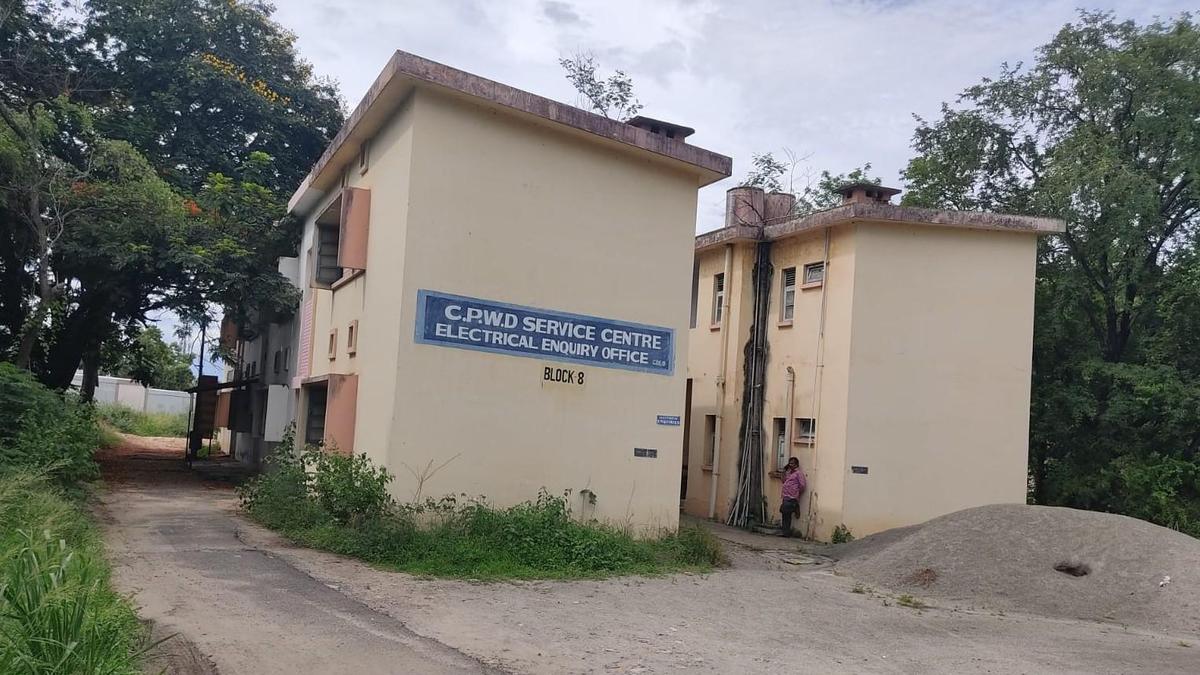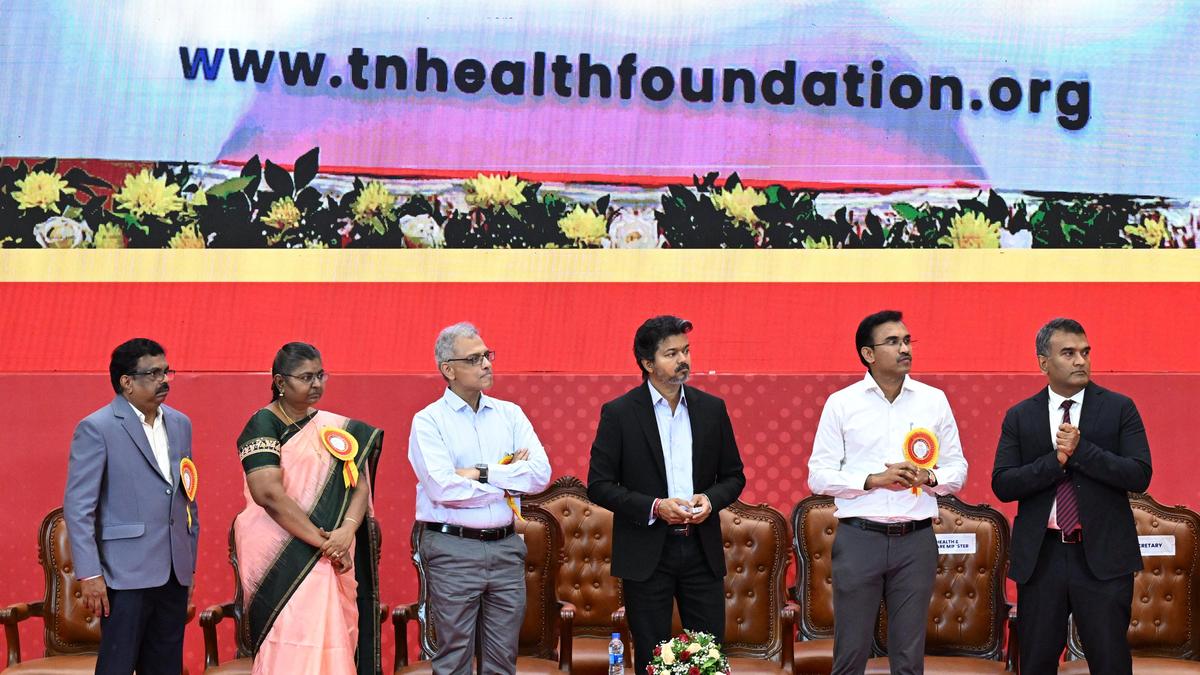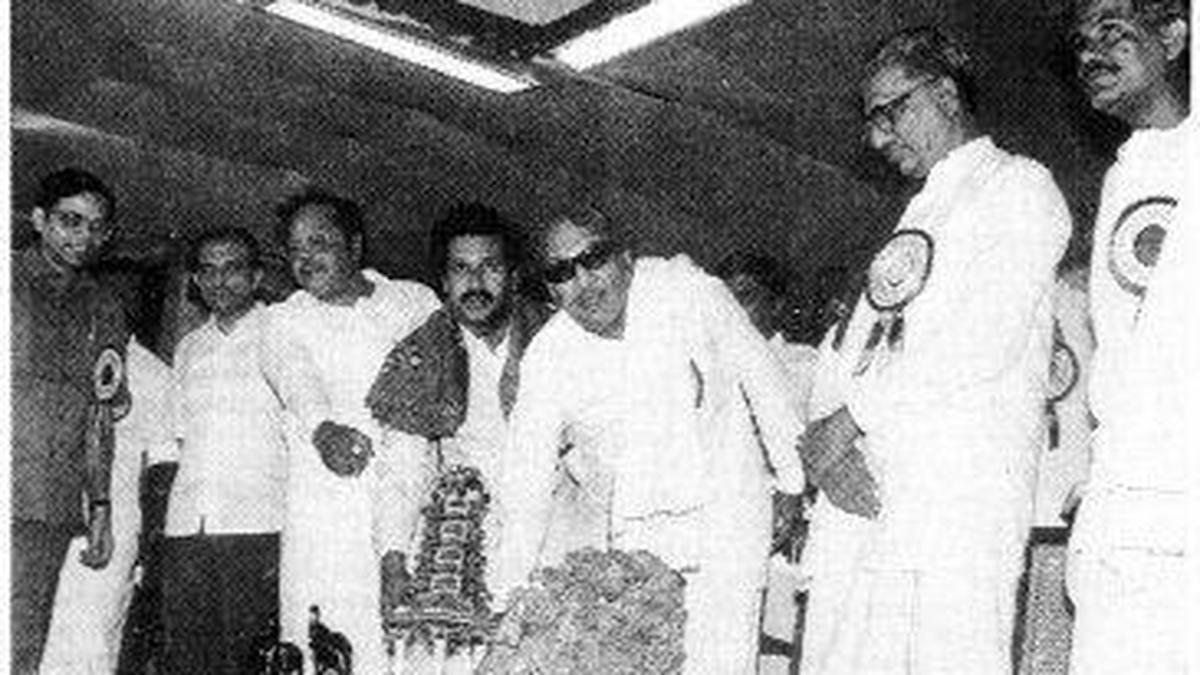
Tamil Nadu’s yearning for an AIIMS-type institution, as reflected in Chief Minister C. Joseph Vijay’s recent request to Prime Minister Narendra Modi for establishing a second AIIMS, is nothing new.In 1989, the DMK government had taken over the privately-established Sri Ramachandra Medical College and Research Institute (popularly called SRMC) in Porur, Chennai. [The institution is now a deemed to be university under the name Sri Ramachandra Institute of Higher Education and Research – SRIHER.] After the take over, the government had established the Tamil Nadu Arasu Medical Science and Research Institute (TAMARAI).At the inauguration of the TAMARAI in July that year, Chief Minister M. Karunanidhi said his government was determined to make it a centre of excellence on the lines of the All-India Institute of Medical Sciences (AIIMS) in New Delhi and the Post-Graduate Institute of Medical Education and Research, Chandigarh.Presently, Madurai has been earmarked for the State’s first AIIMS. The Institute has been functioning at a temporary space on the campus of the Ramanathapuram district’s government medical college. It is expected to be moved soon to Thoppur, where 200-odd acres have been allotted for the institution and the construction of civil structures is progress.That SRIHER was under the State government’s control for three years is a less-talked about story.When the AIADMK regime, headed by M.G. Ramachandran, was in office during the 1980s, the permission to open a self-financing medical college to the Trust was given through an order issued in July 1985. Two other private medical colleges – one in Coimbatore and another in Chidambaram – were also sanctioned by the authorities, marking a shift in the policy of the State government. Billed as the first of its kind in Tamil Nadu, the move marked the process of opening up of higher education in the State. On September 11, 1985, MGR declared open the SRMC.Exactly five months after the DMK returned to power in January 1989, the government had announced it had decided to take over the medical college, which was run by the Sri Ramachandra Educational and Health Trust with N. P. V. Ramasamy Udayar as managing trustee (The Hindu, June 27, 1989).The DMK government’s decision followed the Trust’s acceptance of Karunanidhi’s “desire” that the college be run by the government and that the Tamil Nadu Dr. M.G.R. Medical University be located on its campus, stated a release of the government issued on June 26, 1989.Originally, the Trust received permission of the State government, through an order in December 1987, for acquiring and holding about 269 acres in various villages in the then composite Kancheepuram district under the Land Ceiling Act. Of this land, around 126 acres had been classified government poromboke land. It was for the purpose of alienating approximately 108 acres of the poromboke land to it that the Trust approached the government on June 16, 1989, according to the Madras High Court’s verdict of July 7, 2023 in the Scm Silks Private Limited vs The State Of Tamil Nadu case, wherein the Trust was one of the respondents.At the time of the government’s acquisition, the medical institution had occupied 176 acres, of which122 acres belonged to the State government and 54 acres were purchased from private owners. The news report of June 1989 further stated that “according to the latest balance sheet, about ₹ 34 crore had been spent on establishing the medical college and research centre. Of this, about ₹10 crore represented donations collected; ₹ 9 crore had been taken as secured loans from recognised financial institutions on which accumulated interest was ₹ 2 crore. Another ₹ 12 crores was raised as unsecured loans from private sources.”The report added that in view of its decision to take over the institution, the government had accepted responsibility to repay in instalments ₹11 crore due to public financial institutions. A committee of officials would be set up to examine the nature of expenditure met from the money borrowed from private persons and organisations. Based on the panel’s findings, the government would decide about repaying the “unsecured loans.”Before the formal inauguration of the TAMARAI on July 12, 1989, the DMK regime had constituted a committee of senior and widely respected doctors, including B. Ramamurthy, Dante Mathuranayagam, A. Venugopal, A. S. Tambiah, S.S. Badrinath, N. Rangabashyam, S. Krishnamurthy, and K. V. Thiruvengadam to advise the newly-established institution.When the AIADMK’s senior leader and former Education Minister C. Aranganayagam had accused the DMK government of “vindictiveness” in the matter, the denial promptly came from the DMK’s general secretary K. Anbazhagan, who handled the subject of education during the DMK’s regime (1989-91 and 1996-2001).Initially, the issue of compensation became a subject of litigation between the Trust and the government. In April 1991, the Madras High Court directed the authorities to pay compensation to the Trust for taking over the medical college. Justice K. S. Bakthavatsalam, disposing of two writ petitions filed by the managing trustee of the Trust Ramaswamy Udayar, said if the compensation amount was not arrived at and paid within three months it was open to the petitioner to initiate appropriate proceedings against the State. If the petitioner was aggrieved at the quantum fixed by the State government it was open to him to challenge the same.Simultaneously, in another case, the High Court asked the government to collect fees uniformly from all the students of the TAMARAI, from 1991- 92 irrespective of their date of admission. This order was passed, while disposing of a writ petition filed by 350 students of the TAMARAI, challenging the discrimination in the fees collected from students admitted during 1990-91 and those admitted prior to 1990-91.In July 1992, a Division Bench of the Court quashed the government’s order taking over the college. The Bench, comprising Justice K.Venkataswamy and Justice Abdul Hadi, said the takeover of the college was vitiated by mala fide since it was made at the instance of the then DMK government (The Hindu, July 22, 1992). The Bench said the resolution of the Trustees agreeing to the takeover of the college by the government was not voluntary. The takeover was “rushed through” by the then Chief Minister [Karunanidhi] after calling the Trustees to his chamber. Even assuming that the resolution of the trustees was valid, it was not good in law since the Government had encouraged the Trust to set up the medical college and had granted exemption for land under the Land Ceiling Act, the report added, quoting the Bench as having observed.Following this the ownership of the institution was restored to the Trust.Interestingly, over 15 years later, Karunanidhi was admitted to SRIHER in January 2009 when he developed acute backache.
How an attempt by Tamil Nadu to create an AIIMS-like facility failed to take off decades ago
Explore Tamil Nadu's historical struggle to establish an AIIMS-like facility, highlighting past attempts and current developments in Madurai.
1,100 words~5 min read