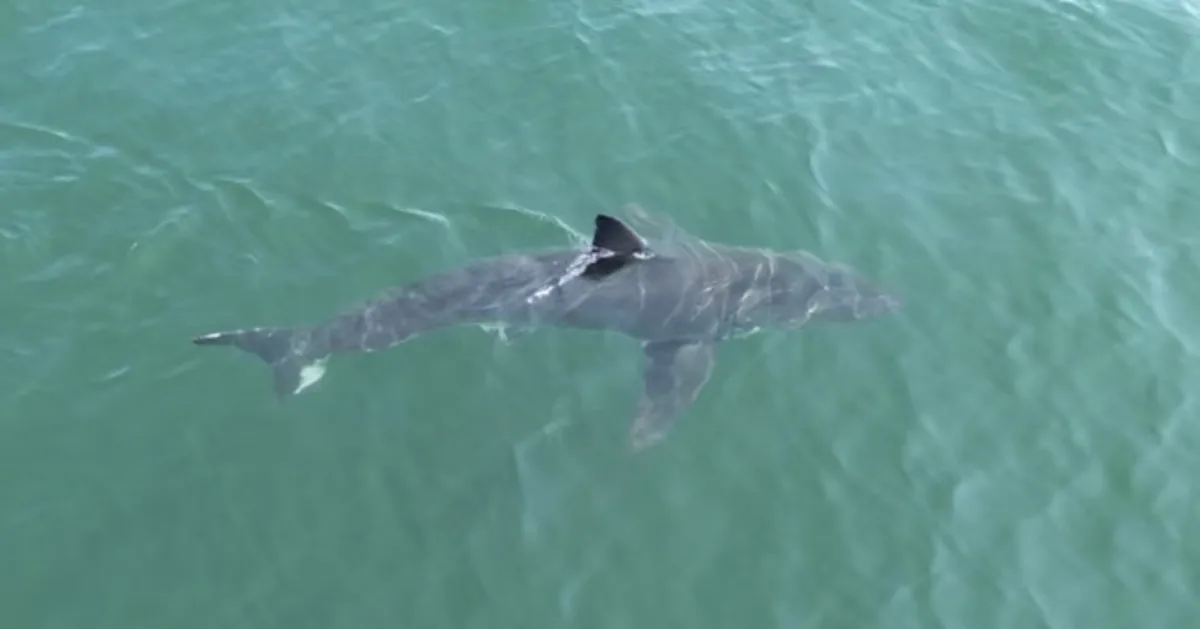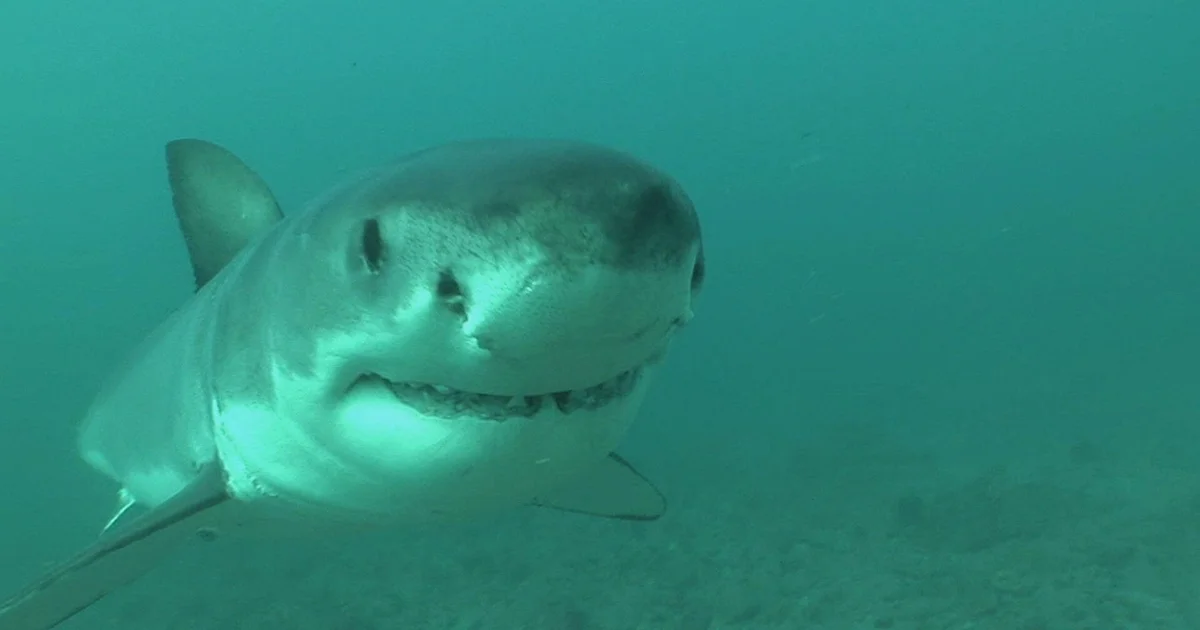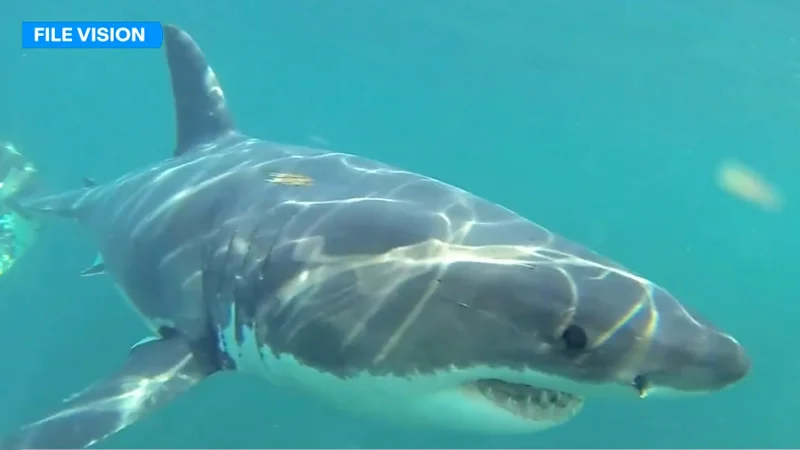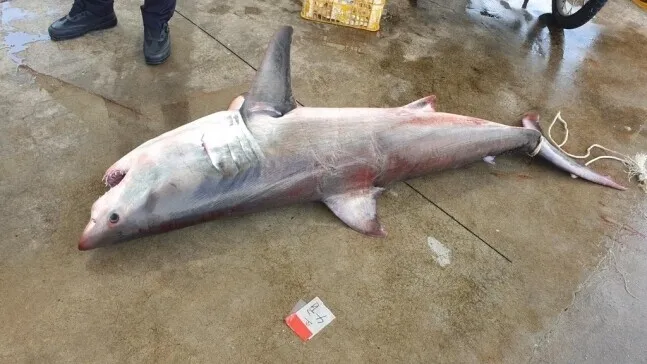
A great white shark that was found 2.7 kilometers off the coast of Sokcho’s Jangsa Port on June 23. (courtesy of the Sokcho Coastguard Station)
South Koreans are being urged to show extra caution during this year’s beach season following the discovery of aggressive sharks in their surrounding waters — including great whites, a species made infamous by the film “Jaws.”The Sokcho Coast Guard Station announced Sunday that it had implemented “reinforced safety management posture” measures after the recent sightings of different species of shark in the waters under its jurisdiction.At around 5:40 am on Saturday, a fishing boat operating in the waters around 7.5 km east of Susan Port in Yangyang County, Gangwon Province, found a dead shark caught in a net. It measured 210 cm in length and 120 cm in circumference.After consultation with an expert institution, it was concluded that the animal was a relatively non-aggressive salmon shark.Fishers reported the discovery of another dead shark around 5.1 kilometers off Sokcho Port at 4:20 am on June 23. At approximately 7:30 the same morning, another dead shark was found by fishers 2.7 km off of Jangsa Port, roughly two kilometers north of Sokcho Port.Measuring 240 cm long and 180 cm around, the shark found off Sokcho was believed to be a salmon shark, the same species found near Susan. But the other shark found off Jangsa — measuring 195 cm long and 95 cm around — was a great white, a species that is known to attack humans.Great whites are considered the premier example of sharks that can be fatally aggressive toward humans. They are categorized as the most ferocious of the sharks, with maximum lengths of around 650 cm.Great white sharks are responsible for many of the attacks on humans that take place at beaches and in the sea around the world.The problem is that sightings of great whites around South Korea are increasingly common.