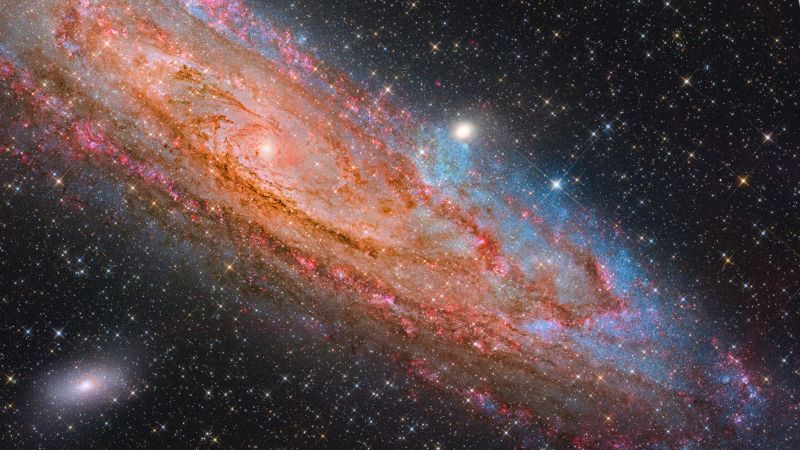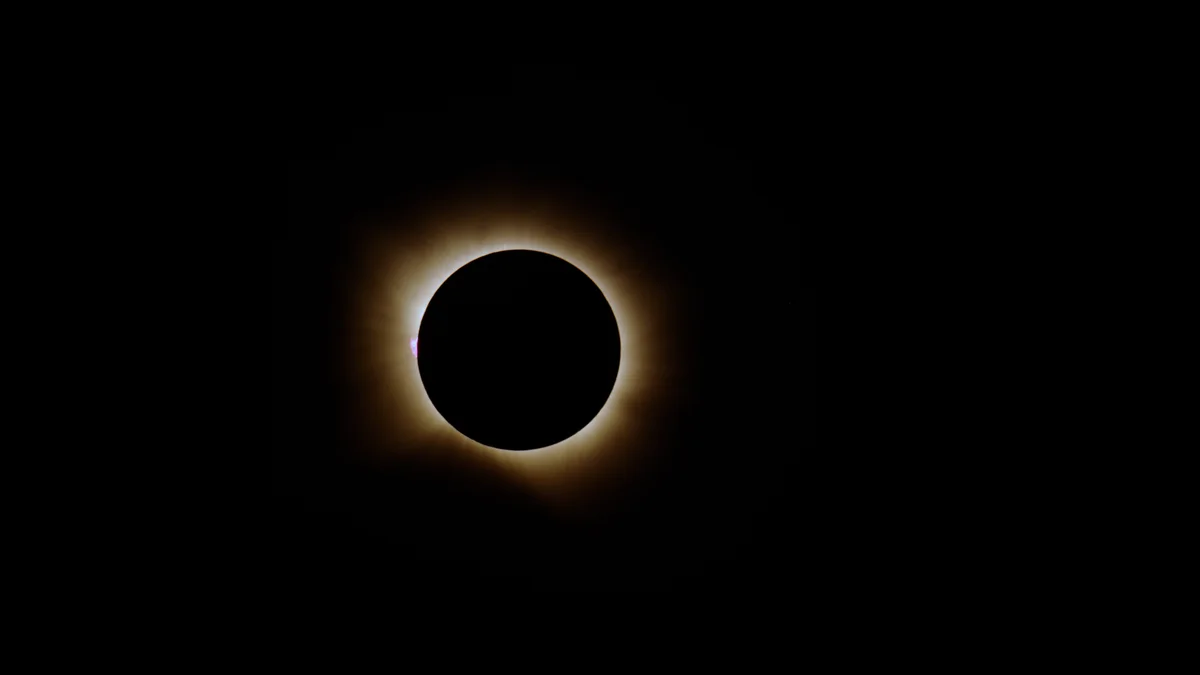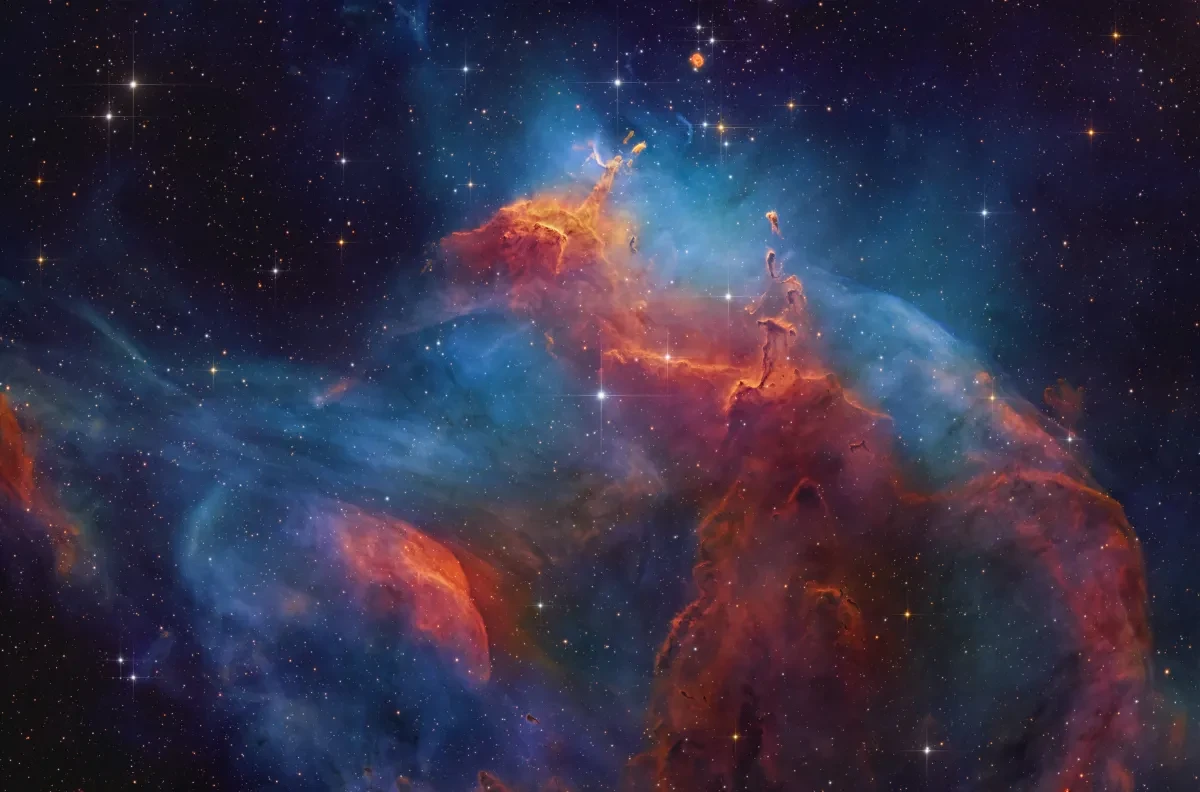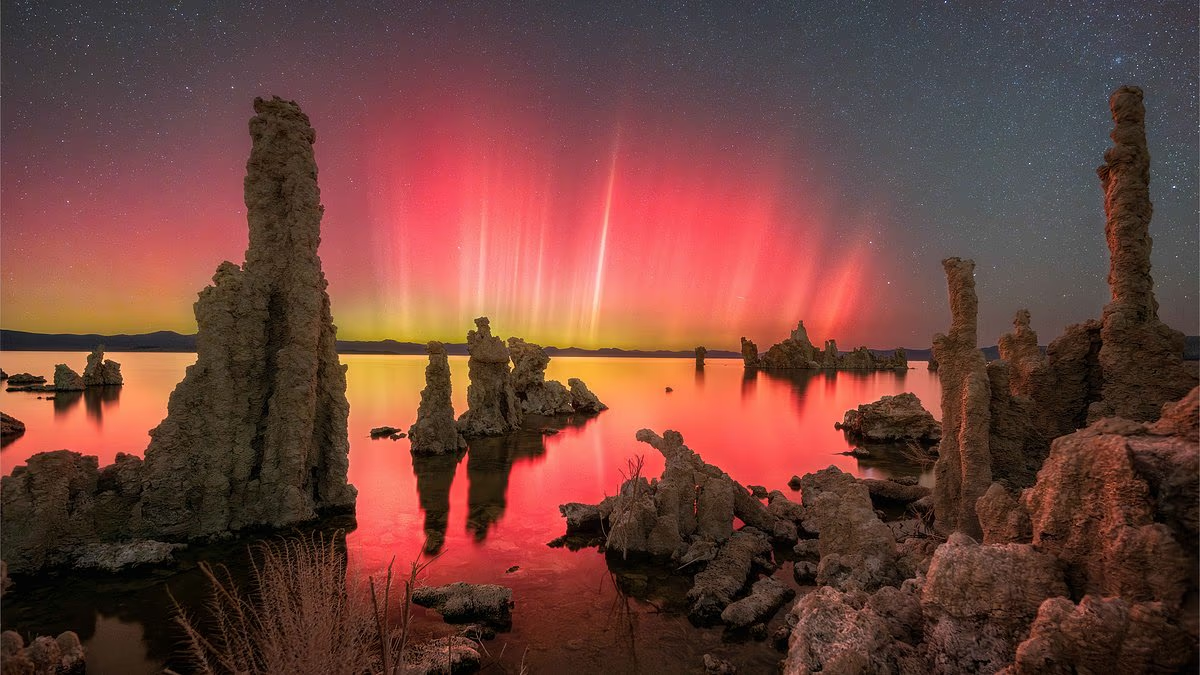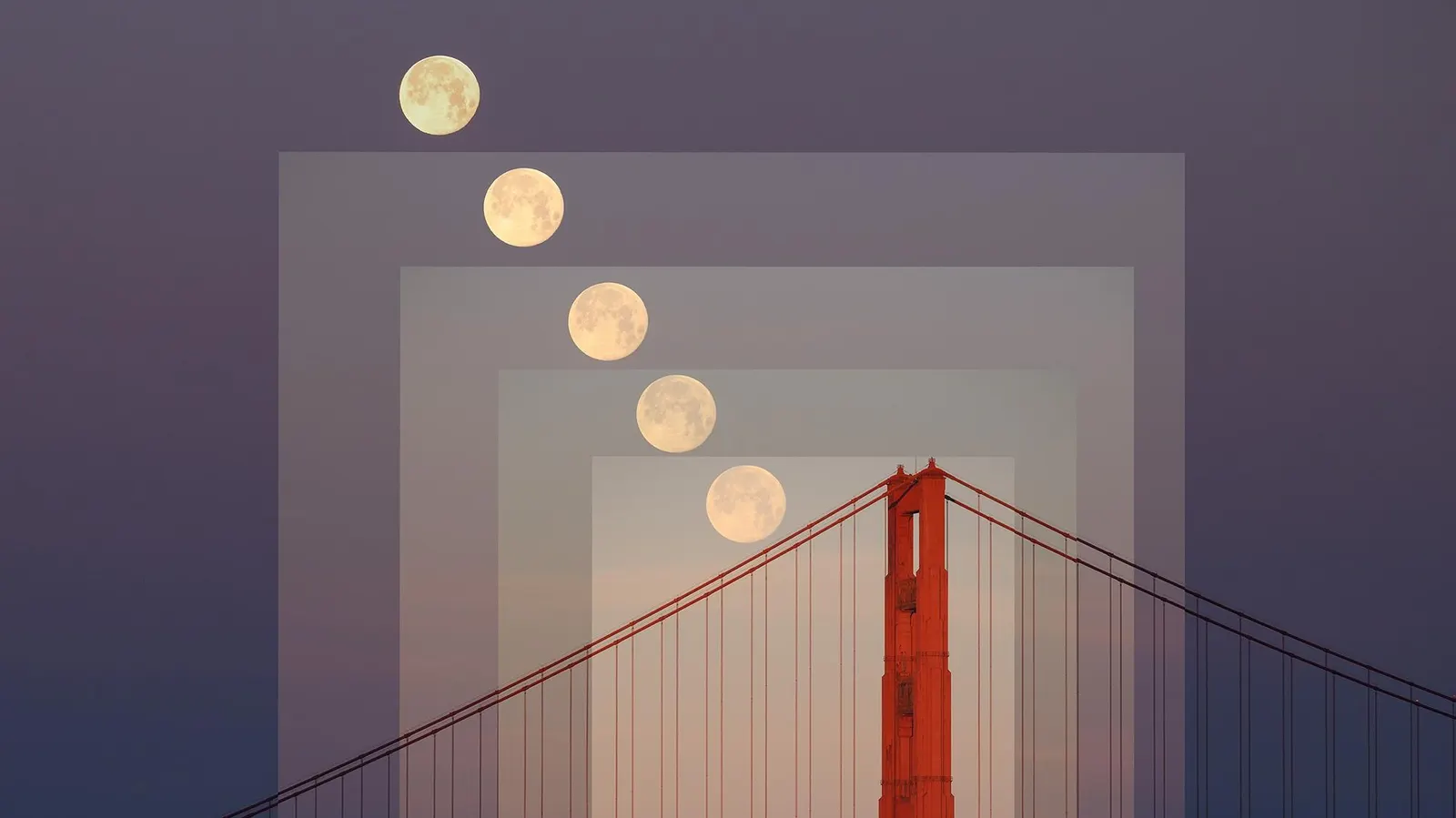
Here, the partial solar eclipse of 2025 was shot through fast-moving clouds on what was a beautiful spring morning. James McBeath spent several hours in a local park tracking the eclipse with his camera, showing many passers-by what he was doing and giving them a good view of the eclipse. McBeath ended up with hundreds of shots, but this one, with the clouds framing the Sun perfectly, immediately caught his eye.James McBeathLondon’s Royal Observatory Greenwich has announced the shortlisted images for the annual ZWO Astronomy Photographer of the Year contest, showcasing some of the world’s most striking views of the night sky, aurorae, solar eclipses, moonrises and deep-sky sights.Now in its eighteenth year, the international competition celebrates the skill and imagination of amateur and professional astrophotographers from across the world. The 2026 contest attracted almost 4,000 entries from 66 countries.The overall winner will receive $13,200, with category winners awarded $2,000. Runners-up, highly commended entrants and special prize winners will also receive cash prizes.Martin Giraud chose to photograph the first Full Moon of the year over the Paris skyline. The Eiffel Tower was 6.3 km (3.9 miles) away from their position, and the Sacré-Cœur Basilica was 11.1 km (6.9 miles) away. This explains why the Moon appears so large in the frame. The location offered the perfect alignment between the buildings and the rising Moon.Martin GiraudAstronomy Photographer of the Year: HighlightsThis year’s shortlist includes dramatic images of nebulae, wide-field views of the Milky Way, meteor showers, lunar scenes, aurorae and solar eclipses from across the world. As such, it also highlights the rise of astrotourism, with photographers traveling to coastlines, waterfalls, cities and dark-sky locations in search of precise alignments and fleeting celestial events.One of the standout astronomical moments featured in the shortlist is the partial solar eclipse of March 29, 2025, which was visible from the U.K., Europe and parts of the U.S. and Canada. British photographer James McBeath’s “Moody Partial Solar Eclipse” captures the sun behind fast-moving clouds in Leeds, West Yorkshire, after he spent several hours in a local park tracking the event and sharing views of it with passers-by. MORE FOR YOUYifan Cao witnessed a major aurora outburst in Iceland, during which the whole sky shone green, red and purple. Goðafoss Waterfall is a famous scenic spot that is strongly linked to Norse mythology.Yifan CaoAstrotourism Takes Photographers Around The WorldOther shortlisted works underline how closely astrophotography is tied to place, timing and travel. In Iceland, Yifan Cao’s “Colorful Aurora and Waterfall” captures a major aurora outburst above Goðafoss Waterfall in Þingeyjarsveit, where the sky glowed green, red and purple above a landmark strongly associated with Norse mythology.In France, Martin Giraud’s “Supermoon Path Over Paris at Sunset” shows the first full moon of 2026 rising over the Paris skyline, with the Eiffel Tower and Sacré-Cœur Basilica aligned in the frame from a viewpoint in Meudon, Île-de-France. The long distance to the landmarks helps explain why the moon appears so large against the city.This composite image shows five separate captures of the setting Full Moon, taken as the sky changed from a deep blue, in which the pinkish glow known as the Belt of Venus was visible, to full golden-hour illumination. Fredric Walder attempted to show the evolution of both the colour and luminosity of the sky by keeping the lunar disc approximately the same brightness in each section.Fredric WalderMoonrises Frame Famous LandmarksIn San Francisco, Fredric Walder’s “Fifteen Minutes of Moonset and Sunrise Over the Golden Gate” combines five separate captures of the setting full moon as the sky changed from deep blue to golden-hour light. The composite shows the moon setting over one of the world’s most recognizable travel landmarks.In Aotearoa New Zealand, Evan McKay photographed “Te Hoho Rock Moonrise” at Cathedral Cove in Waikato, North Island. With only a small window before moonrise, McKay used the moonlight to illuminate the foreground while blending in a separate sky panorama to bring out the nebulae above the coastal landscape.Japan also features prominently in the shortlist. Yoshiki Abe’s “The Celestial Gate” frames a solitary torii gate at Nata Beach in Kitsuki, Ōita Prefecture, with the M8 and M20 nebulae shimmering in the background. The image turns a sacred coastal site into what appears to be a portal to the heavens.On this particular night, Evan McKay had only a small window to capture the sky before the Moon started to rise. McKay polar-aligned his mount during twilight and then began shooting the sky panorama from this location. The moonlight provided the best of both worlds and did a fantastic job of lighting up the foreground. To enhance the sky, McKay captured a separate panorama using a dual narrowband filter and blended it in to bring out the nebulae.Evan McKayAstronomy Photographer Of The Year: CategoriesThe categories include Skyscapes, Aurorae, People and Space, Our Sun, Our Moon, Planets, Comets and Asteroids, Stars and Nebulae, Galaxies, and ZWO Young Astronomy Photographer of the Year. The judges will also award the Sir Patrick Moore Prize for Best Newcomer and the Annie Maunder Open Category prize.The winners of the competition’s nine categories, two special prizes and the overall prize will be announced on Sept. 17, 2026.The winning photographs will then go on display at the National Maritime Museum in London from Sept. 18, 2026, alongside a selection of the best shortlisted images.At Nata Beach, a solitary torii gate stands amid the waves. It marks a sacred site where one of the Japanese deities is said to have first descended to Earth. With the M8 and M20 nebulae shimmering in the background, the gate appears as a true portal to the heavens.Yoshiki AbeAstronomy Photographer Of The Year: ExhibitionThe exhibition will open at the National Maritime Museum in London on Sept. 18, giving visitors the chance to see the winning images and selected shortlisted photographs.The competition is run by Royal Observatory Greenwich, supported by ZWO and in association with BBC Sky at Night magazine.“At ZWO, we believe astrophotography is not only a means of recording the cosmos, but also a way to inspire curiosity, nurture learning and bring people together through a shared sense of wonder,” said Sam Wen, founder and CEO of ZWO.Wishing you clear skies and wide eyes.
29 Stunning Space Photos Revealed By Astronomy Photographer Of The Year
Astronomy Photographer of the Year 2026 shortlist features eclipses, nebulae, aurorae and Milky Way images ahead of the September winners announcement.
1,032 words~5 min read