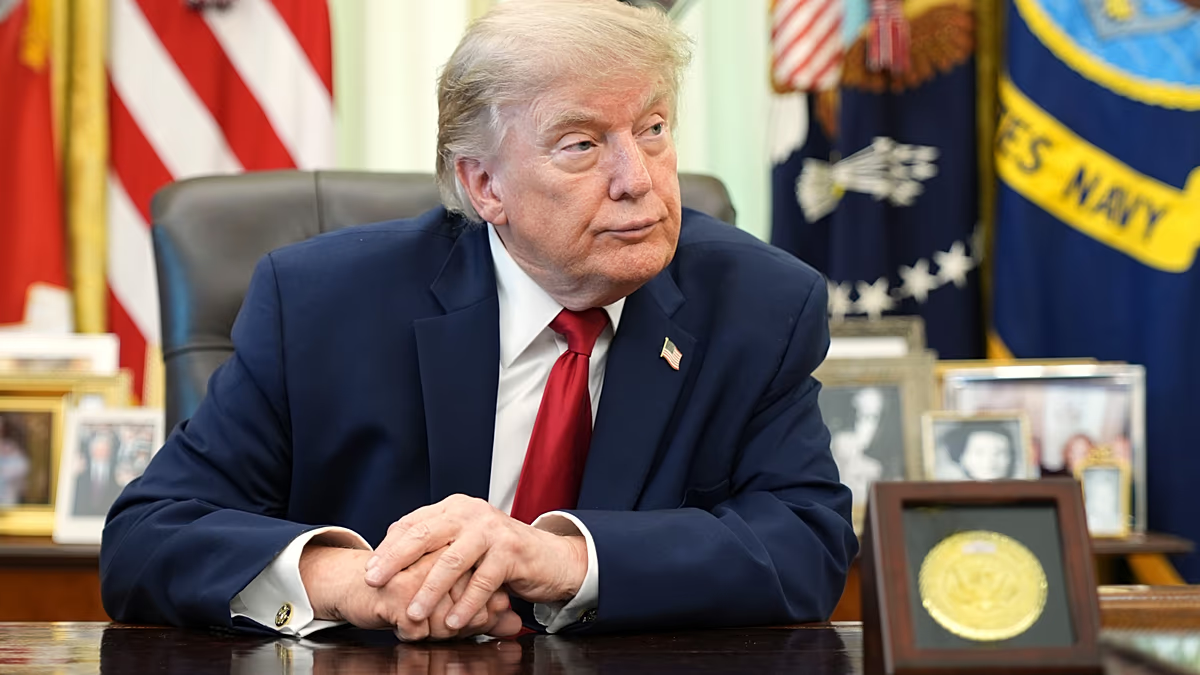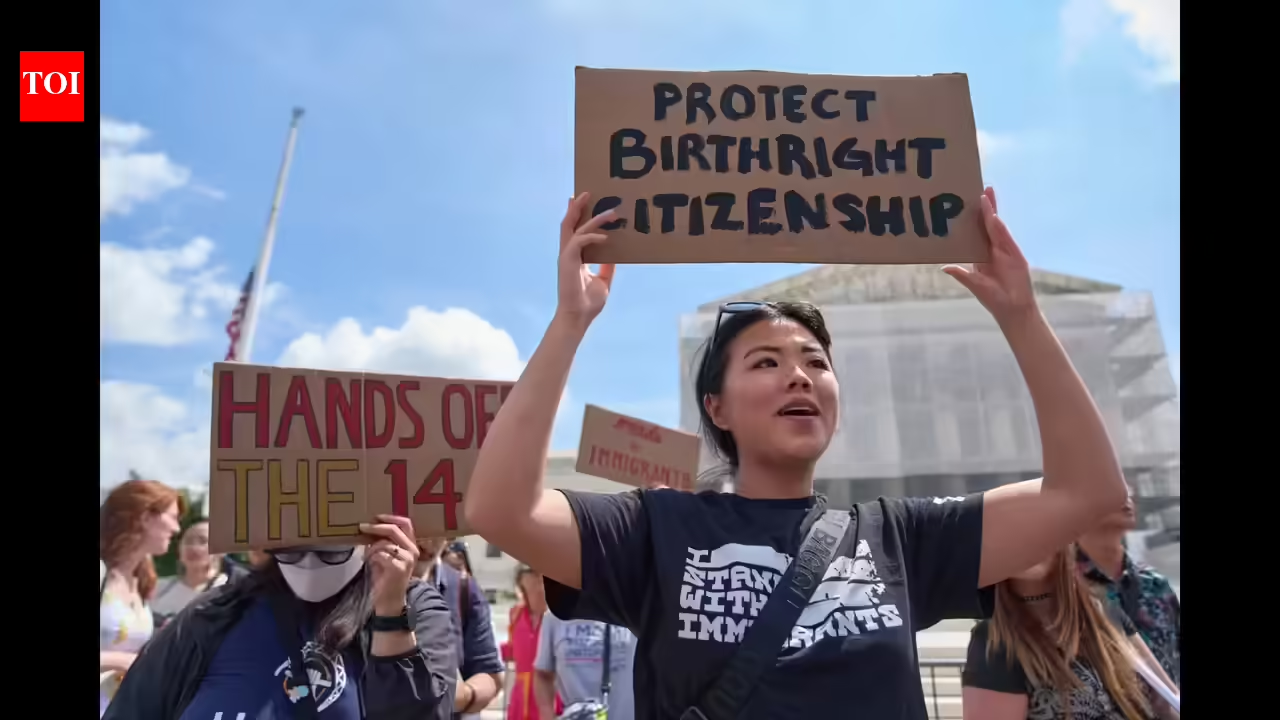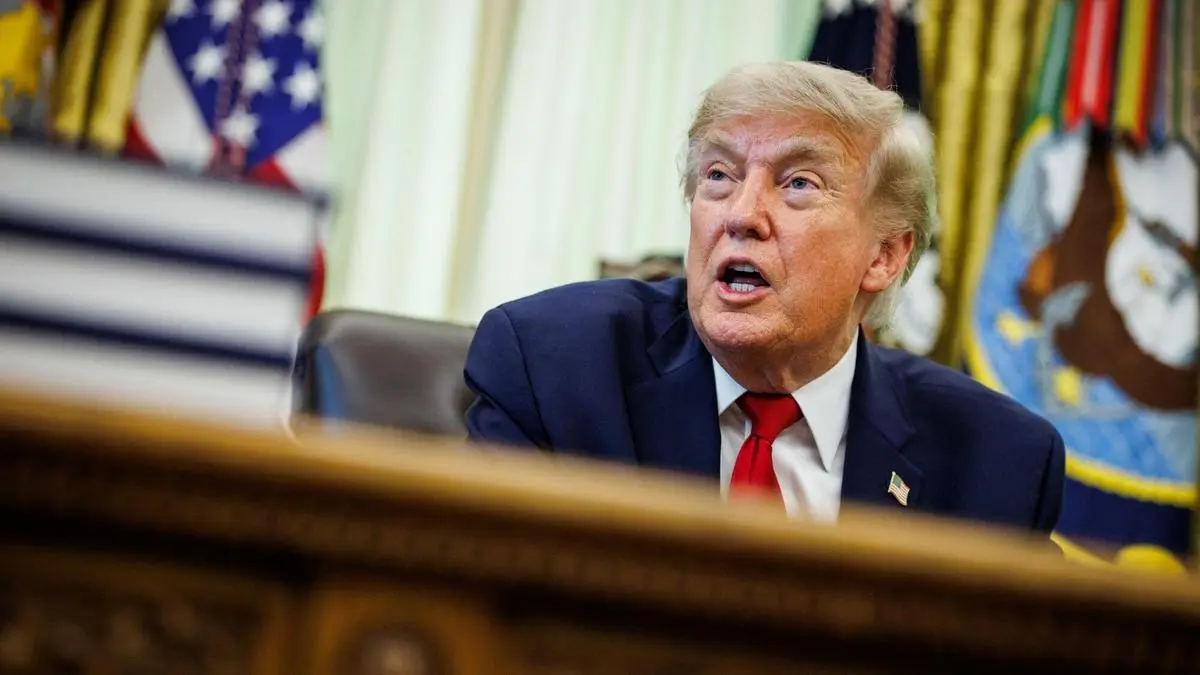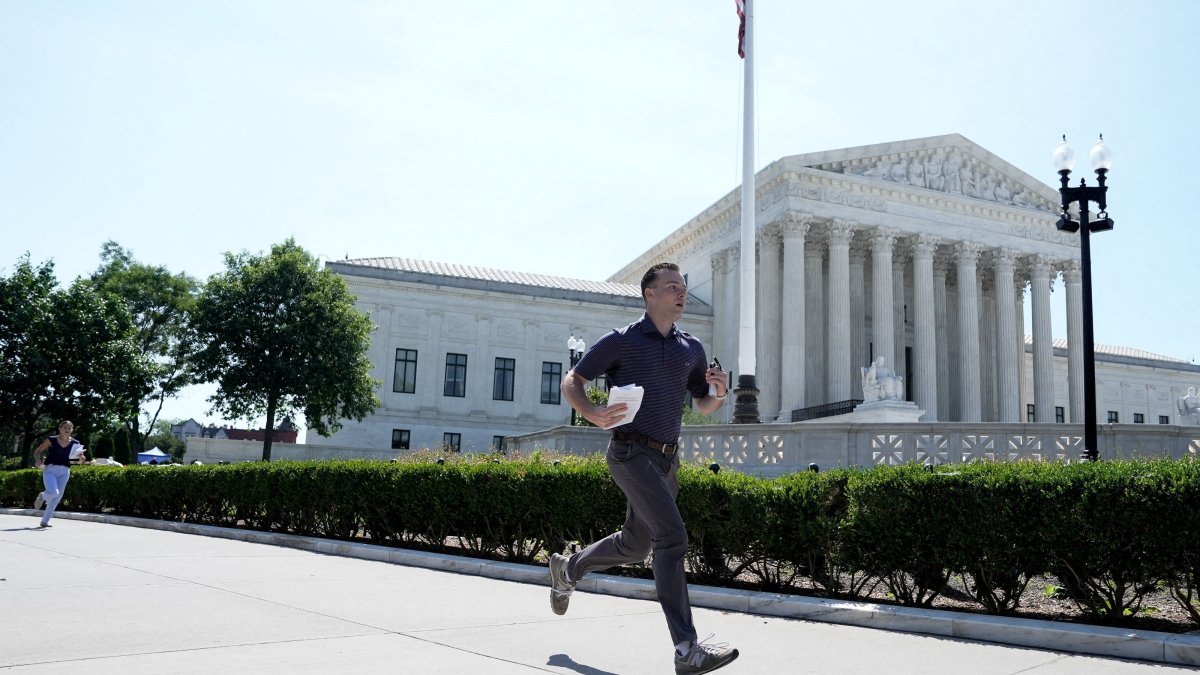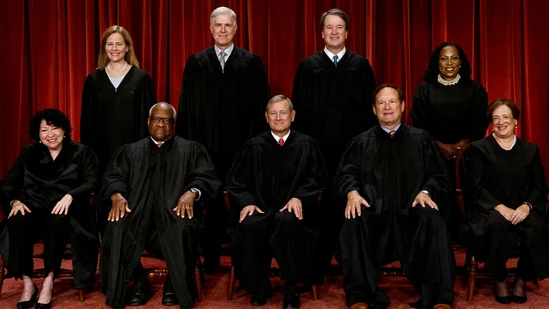
The US Supreme Court on Tuesday rejected President Donald Trump's effort to restrict birthright citizenship, handing the White House one of its biggest legal defeats of the year. The court ruled 6-3 that Trump's executive order violated the Citizenship Clause of the 14th Amendment.Seated (L-R): Justices Sonia Sotomayor, Clarence Thomas, Chief Justice John G. Roberts, Jr., Samuel A. Alito, Jr. and Elena Kagan. Standing (L-R): Justices Amy Coney Barrett, Neil M. Gorsuch, Brett M. Kavanaugh and Ketanji Brown Jackson. REUTERS/Evelyn Hockstein/File Photo (REUTERS)The ruling for birthright citizenship reaffirmed that nearly everyone born on US soil is automatically a US citizen.Although the Supreme Court has a 6-3 conservative majority, Chief Justice John Roberts sided with the court's three liberal justices and two other conservatives to reject Trump's order.Trump's executive order, signed on his first day after returning to office, instructed not to recognize citizenship for children born in the United States unless at least one parent was a US citizen or lawful permanent resident.Civil rights groups argued that the order directly conflicted with the Constitution.Read more: Ketanji Brown Jackson vs Clarence Thomas: SC justices clash on birthright citizenship and Dred Scott implicationsWho voted to keep birthright citizenship?The six justices who voted to block Trump's executive order and preserve birthright citizenship were:1. Chief Justice John Roberts2. Justice Amy Coney Barrett3. Justice Ketanji Brown Jackson4. Justice Elena Kagan5. Justice Brett Kavanaugh6. Justice Sonia SotomayorAccording to the majority opinion written by Roberts, the 14th Amendment clearly guarantees citizenship to almost everyone born in the United States, except for narrow exceptions."Citizenship, then and now, was the right to have rights — to freely participate in our political community," Roberts wrote, per Reuters. He added that the authors of the 14th Amendment extended that promise to every free-born person in the country and that "we keep that promise today."Read more: What is the 14th Amendment? The 158-year-old US law behind Trump's birthright caseWho voted to overturn birthright citizenship?The three dissenting justices were:1. Justice Clarence Thomas2. Justice Samuel Alito3. Justice Neil GorsuchThey would have allowed Trump's executive order restricting birthright citizenship to take effect.Reuters reported that Trump's order could have affected the legal status of as many as 250,000 babies born each year. It also could have forced millions of families to prove the citizenship status of their newborns before receiving government recognition.Trump called the decision "too bad for our Country" in a post on Truth Social. He urged Congress to pursue legislation ending what he described as "expensive and unfair" birthright citizenship.
Which Supreme Court justices voted to protect birthright citizenship? The 6-3 split explained
Chief Justice John Roberts joined five colleagues to strike down Donald Trump's bid to restrict birthright citizenship.
416 words~2 min read