For nearly a decade, a husband-and-wife team operated a network of massage businesses stretching across New Jersey and New York. These seemingly innocent storefronts concealed brothels where women were expected to provide sexual services to customers from morning until midnight.The case, which ended in guilty pleas in late May, offers a glimpse into a little-known corner of the commercial sex trade: the illicit massage business. The prosecution also comes as the Justice Department signaled it intends to continue making human trafficking a priority under the Trump administration. Earlier this month, acting Attorney General Todd Blanche appointed veteran federal prosecutor Ali Serano to lead the department’s anti-human trafficking efforts.
“Ending human trafficking and the exploitation of children has been and remains one of the highest priorities of the Department of Justice,” Blanche said in announcing her appointment. “With [the] appointment of Ali Serano, we are sending a clear and unmistakable message to predators: we are coming for you.”What is the illicit massage business?
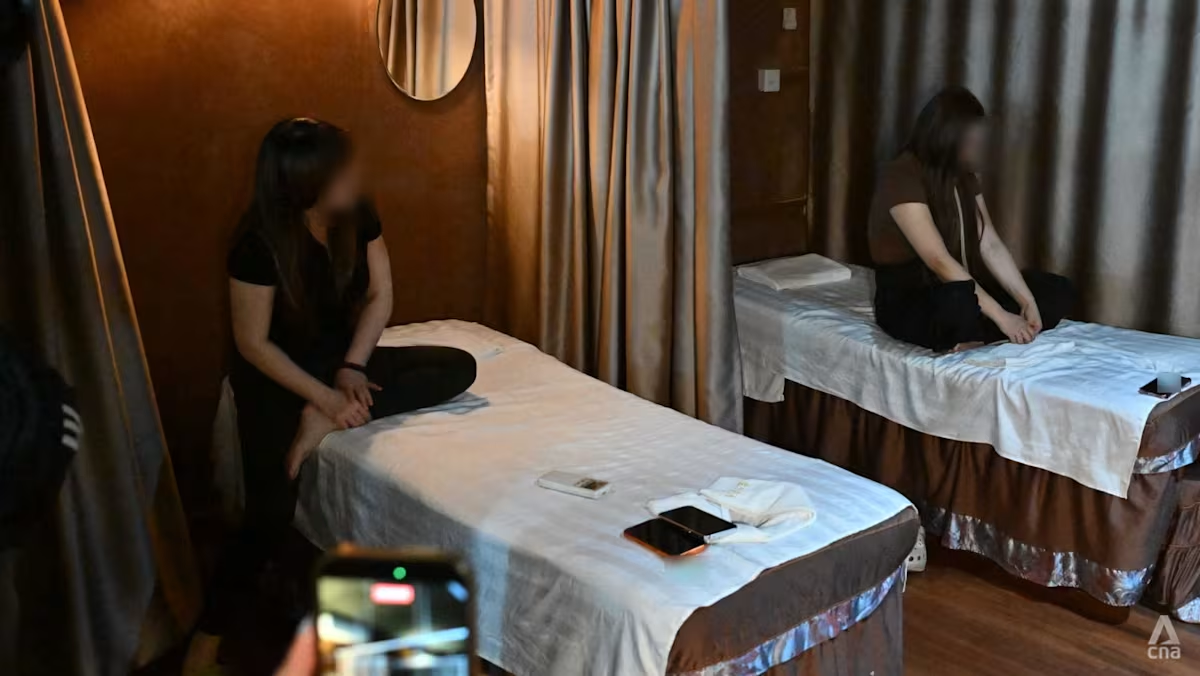
Illicit massage businesses, or IMBs, operate under the appearance of legitimate massage parlors or spas while secretly selling sex. Although they often appear to be independent storefront businesses, anti-trafficking advocates say many are connected through larger criminal networks that recruit vulnerable women, frequently foreign nationals, and move them between locations to keep a constant rotation of workers.There are between 7,500 and 9,000 illicit massage businesses operating across the United States, according to estimates from the Polaris Project and the DOJ. Many involve elements of labor trafficking, sex trafficking, or both, with workers controlled through debt bondage, deception, threats, or intimidation.Court records from the New Jersey case illustrate how the businesses operate.According to prosecutors, women lived inside the spas and worked approximately 16-hour days, seven days a week. Customers paid between $160 and $175 for sexual services, and some locations even offered loyalty cards that rewarded repeat customers with free visits. Business records showed some women serviced as many as 20 customers in a single day.As one of the conspiracy’s leaders, Hee Choi admitted recruiting women to work in the spas, advertising sexual services online, scheduling appointments, and directing other members of the operation. Her husband, Yong Piao, admitted to delivering groceries, condoms, medications, and other supplies to the businesses while transporting cash proceeds and business records. Investigators recovered approximately $1.2 million in cash, along with luxury watches, jewelry, and designer handbags, all of which the pair agreed to forfeit.Both pleaded guilty to conspiracy to commit interstate travel and use of facilities in aid of a racketeering enterprise.A difficult crime to investigate