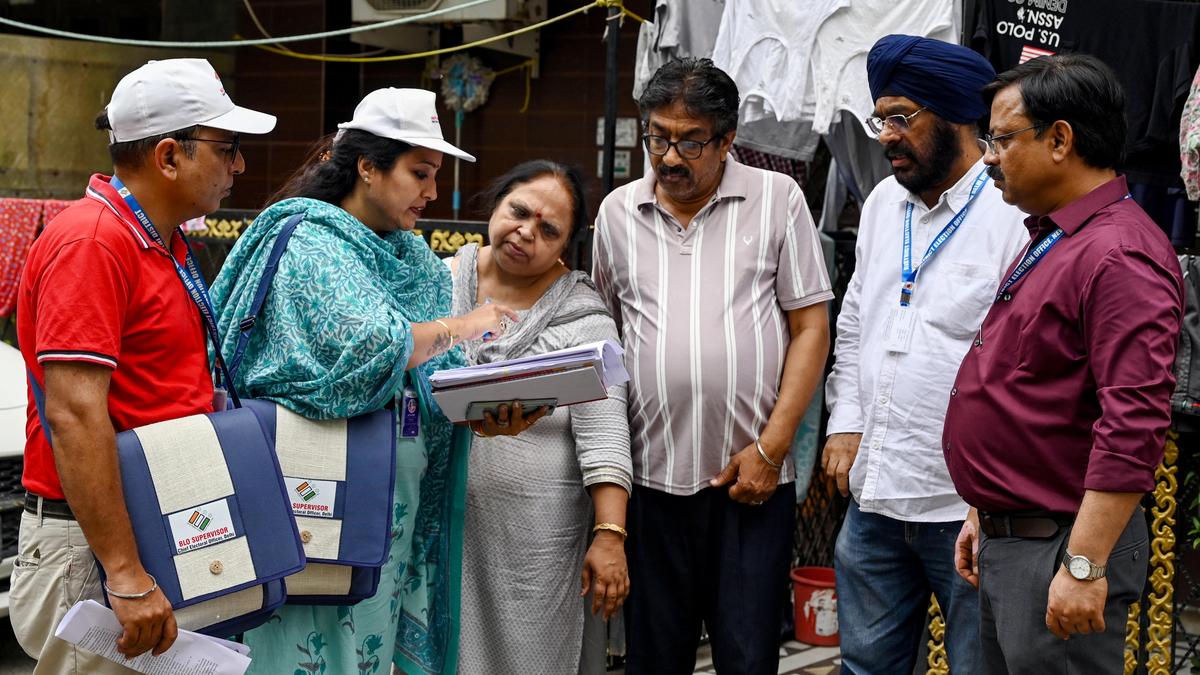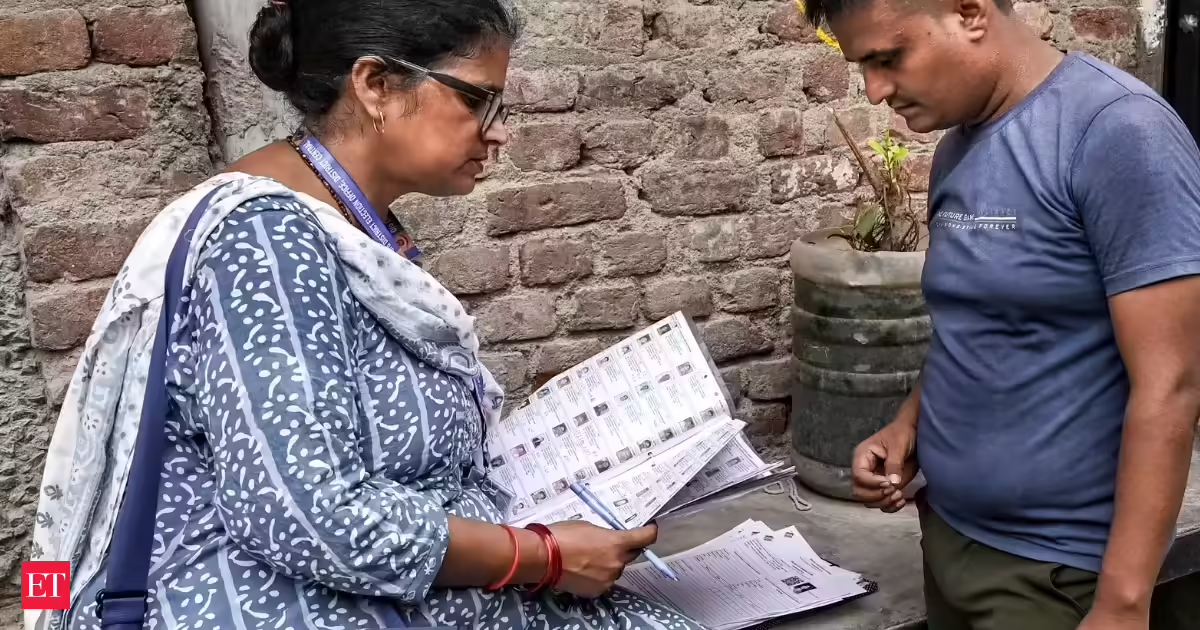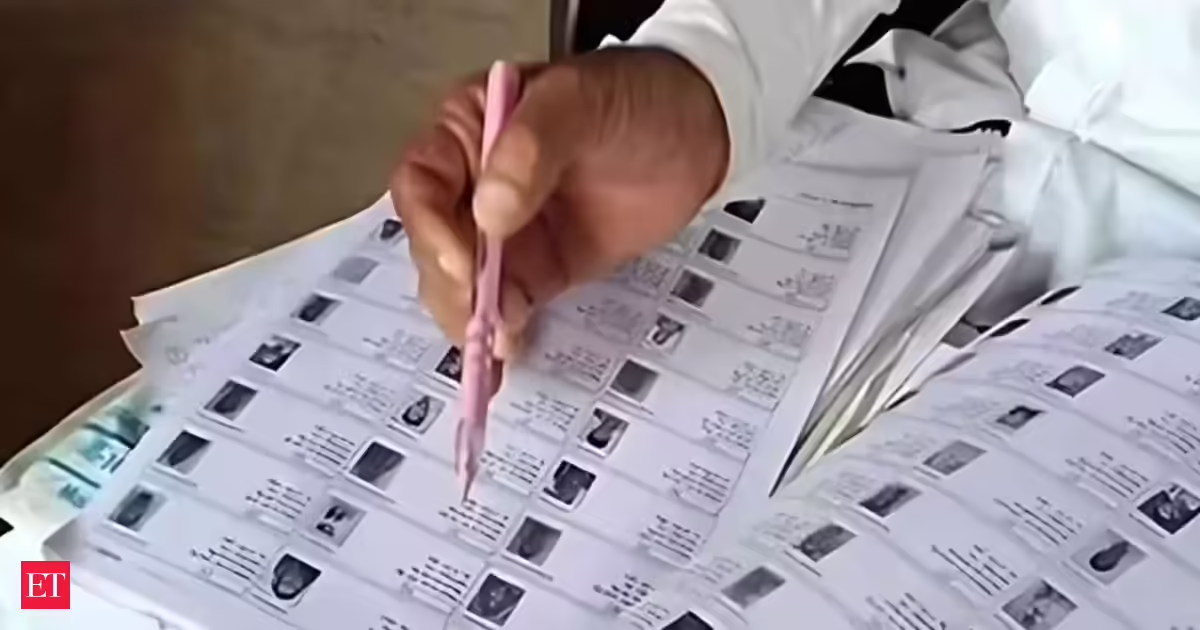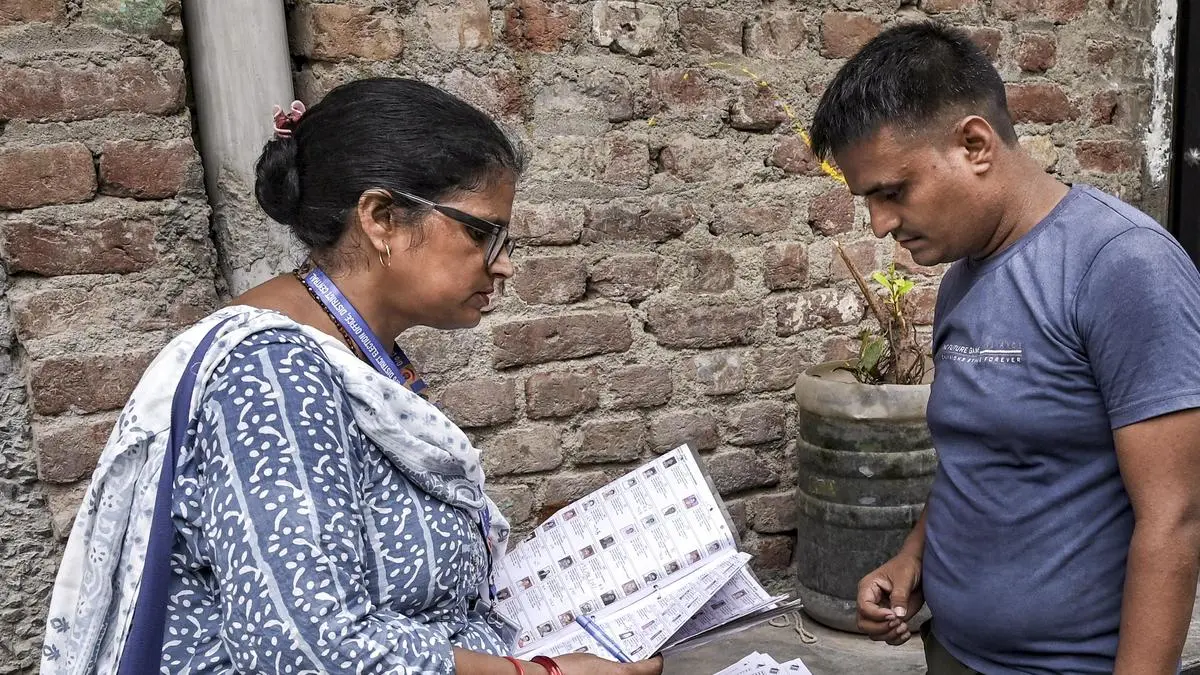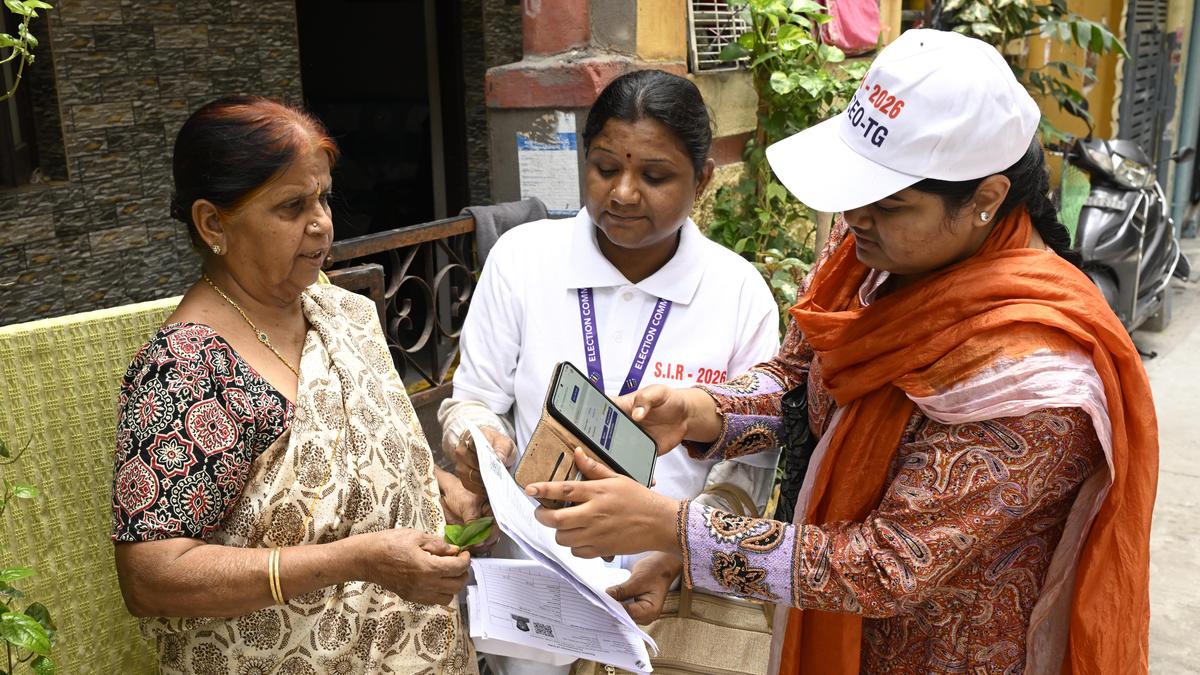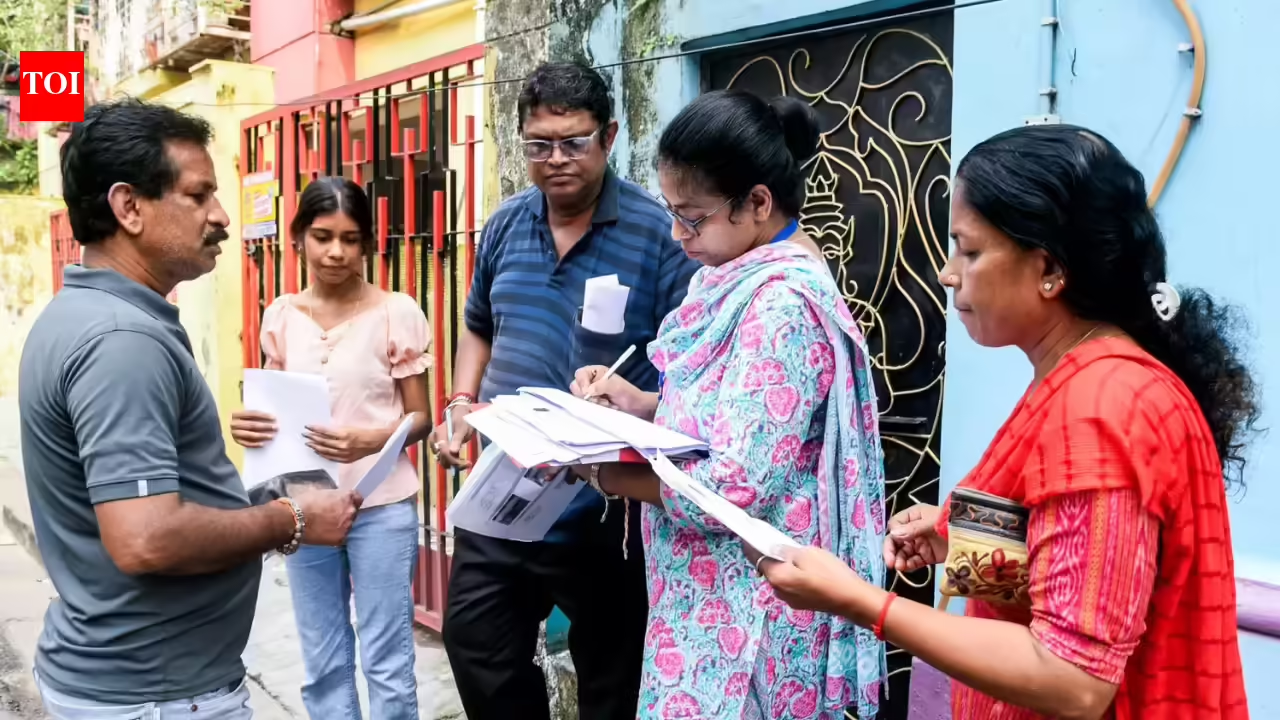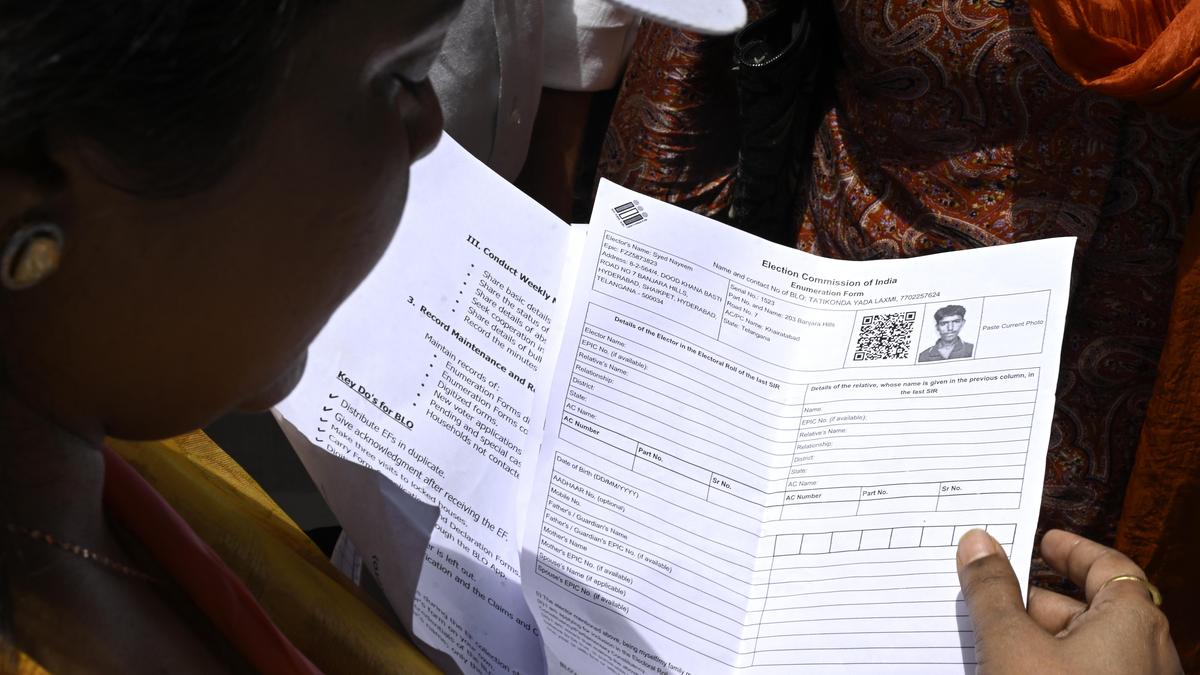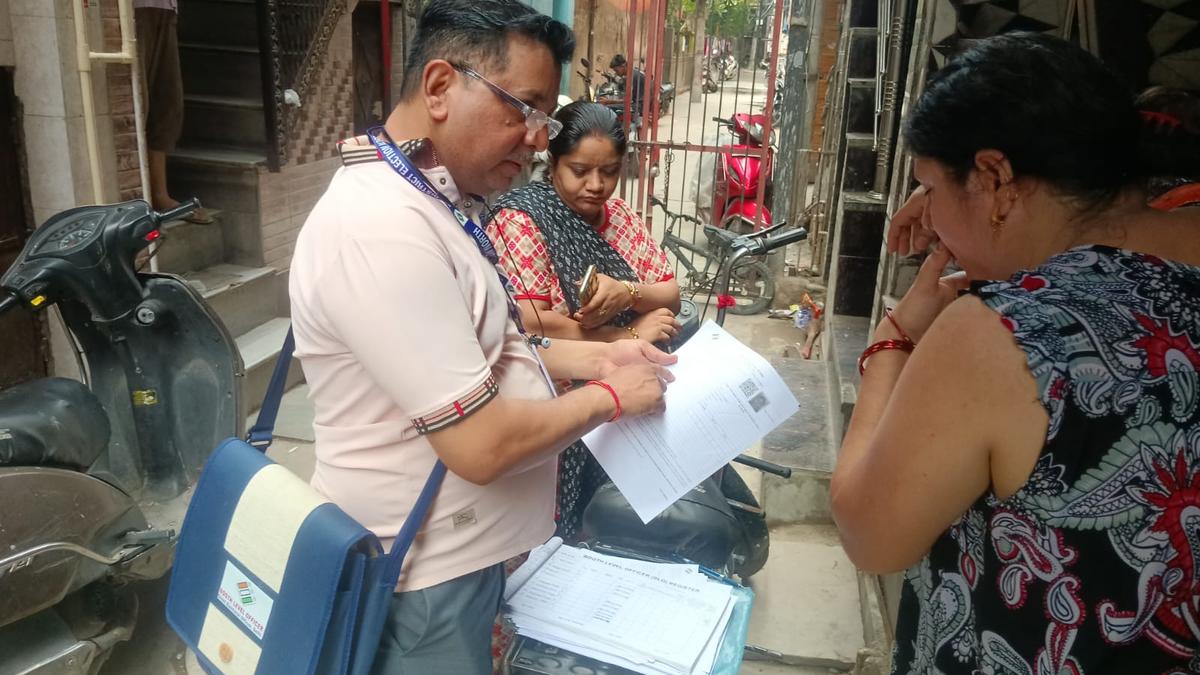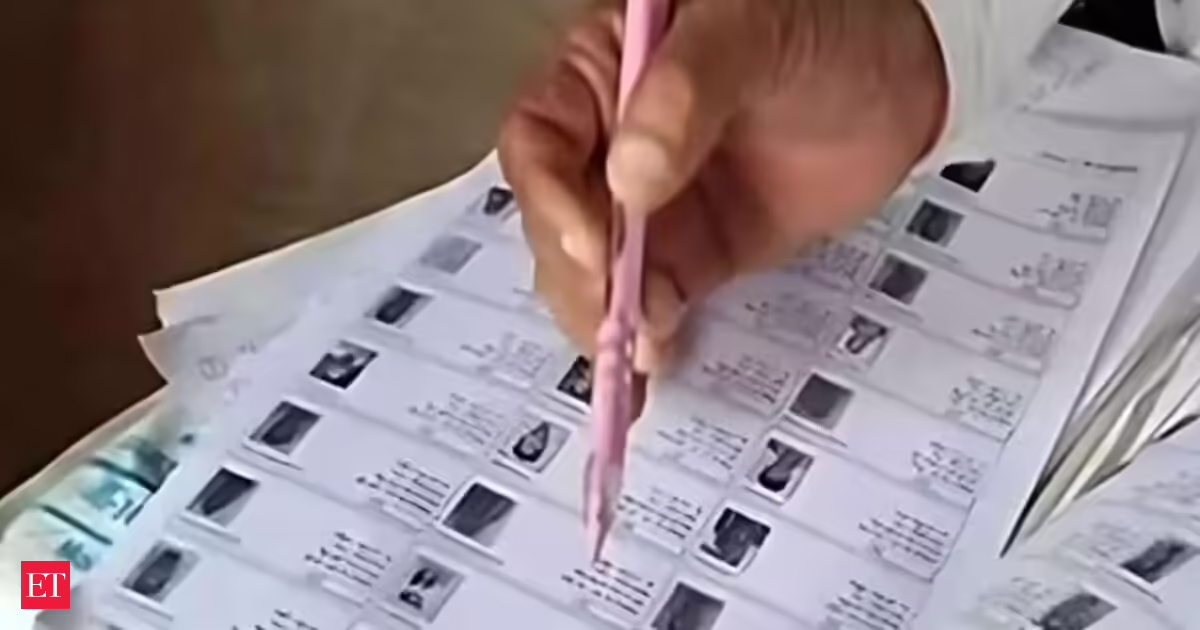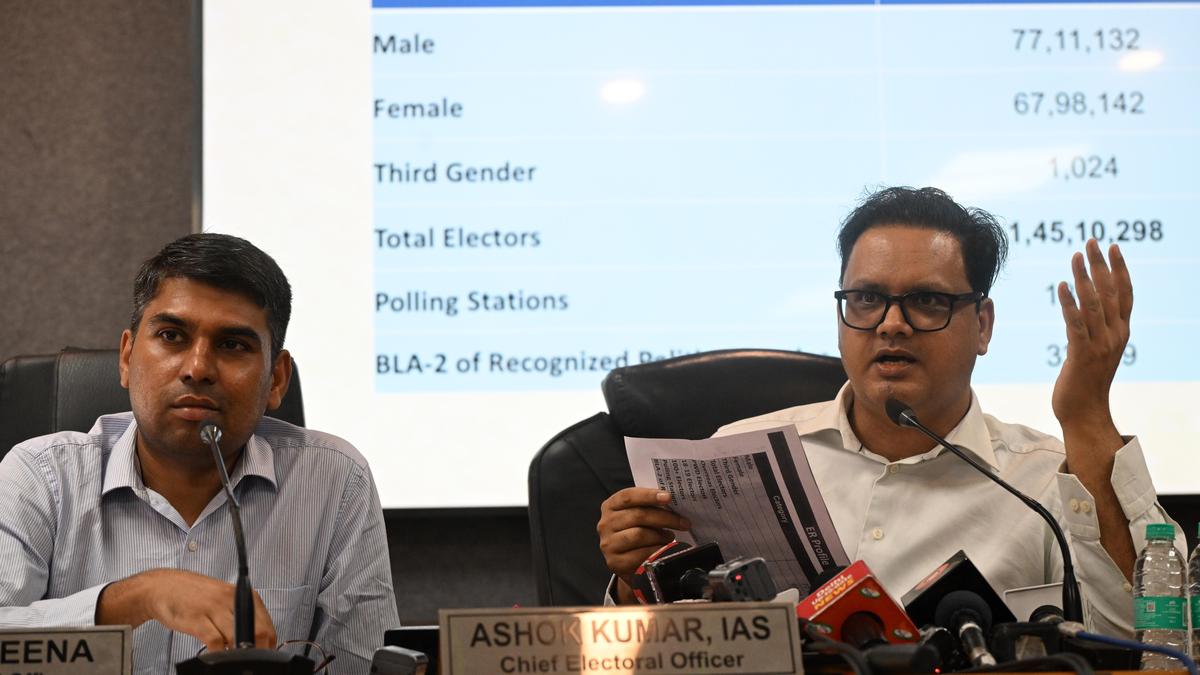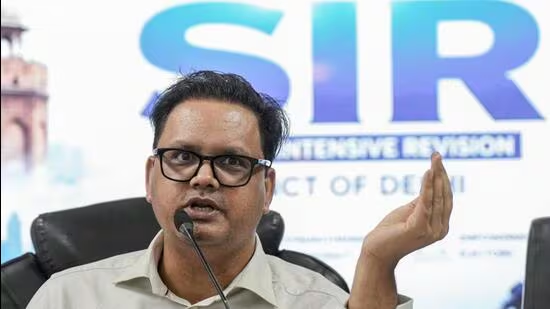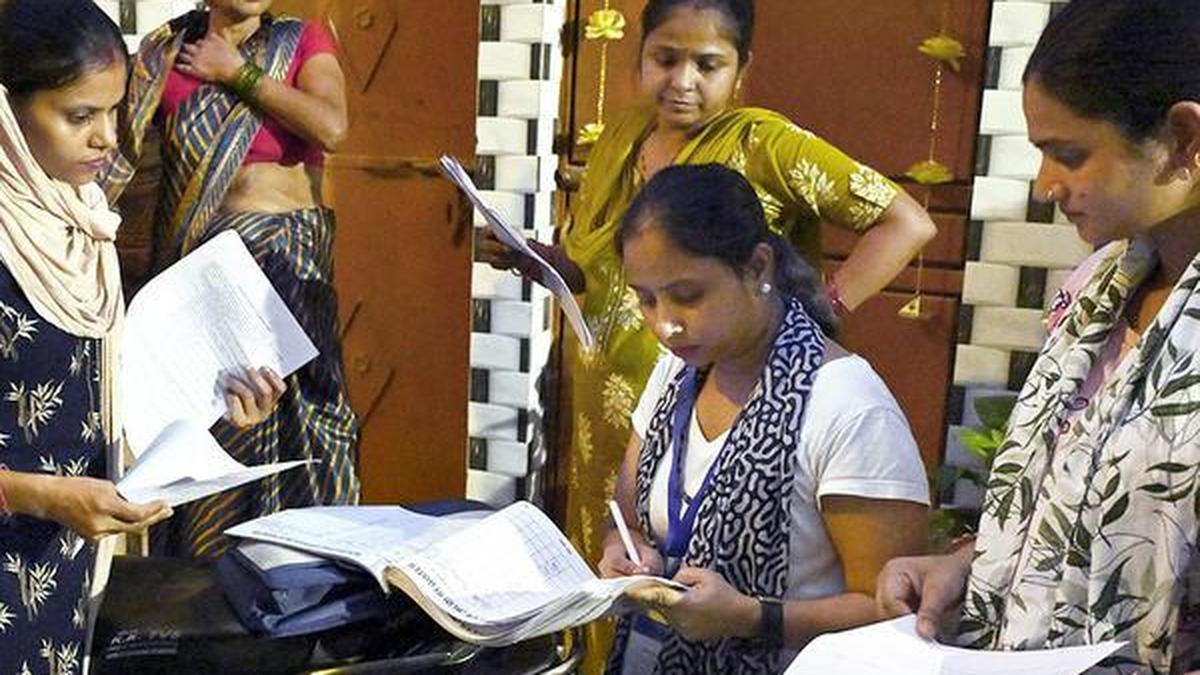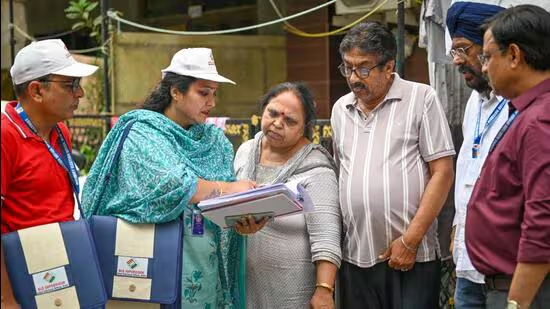
New DelhiThe exercise, which began across all 13 districts of the national capital, will continue till July 29, with BLOs visiting every household to distribute and collect enumeration forms as part of the revision exercise. (Sanchit Khanna/HT Photo)Booth-level election officers (BLOs) on Tuesday distributed 168,291 enumeration forms and digitised 7,605 forms as of the evening on the first day of the Special Intensive Revision (SIR) of the electoral roll exercise, according to officials with the chief electoral office (CEO).On the first day, chief minister Rekha Gupta completed the process of SIR by submitting the enumeration forms for herself and her family. She appealed to Delhi’s eligible voters to cooperate for the smooth conduct of the exercise.“Chief Minister Smt. Rekha Gupta today completed the formalities under the Special Intensive Revision (SIR) by submitting the enumeration form for herself and her family. She appealed to all eligible electors in Delhi to participate in the ongoing revision process by filling their enumeration forms accurately and submitting them to their respective BLOs within the prescribed timeline,” the Chief Minister’s Office said in a post on X.The exercise, which began across all 13 districts of the national capital, will continue till July 29, with BLOs visiting every household to distribute and collect enumeration forms as part of the revision exercise.The CEO’s office urged electors to cooperate with BLOs, fill the forms accurately and submit them within the stipulated period. The BLOs have been tasked with visiting at least 10 houses daily.Rajinder Pal Singh, an assistant electoral officer in the New Delhi zone, said, “The BLOs took a bit of extra time explaining details to the voters and were able to visit five to six houses on the first day. Wednesday onwards, they said that they would be able to distribute the forms in over 10-15 houses and cover nearly 60-70 voters daily. BLOs have also already distributed forms to acquaintances in their areas already.”Voters, who participated in the exercise on the day, said the process went off without a hitch.“The BLO came to deliver the forms at around 1pm. He told me that my family and I would have to fill in the forms by Sunday, when he would come to take them. He explained that he would take one of each form, while the other would remain with us as a record, after he acknowledges it. He also explained basic details, such as where we would have to attach our photos, and told me to call him if I have any doubts,” said Suresh Kapoor, a resident of Chanakyapuri.“I was alone at home when the BLO visited. They shared the forms and asked us to share our photos and previous voter ID. I would have to check with other family members about their details and would need their photos but they were not home. So, the BLO said that he will return in a couple of days to collect the forms,” said Satyanarayan Chug, a 65-year old resident of Rajouri Garden.The Election Commission first announced plans for SIR in Delhi on June 14, as part of a nationwide revision of electoral rolls. Ahead of the start of the exercise, Delhi CEO Ashok Kumar on Monday said over 13,000 BLOs have been deployed for the exercise, while political parties have appointed over 32,000 booth-level agents to assist with the exercise.Addressing a press conference, Kumar said BLOs would distribute pre-printed enumeration forms in duplicate to existing electors and assist them in filling the forms. “BLOs will make at least three visits to collect the filled forms. One copy of the submitted form will be retained by the BLO, while the other, carrying an acknowledgement of receipt, will remain with the elector,” Kumar said.The CEO’s office said every elector whose name is in the electoral roll will receive an enumeration form from the BLO. If a house is found locked during the visit, the BLO will leave the form and make multiple visits to collect the completed document.Officials said electors are not required to submit any document along with the enumeration form. The process can also be completed online through the Election Commission of India’s voter services portal. Assistance is available through the voter helpline “1950”, the “Book-A-Call” facility for contacting BLOs and voter help centres established in all district headquarters and assembly constituencies.As per past records, Delhi currently has 14,510,298 registered electors. The Capital has 13,033 polling stations spread across seven Lok Sabha constituencies and 70 assembly segments. The electoral roll was frozen on June 16, and nearly 249,000 voters were added between January and June this year.As per the notified schedule, the draft electoral roll will be published on August 5, followed by the claim and objection period until September 4, disposal of claims and objections until October 3, and publication of the final electoral roll on October 7.
SIR kicks off in Delhi; 7.6k forms digitised on Day 1
Delhi's BLOs began the Special Intensive Revision of electoral rolls, distributing 168,291 forms on day one, urging eligible voters to participate. | Latest News Delhi
804 words~4 min read