Have you ever been travelling, had to make a big payment and realised you left your hardware wallet back home? Perhaps you are a key holder in a business’s Bitcoin treasury, or an emergency came up, and a big payment has to be made, some cold storage Bitcoin has to move, but the keys are elsewhere.
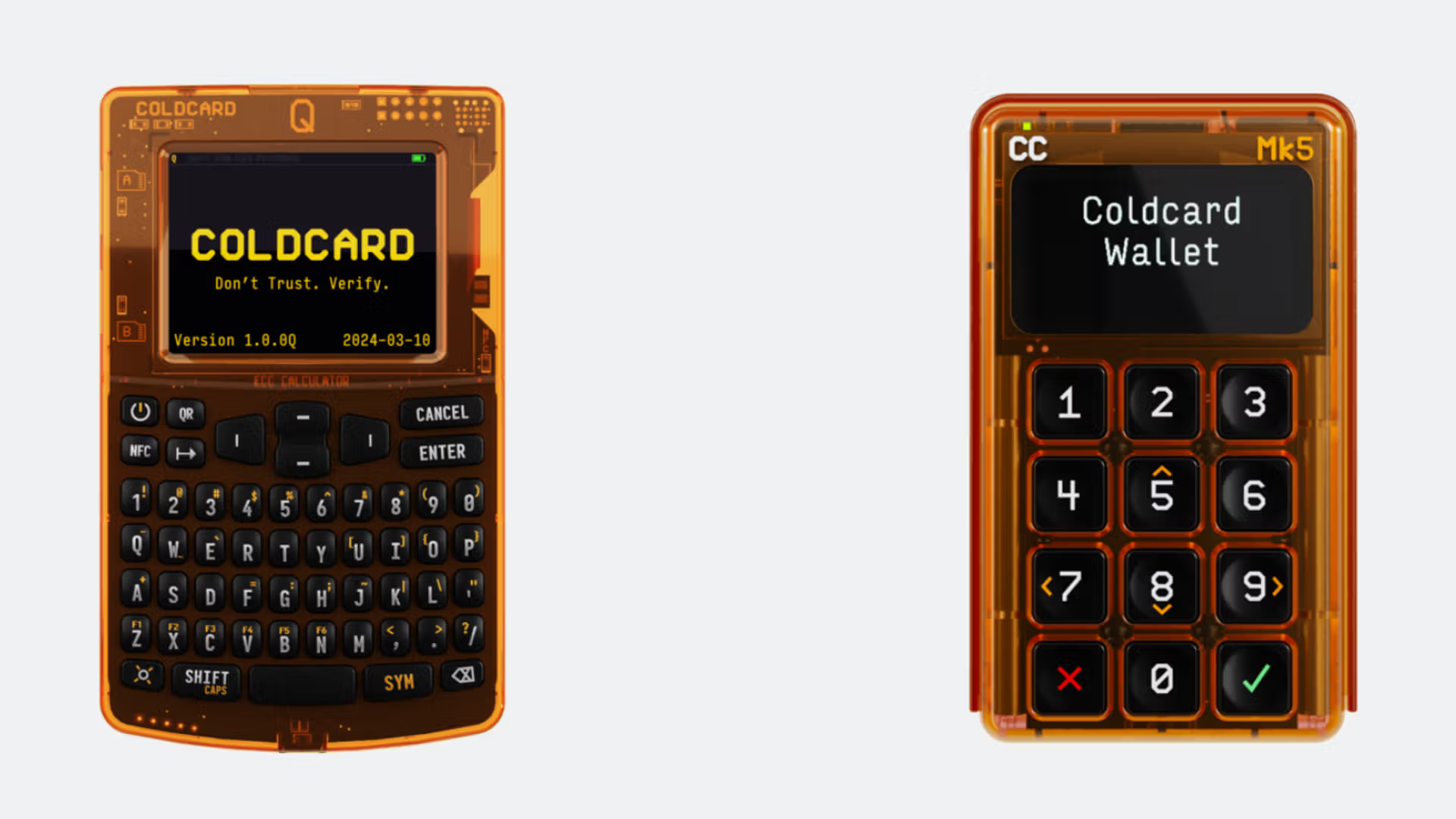
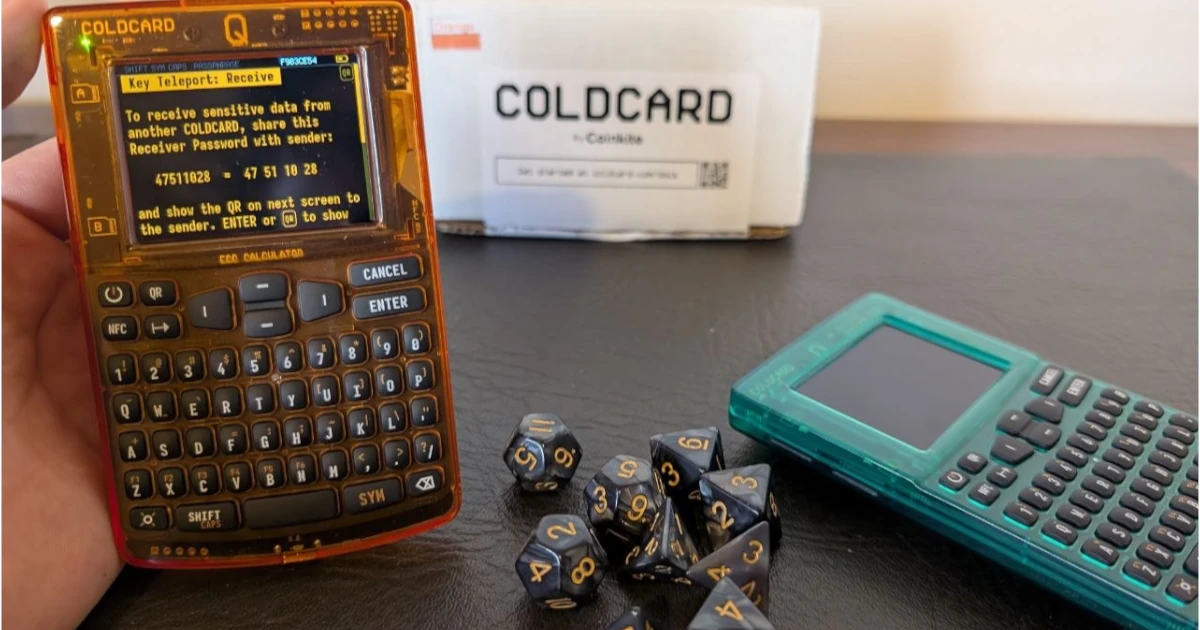
Key Teleport, a feature developed by the hardware wallet manufacturer Coinkite, may be the most secure way to handle key material at a distance. The feature is only available to the Coldcard Q, the premium, feature-rich Bitcoin hardware wallet developed by the company.
Before Key Teleport, the most paranoid, secure way to move a private key over the internet was not to send it over WhatsApp or Signal. These apps, while end-to-end encrypted on the surface, are running on top of very complex hardware and operating systems, in many cases with very intrusive firmware embedded deeply by manufacturers. Smartphones today, as with most of mainstream technology, are simply not designed to secure highly valuable secrets that can transfer irreversible money like Bitcoin.
Had you asked me how I might go about sending a private key with life-changing money on it, across the wire, I would have told you this: You need to boot Tails OS, a slim, highly paranoid Linux distribution, into hardware you know to be secure, ideally a burner laptop. You then need to generate a fresh set of PGP keys to encrypt the secret with the power of asymmetric cryptography. The recipient needs to do the same, Tails-OS and PGP. Then, a classic encrypted message is made to the recipient’s public key, and the encrypted secret is sent over Tor, probably wrapped by another VPN just in case. Having done this once, I can tell you, it’s a mission.