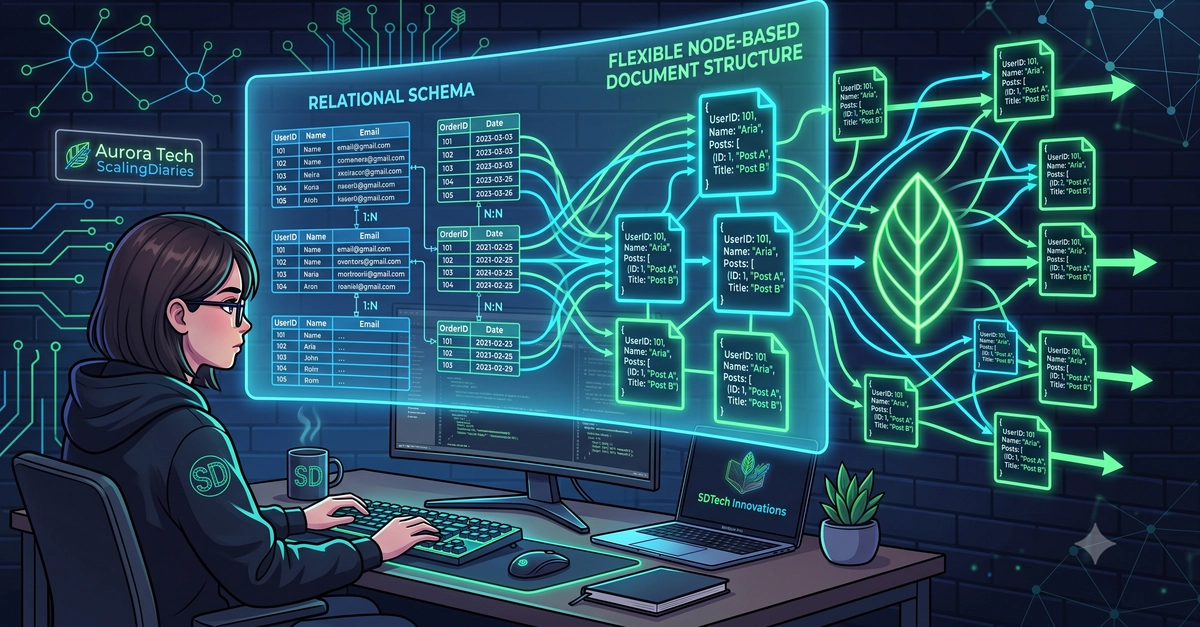
For a long time, my comfort zone was built on rows, columns, and foreign keys. I lived in the world of strict relational databases, relying on strong consistency and complex multi-table joins to get things done. It felt safe, but as the applications I was building started to demand more, I hit a wall.
Here is the story of why I stepped out of the relational matrix, the hurdles I faced, and why MongoDB became my go-to engine for modern, scalable applications.
The Challenge: When Rows and Columns Weren't Enough
The shift started when my workloads evolved. I was dealing with rapid prototyping, massive write-heavy workloads, and an increasing need to integrate AI features.
While traditional relational databases like PostgreSQL have evolved into impressive "hybrid beasts" with features like native JSONB indexing and parallel query execution, I still felt the friction. Scaling a relational database horizontally for global, write-heavy applications is notoriously painful. I was spending too much time wrestling with schema migrations and worrying about latency rather than just shipping features.