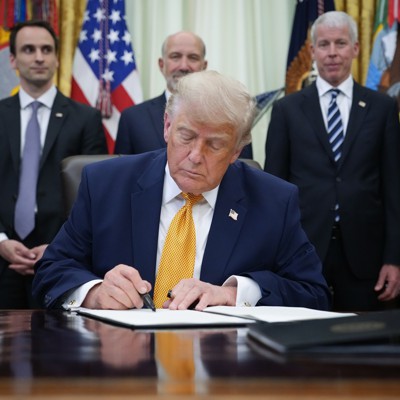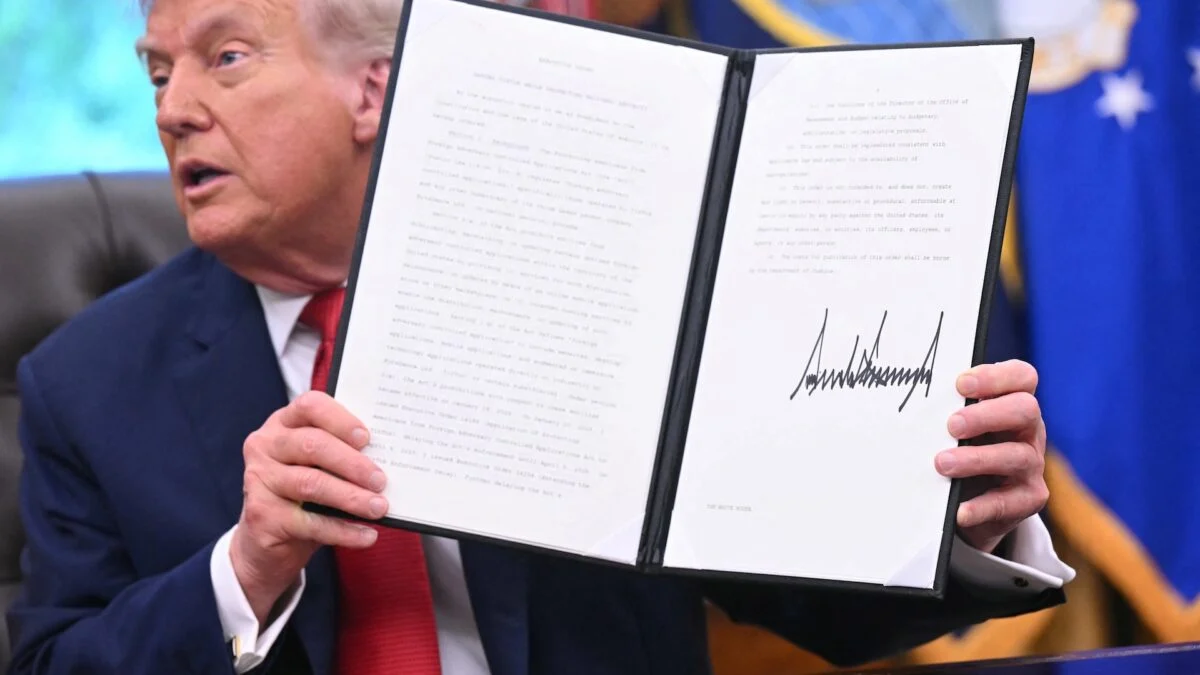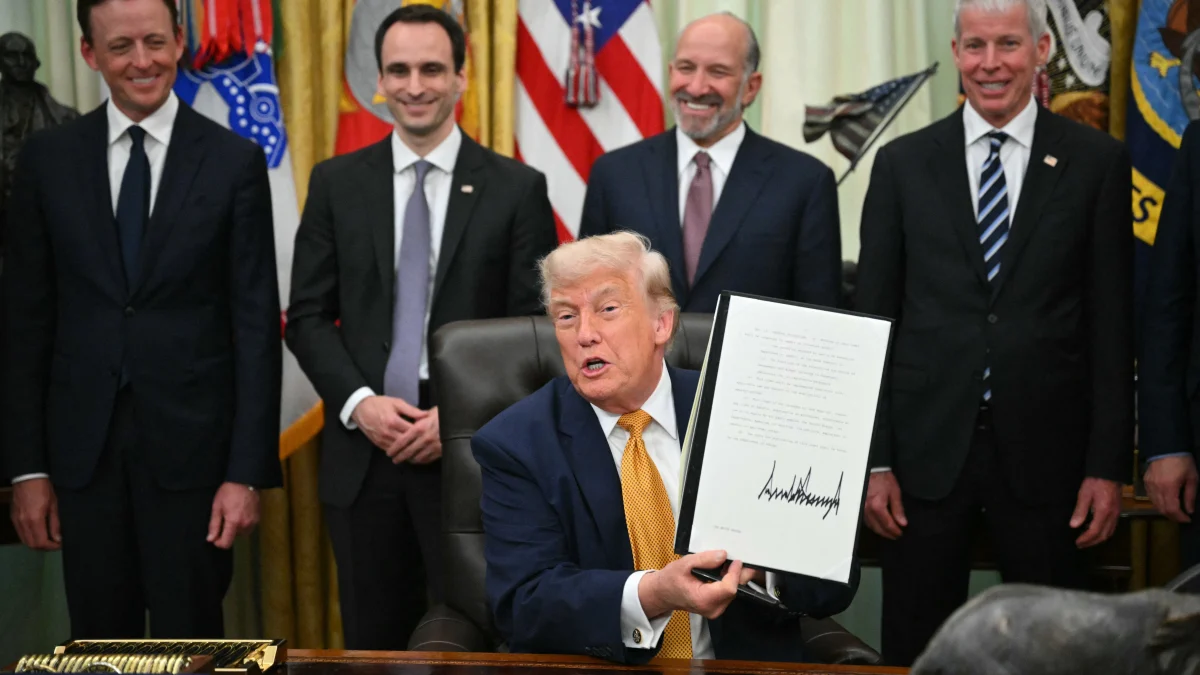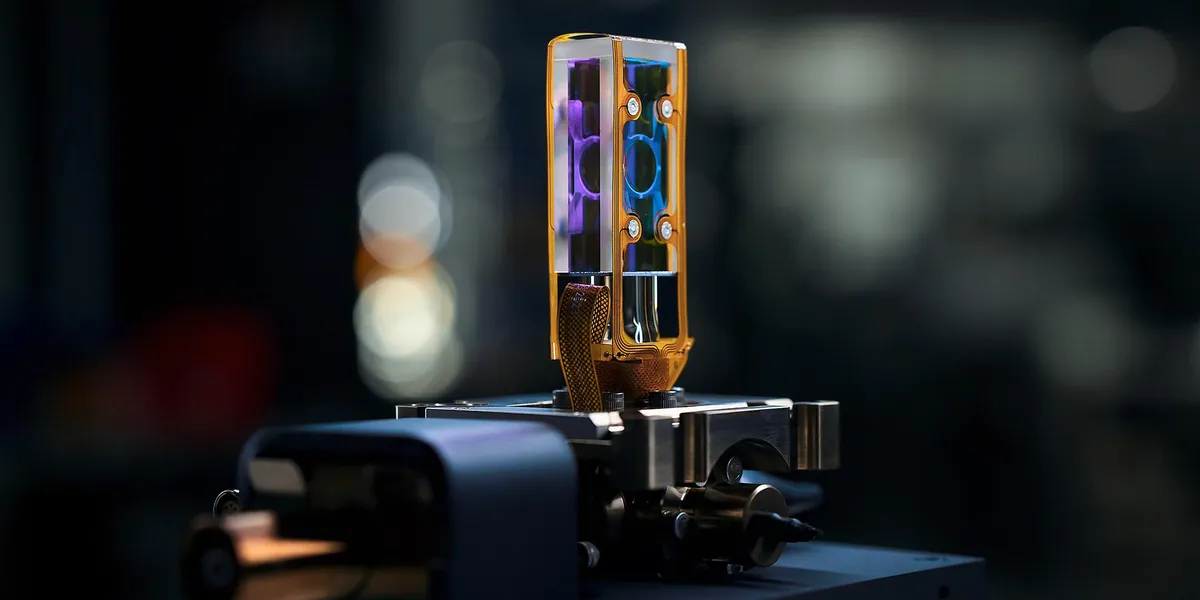
On 22 June, President Donald Trump signed two executive orders focused on quantum computing: The first aims to accelerate the development of quantum computers, sensors, and networks. The other seeks to accelerate the timeline for migrating critical infrastructure to cryptographic schemes that are immune to quantum attacks. In response, the U.S. Department of Energy (DOE) has committed to deploy “the world’s first fault-tolerant, scientifically relevant quantum computer” by the ambitious deadline of 2028.“It feels like everything is happening all at once, which is great,” says Pranav Gokhale, chief technology officer and co-founder of quantum company Infleqtion.“I think this executive order is in many ways a continuation of what’s been going on since 2018, when the first National Quantum Initiative Act was passed,” says Elizabeth Goldschmidt, associate professor of physics at the University of Illinois Urbana-Champagne (UIUC). “It revives and continues a lot of things that have happened since. I think it’s very ambitious, but there’s a lot of very good stuff in here.”IEEE Spectrum spoke to experts about these policy initiatives and how they reflect and shape the United States’ quantum capabilities for the next few years.How realistic is the 2028 deadline for a fault-tolerant quantum computer?Here, the devil is in the details. A fault-tolerant quantum computer is one that can correct mistakes that happen naturally, and inevitably, during computations. Fault-tolerance is achieved through quantum error correction, a way to make fragile quantum bits (qubits) robust against noise. This is generally done by encoding a single bit of quantum information into a collection of physical qubits, called a logical qubit. For a quantum computer to be useful, it would need to be able to do operations on many such logical qubits, and actively correct errors in the process.The DOE is aiming for quantum computers with logical qubits “numbering in the low hundreds.” The current record holders are the companies QuEra, claiming 96 logical qubits, and Quantinuum, claiming 94. The low hundreds threshold is already a 2028 target on several companies’ roadmaps, including QuEra, IonQ, and IBM. But not all logical qubits are created equal.“How much more stable these logical qubits would be remains a very open question.” —Edward Parker, Rand Corporation“Originally, the idea of a logical qubit was that, once your physical qubits were better than a certain threshold, then you should be able to correct all errors in the [logical] qubit, which basically means that your qubit would be everlasting,” says Jay Sau, professor of physics at the University of Maryland. “Now, a ‘logical qubit’ seems to be a collection of qubits that is somewhat better than one qubit, and I’m not sure that the use for such logical qubits is as obvious.”Others argue that these imperfect logical qubits may still have useful applications. Even if a logical qubit isn’t everlasting, if it lasts long enough without errors to run a particular algorithm, it’ll do the trick. “I think that achieving hundreds of logical qubits by 2028 is plausible,” says Edward Parker, senior physical scientist at the Rand Corporation. “These will not be perfect logical qubits that are capable of sustaining very long computations. These logical qubits would be somewhat more stable than their underlying constituent physical qubits, but still noisy. How much more stable these logical qubits would be remains a very open question.”The DOE’s stated goal is a “scientifically relevant” quantum computer—one that can answer scientific questions that would be prohibitively difficult to answer with current supercomputers.“I cannot think of a [scientific] question that a quantum computer can help with in 2028, unless there is a serious breakthrough in device quality,” Maryland’s Sau says.Infleqtion’s Gokhale disagrees. “100 logical qubits is where we see the advantage” for two scientific models, he says: One that underlies magnetism and one that potentially underlies high-temperature superconductivity.Will quantum computers be commercially successful by 2028?Being able to solve scientific problems is inherently valuable, but Carl Williams, quantum industry consultant at his company CJW Quantum Consulting and former deputy director at the U.S. National Institute of Standards and Technology, argues the scientific applications will not cover the billions of dollars that have gone into quantum research and development so far. For that, Williams says, commercial applications are needed.“I think for materials, quantum chemistry, and pharmaceuticals, we may see the first economically viable computations in 2028 or 2029,” Williams says. “Note, this is different from saying that the businesses will be cash positive. I suspect that will occur in the early 2030’s and probably by 2032. I think there are other applications, such as machine learning and optimization, that will require a much larger quantum computer.”“I cannot think of a [scientific] question that a quantum computer can help with in 2028, unless there is a serious breakthrough in device quality.” —Jay Sau, University of MarylandInfleqtion’s Gokhale also believes that commercial applications are within close reach. “I think that materials discovery is a little bit further than the science problems, but not that much further, and the demand on the commercial side is going to be larger dollar amounts than what scientists can pay for.”Gokhale also argues that the costs of running a quantum machine, particularly a neutral-atom based machine such as Infleqtion’s, are dropping rapidly. “The build material cost that we’re seeing is incredibly favorable for not just building one quantum computer but having a data center with tens, if not hundreds of quantum computers. We expect that the market will support cloud-based deployments too.”What’s the deal with quantum sensors?The executive order also directs the Secretary of Defense to identify three quantum sensor technologies that can be ready for use by 2028. The experts IEEE Spectrum spoke to seemed to not only think this is likely feasible, but also have good candidates for what those sensor technologies should be. Top candidates include inertial navigation without GPS, gravity measurement for navigation or for underground surveying, and magnetic measurements for navigation or anomaly detection.Almost everyone agreed that optical atomic clocks—higher precision timing devices that may enable more precise GPS—were a prime candidate for such a sensor. “Those are already deployed and just being refined to fit into mission architectures,” Gokhale says.Another potential candidate is sensing extremely weak radio-frequency signals using individual atoms, ions, or other qubit-like structures.“I like that the specific quantum sensors have been targeted,” UIUC’s Goldschmidt says. “The Department of Defense has always been active about pursuing quantum sensing, because of the importance, in particular, of things like position navigation and timing. I would love to see more thought going into using quantum sensors in various other places.”Does the U.S. have the workforce necessary?The executive order also puts a strong emphasis on developing the quantum workforce within the United States. The quantum computing field still relies heavily on holders of quantum physics-related doctorates, although many people with other engineering skills are also needed.“If you go look at the QED-C’s state of the quantum report from this year, you see how many job openings remain,” Williams says. “There’s nothing surprising about the number of openings that remain. We didn’t really start trying to refill our pipeline until 2018, two or three years too late. It’s five years to get a Ph.D. And then if you start doing things to discourage people from coming to the US, or make it harder for them to get in, or get an H1B visa, all you do is make the problem worse. You don’t help the problem by being unwelcoming.”“We’ve had our fair share of successes [in hiring], but also our fair share of just roles that have been unfilled for weeks, if not months and months,” Infleqtion’s Gokhale says. “Now, the flip side is we do think quantum is reaching the point where we can reduce our reliance on the Ph.D. types and start moving to more manufacturing engineering, and where we see really bright spots are, for instance, community colleges.”What about the threat posed by quantum computers to cryptography?Despite having potential scientific and commercial advantages, future quantum computers also pose a novel threat: They can be used to break certain types of cryptography that are in common use today. Luckily, cryptographic protocols that are immune to quantum attacks, known as post-quantum cryptography, exist and have been standardized by NIST.Trump’s post-quantum cryptography executive order accelerates the timeline for this transition to either 2030 or 2031, from a previous Biden-era deadline of 2035. This is likely a reaction to several recent developments that have brought the quantum threat closer to reality than previously thought.“If you start doing things to discourage people from coming to the US, or make it harder for them to get in, or get an H1B visa, all you do is make the problem worse.” —Carl Williams, CJW Quantum Consulting“It is difficult to accurately predict whether and when a cryptography-breaking quantum computer will emerge,” says Chris Peikert, professor of computer science and engineering at the University of Michigan and chief scientific officer at cryptocurrency Algorand. “But the larger question is one of risk: What are the chances that one will be built by 2028? By 2030? By 2034? The cost and timeline of migrating must be weighed against the chance of a catastrophic break occurring before the migration is complete. The recent progress increases that risk, so the migration should be accelerated.”“The biggest priority in the transition is securing critical national infrastructure, where systems have long lifecycles and vulnerable cryptography presents an unacceptable national security risk,” Ali El Kaafarani, chief executive officer and founder at post-quantum cryptography provider PQShield, wrote via email. “This transition needs to happen at the government level, so the EO is a welcome intervention. It’s also worth noting that this isn’t the steepest timeline change we have seen: Google and Cloudflare have already set 2029 implementation deadlines, and the supply chain will now need to follow their lead as well. Quantum readiness is now an active compliance milestone, and the tightened timelines are only feasible if the boardroom makes migration a priority. The time to build strategic roadmaps is now.”“Yeah, we should probably get on that,” Goldschmidt says.
Trump’s Quantum Orders Push Fault Tolerant Qubits Toward 2028
A new pair of executive orders accelerate the timeline for a fault-tolerant quantum computer
1,665 words~8 min read