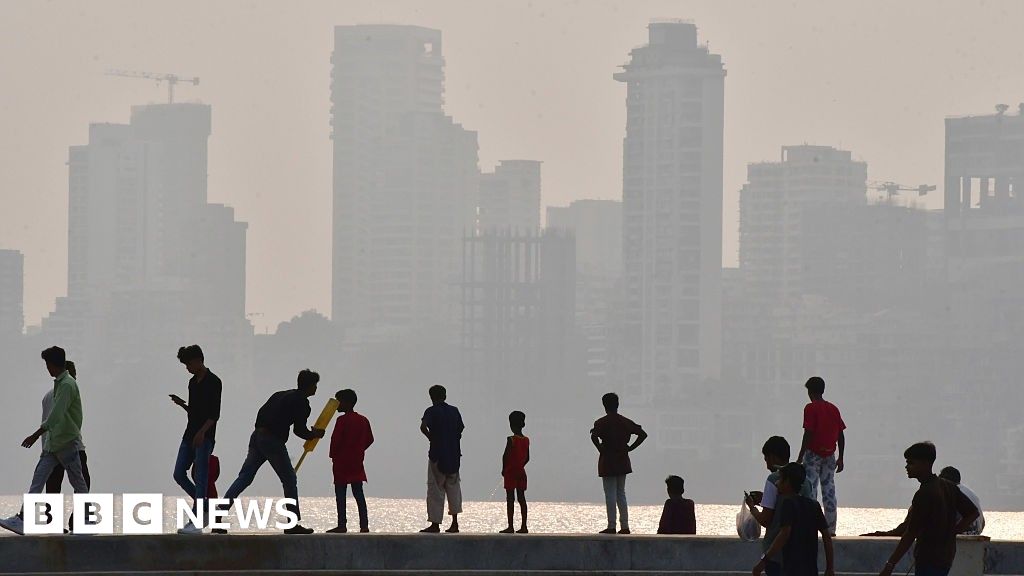
The study measured the annual attenuation of solar exposure (the reduction in solar energy) in the target cities
| Photo Credit:
Solar energy is gaining traction and emerging as an effective alternative to expensive, regular power sources. But this alternative source faces a challenge — the growing problem of air pollution, which casts a shadow on the quality of solar radiation. A new study published in the Journal of Atmospheric and Solar-Terrestrial Physics finds that high levels of ambient air pollution in some Indian cities are significantly blocking sunlight, reducing the potential output of solar energy systems.Loss of sunlightA group of scientists from the National Geophysical Research Institute (CSIR-NGRI) and the Information Technology Division, Council of Scientific and Industrial Research (CSIR), studied data from 12 cities between 2000 and 2020 to understand the phenomenon.By studying local Air Quality Index (AQI) records with both surface-level and satellite measurements of solar exposure, the scientific team quantified exactly how much sunlight is lost to air pollution.Solar panels, which capture sunlight to convert it into energy, require clear skies to generate power efficiently. The air, studded with suspended particles such as aerosols and dust, acts as a barrier in this process. These particles absorb, reflect, and scatter solar radiation before it reaches the solar panels, adversely impacting their performance.The study found a link between higher pollution levels and greater atmospheric attenuation (a reduction in the intensity, strength, or magnitude). This means there is a decrease in the amount of sunlight reaching the ground.The scientists extracted data from the Central Pollution Control Board (CPCB) on air quality, the World Radiation Data Centre (WRDC) on surface solar data, and the National Renewable Energy Laboratory (NREL) on satellite measurements. The AQI data tracked eight major pollutants, including dangerous particulate matter, nitrogen dioxide, and sulphur dioxide. The study measured the annual attenuation of solar exposure (the reduction in solar energy) in the target cities. Mumbai recorded the highest absolute annual loss of solar energy, followed by Jodhpur, Kolkata, Goa, Pune, and New Delhi.attenuation effectInterestingly, the researchers observed that the relationship between severe pollution and solar loss is complicated. For instance, despite having notoriously high overall AQI levels, cities like New Delhi and Kolkata did not record the peak attenuation in relative solar exposure.The study observes that solar dimming is influenced by a combination of localised variables, including specific attenuation coefficients, varying weather conditions, and the number of days assessed. The paper observed that scientists, engineers, and policymakers must consider the attenuation effect of local air pollution when measuring irradiation dynamics and designing future solar energy systems.The researchers caution that the calculations cannot be directly applied to other cities, even if the new location has very similar climatic conditions. Researchers need to factor in fresh local data to figure out the radiation reduction.Published on June 30, 2026