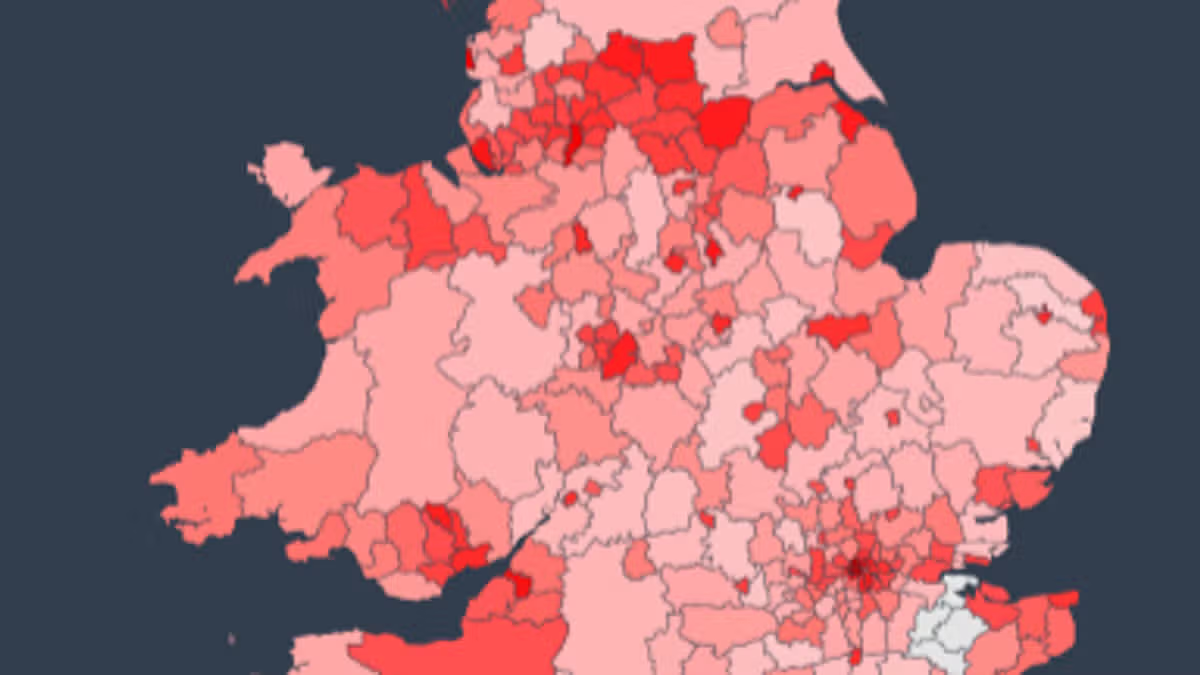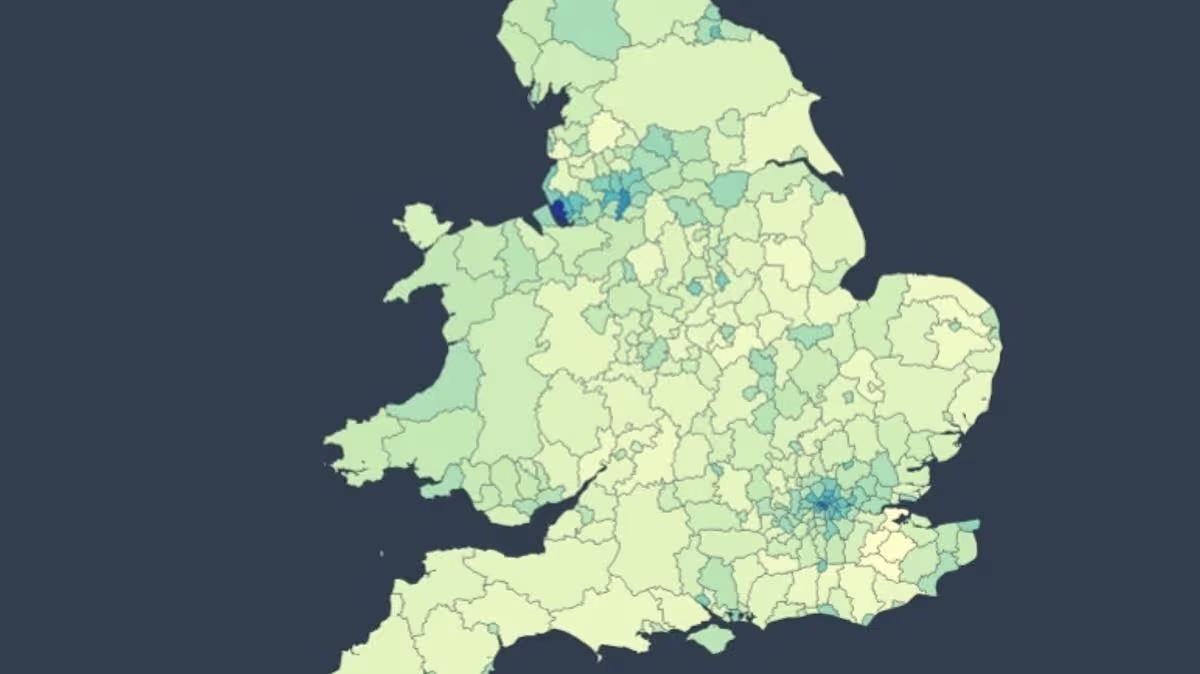
The latest statistics from the Home Office has revealed a series of problem areas where drug crime has become a major issue - with some cases involving serious drug gang violence14:54, 30 Jun 2026Drug crime has soared across the country, according to new data, which has revealed exactly which parts of the nation have become hotspot areas with the most serious issues.While most recorded crime types have fallen in the last year, drug crime has increased by 18%, with more than 230,000 documented offences including trafficking or supply of drugs, which is frequently linked to criminal gangs. Home Office figures show drug crime is most prevalent in cities, particularly in the North.There, statistics show some areas with more than 20 drug crimes a day, some of which were violent incidents during which gangs carried out vicious drug-related killings.Police recorded 7,770 drug crimes in Liverpool in 2025, a 19% increase on the previous year - although Merseyside Police says this is due to rising arrests and warrants targeting criminal gangs - and by far the highest number recorded in England and Wales. That’s more than 20 drug crimes a day, or one crime every 68 minutes.In June, there were two shootings in the Toxteth area of Liverpool, following a reported escalation in violence between gangs waging a turf war. In March, a teenage girl was shot in the legs in Toxteth.Two years ago, 19-year-old Ellis Cox was killed near the Liverpool Loop Line. While Ellis had no involvement in crime, his shooting was fueled by a turf war between rival street-level drug gangs in north Liverpool. Police have recently revealed that the gun used to kill Ellis on June 23, 2024, had been used in two previous incidents.Outside Liverpool, there were also 6,631 drug crimes recorded in Manchester, which was a 31% rise, 4,680 in Birmingham (up 23%), and 3,114 crimes in Leeds (up 7%).Liverpool also had by far the highest crime rate, with 15 drug offences recorded for every 1,000 people who live in the city. Westminster had the second-highest drug crime rate, with 13 offences per 1,000 residents, followed by Manchester with 11, and Islington and Knowsley, each with a rate of nine crimes per 1,000 residents.You can see how your area is affected by drug time using our interactive map.The figures include possession, supply, and production of drugs, which are often linked to organised criminal gangs. Assistant Chief Constable Andy Ryan, Head of Crime and Intelligence for Merseyside Police - which has seen a 13% force-wide rise in drug crime - said: “The most eye-catching increase is a 13% increase in drug offences."Although we understand that such an increase may cause concern, we don’t necessarily see an increase in drug arrests as a negative result, but in part as a result of proactive resources being invested in the issue.“In the past year, our policing of serious and organised crime has led to significant numbers of warrants, arrests, charges and sentences - some brilliant - across many strands of the force. We are constantly looking for information and opportunities to target drug offences and offenders, and such proactive policing will naturally result in more offences being identified.”High levels of drug crime can lead to a rise in other types of offending, such as violence and intimidation, particularly when rival gangs fight over territory.In response, police have stepped up efforts to tackle “county lines” gangs and disrupt supply chains. “Clear Hold Build”, a multi-agency framework for tackling serious organised crime in neighbourhoods and communities, was rolled out nationally in 2024. It provides forces with a blueprint to transform areas by linking organised crime specialists with neighbourhood policing teams to tackle the specific challenges in a particular area.In an update last week, the National Police Chiefs Council announced that 1,254 people had been arrested, 331 people charged, and offenders sentenced to a combined total of more than 438 years.Article continues belowDeputy Chief Constable Gunney, National Serious Organised Crime (SOC) lead said: “We know the symptoms of SOC can manifest in a number of different ways from spikes in ASB to rises in theft and reports of violence. Historically, these crimes have been seen in isolation and not as symptoms of wider organised criminality like drug trafficking and money laundering."What CHB has done, is connect specialist SOC officers to neighbourhood teams so escalating behaviours and patterns can be viewed and investigated through a different lens.“These sites are real success stories where change hasn’t happened overnight but has been as a result of the hard work, determination and specialist skills of all involved. Law enforcement faces many challenges in this area and while CHB is just one mechanism we are using to deliver real change, it is encouraging to see it transforming people's lives for the better and I hope forces continue their great work.”
See impact of drug crime where you live with our interactive map
The latest statistics from the Home Office has revealed a series of problem areas where drug crime has become a major issue - with some cases involving serious drug gang violence
802 words~4 min read