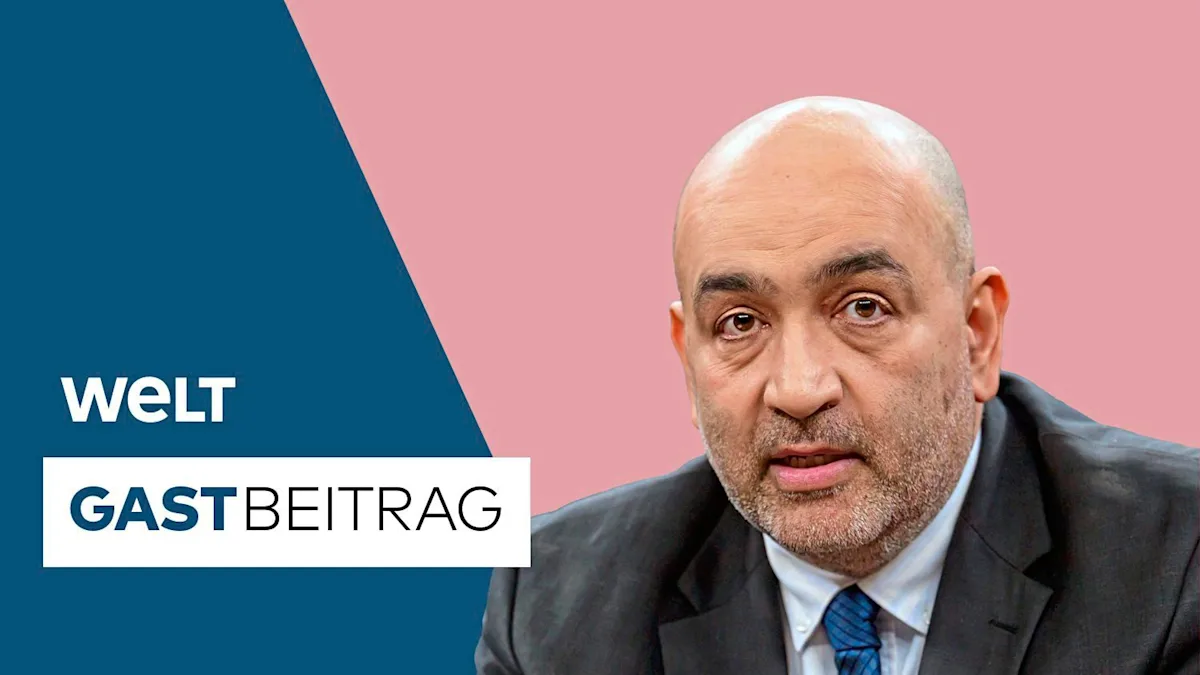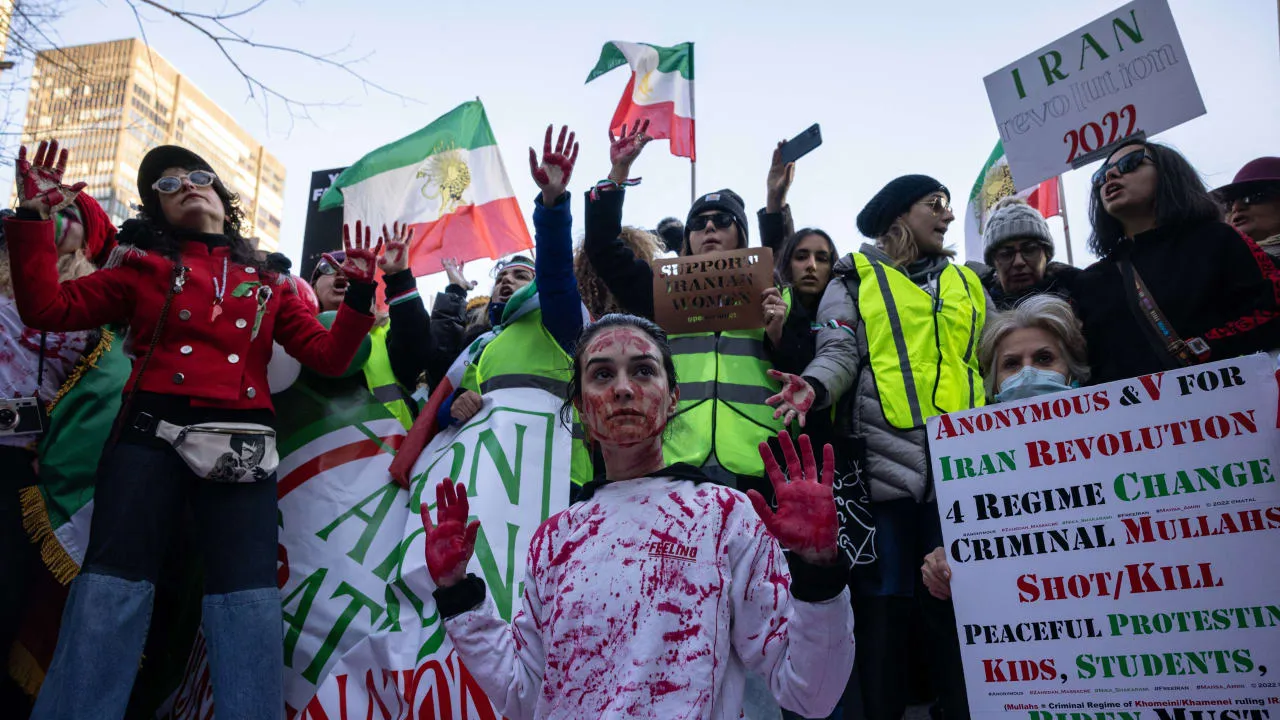
ByDANIELLE GREYMAN-KENNARDJUNE 30, 2026 16:44“Europe can't join a war when it is uncertain of the consequences for international law,” German politician Max Lucks, the rapporteur on Iran for the Parliamentary Assembly of the Council of Europe, told The Jerusalem Post on Tuesday when asked whether greater international involvement would have given Europe more influence over the terms of the memorandum of understanding with Iran.Calling it a “crazy war” that lacked a clear strategy, Lucks said he believed “it was the right decision not to join this war.” He argued that the military campaign proceeded only because it served the electoral interests of the “terrible Mr. Netanyahu,” adding that it was ultimately the Iranian people who paid the price.“Europe can't join a war where it's not sure of the consequences for international law…and not really sure of the strategy,” the member of the left-wing Green Party commented. “No one called the European states before [starting the war] asking to join it or to support something. It was just ‘Okay, we started this crazy war, and now you can join us, and please help us in it.’ And it went wrong. So, I think it was the right decision not to join this war that was obviously violating international law, and what I think is that there really is no strategy that was provided that was supported, and there wasn't really a plan for the Iranian civilian population.”The interview came less than a week after Lucks published a report on the human rights situation in Iran and led a Council of Europe session condemning the absence of terms on behalf of the Iranian people in the MoU.As referenced in Lucks’ report, the Islamic Republic’s human rights abuses have only grown more severe since the start of 2026. Human rights groups report that as many as 30,000 Iranians were killed during demonstrations in late December and early January, with thousands more arbitrarily detained. Internet shutdowns, the regime’s refusal to allow United Nations investigators into the country, and threats to charge whistleblowers with espionage have largely obscured the full extent of the crackdown.The Islamic Republic has also intensified its use of the death penalty. In May, Iranian police chief Ahmadreza Radan announced that security forces had arrested more than 6,500 people accused of being "traitors and spies."Trump’s broken promise to IraniansLucks said these developments, coupled with US President Donald Trump’s promise to Iranians that “help is on the way,” made it even more unacceptable that Washington failed to secure guarantees for Iranians detained by the regime during its negotiations with Tehran.“The result of the war is that we right now see a US president who supports this regime like no president before him,” he continued, referencing the strong financial infusion the regime has acquired through the MoU, which demands very little adjustment from Iran domestically.“I'm especially disappointed by the Americans that they don't mention the human rights in Iran by a single word, by a single sentence. I think their role should not be to give too easy a pass to this brutal regime that massacres its own population. I think that they should create more pressure on this brutal and evil regime, but that is not what they are doing,” Lucks said, adding that the rights of Iranian people are being strategically forgotten as part of an exchange for a short-term pause in geopolitical tensions.“They don't really care about human rights, and I think they need to highlight these topics, and if the Americans don't do that, the Europeans should,” he asserted.Though Lucks acknowledged Europe’s ability to have an impact on the regime, he also acknowledged a growing unwillingness from “cynical” camps on the left and right to pursue action against Iran.Parts of the left are unwilling to act out of a moral objection to pushing what they consider to be Western standards of human rights, and part of the right is unwilling to take action as they believe more meaningful influence can be held with Iran through the establishment and expansion of trade and economic ties, Lucks explained.EU member states, namely France, Germany and Italy, also expressed their willingness to ease sanctions following the signing of the MoU, in exchange for Iran’s commitment to never obtain nuclear weapons.“I think that was such a cynical decision coming from different European Union member states to lower the level of sanctions to this regime right now, because what has changed? Nothing has changed. They are still responsible for what is going on in the whole Middle East region,” Lucks said. “They are still responsible for the most basic violations of human rights that we've ever seen, and European Union member states lower their sanctions, and I think this is a wrong strategy.”Questioned on the effectiveness of sanctions as a strategy, as it has often been reported that Iranian civil society has paid the price rather than the regime’s leadership, Lucks acknowledged that there had to be some thought in how to ensure that the people were shielded from their impact.“I think that we really need to work on our effectiveness as Europeans to hit those responsible for violations of human rights with our sanctions. The prices for the Iranian civilian population are very high, but the kids of representatives of this regime still go to universities all across Europe. They still have bank accounts in Europe, and especially also in Switzerland, for example. They still have banks operating between Tehran and German cities, so we still have banks here in Germany who have one office in China and one office in Munich, and this is something just not acceptable, and that is working for the regime, and that is what we need to really break through,” he admitted.The war did not win a better future for the Iranian peopleWith the war in Iran unsuccessful at ensuring a better future for the Iranian people, and sanctions not hitting Iran the way they are intended to, Lucks said Europe could focus on helping the Iranian opposition formulate an alternative for the day the regime does fall.“The room to create an alternative is not in Iran; it has to be in the exile,” he highlighted. “And that was also one very important conclusion of my report at the Parliamentary Assembly of the Council of Europe, that this place should be Strasbourg. I think we would reach so many things by bringing all the very different Iranian democratic voices in exile together and helping them to become more unified and clearer and to really provide things for their own future.”With no signs that the Islamic regime will begin honoring the human rights of the Iranian people anytime soon, Lucks seemed to feel the only possible thing to do is wait and prepare.“This regime does not have a chance of a majority in its own society. The overall majority of Iranian people oppose their rule, and I think this is important to understand. So, I think that there will be many chances of change, and that we should support them when it comes to them,” he said.Concluding the interview, Lucks took a final swipe at Trump, telling The Post that the president’s unfulfilled promise to Iranians risking their lives in the streets of Iran would remain “a shame for the history books.” Follow us on Google
Iran war broke intl law, failed Iranians, Iran rapporteur says | The Jerusalem Post
Europe must target Iranian officials more effectively and support democratic opposition groups in exile, Council of Europe rapporteur Max Lucks said.
1,216 words~6 min read