Violating the Indus Water Treaty for a little more sediment flushing undermines New Delhi's credibility far more than it inconveniences Pakistan's canals.
This piece was originally published on August 4, 2025.
On the morning of May 31, flow gauges on the Chenab River recorded an alarming decrease in the river flow. The development made headlines in the aftermath of the conflict between India and Pakistan, which broke out on May 7. As with a similar episode at the end of April, it led some to wonder anxiously: Can New Delhi shut Pakistan’s water supply just like that?
The bulk of Pakistan’s water supplies originate from three rivers — Indus, Jhelum, and Chenab — which are allocated under the 1960 Indus Waters Treaty (IWT). Two of these western rivers are buffered by large dams on the Pakistani side: Tarbela on the Indus and Mangla on the Jhelum. Each can absorb changes in flow with little effect on irrigation deliveries. The Chenab, however, is different.
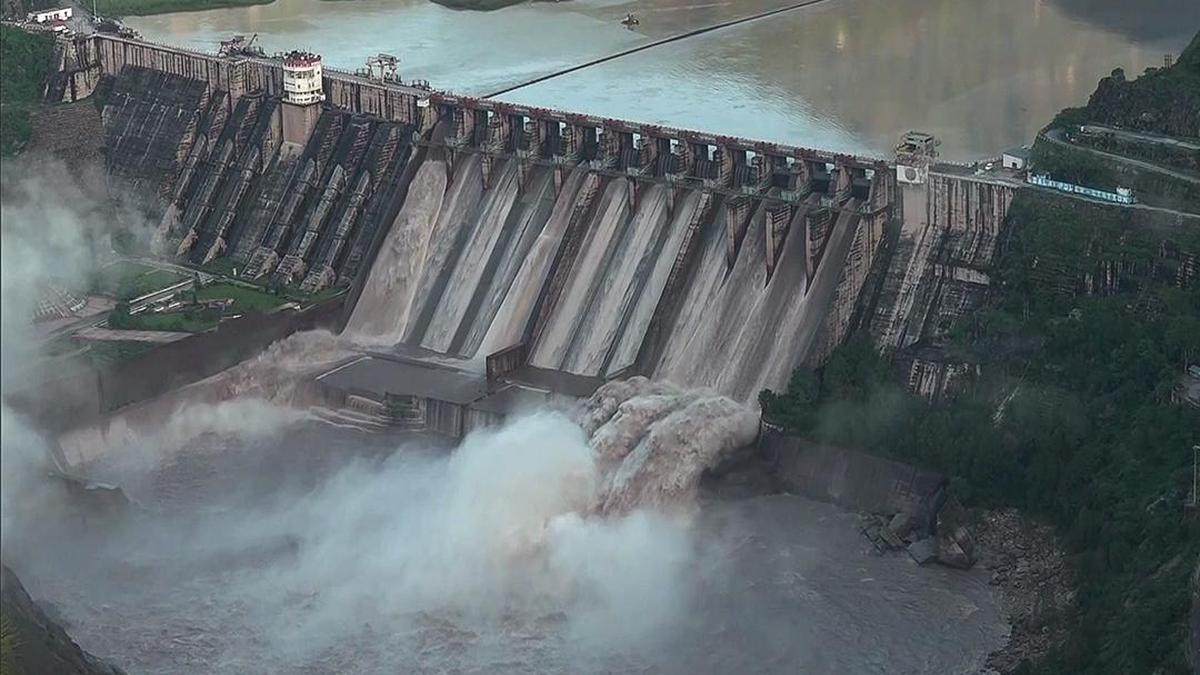
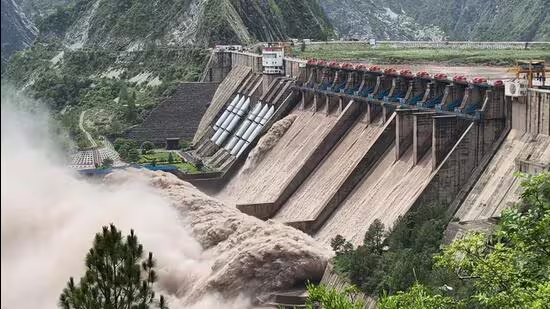
Pakistan does not have a Tarbela-sized reservoir here, and upstream on the Chenab River, India operates three modest dams (Baglihar, Salal and Dulhasti). A closure at these structures can therefore look, at first glance, like the country’s tap has been turned off.