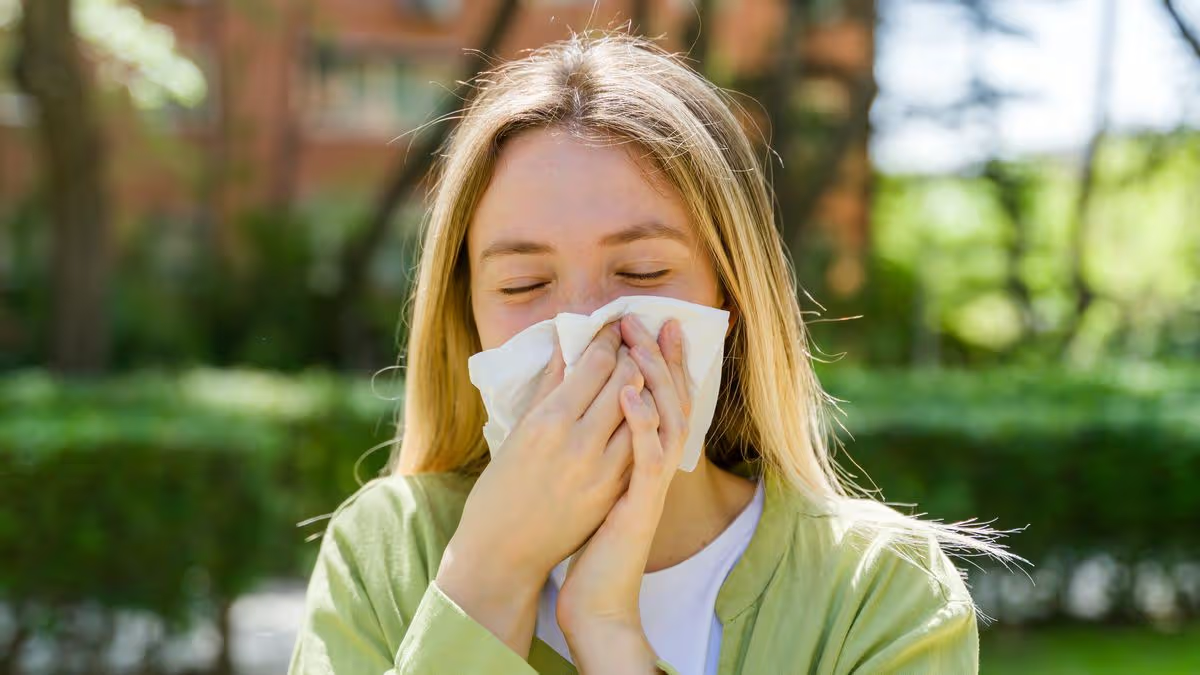
NewsHealthNHSThe Met Office has warned of "very high" or "high" pollen levels across parts of the UK this week13:27, 30 Jun 2026People are being urged to follow a simple grass rule if they're affected by hay fever. With parts of the UK expected to see "very high" pollen levels this week, it's important to follow advice on reducing your symptoms.Hay fever, clinically known as allergic rhinitis, is a common allergy that causes sneezing, coughing, and itchy eyes through reactions to allergens including pollen, dust, mould, and mites.Around one in four people in Britain are affected by hay fever, totalling roughly 16 million people. While there's no cure for hay fever, treatments exist to ease symptoms and certain measures can help reduce pollen exposure.The Met Office website cautions that regions across the UK will face "very high" or "high" pollen levels this week, worsening symptoms. Today (30 June), the east of England and east Midlands can anticipate "very high" levels, with "high" levels across London, south east England, south west England, the west Midlands, Yorkshire and Humber, north west England and north east England.Tomorrow (1 July) and Thursday (2 July), only London and south east England are forecast for "very high" levels, while on Friday and Saturday, London, south east England and the east of England will experience "very high" pollen counts.SymptomsThe NHS outlines the main signs of hay fever to watch out for, including:Sneezing and coughingA runny or blocked noseItchy, red or watery eyesItchy throat, mouth, nose and earsLoss of smellPain around the sides of your head and your foreheadHeadacheFeeling tiredThe NHS explains: "Symptoms are usually worse between late March and September, especially when it's warm, humid and windy. This is when the pollen count is at its highest."Hay fever can persist for weeks or months, unlike a cold, which typically clears up after one to two weeks.How to prevent and treat hay feverAs part of its guidance, the NHS advises people not to "cut grass or walk on grass" when the pollen count is high.If you are prone to hay fever, the NHS also recommends you:Put petroleum jelly (such as Vaseline) around your nostrils to trap pollenWear wraparound sunglasses, a mask or a wide-brimmed hat to stop pollen getting into your nose and eyesShower and change your clothes after you have been outside to wash pollen offKeep windows and doors shut as much as possibleVacuum regularly and dust with a damp clothTry to use a pollen filter in the air vents of your car, if you have one, and a HEPA filter in your vacuum cleanerDo not spend too much time outsideDo not keep fresh flowers in the houseDo not smoke or be around smoke – it makes your symptoms worseDo not dry clothes outside – they can catch pollenDo not let pets into the house if possible – they can carry pollen indoorsArticle continues belowIt is also worth consulting a pharmacist regarding treatments including antihistamine drops, tablets or nasal sprays, and steroid nasal sprays.Choose Daily Mirror as a 'Preferred Source' on Google News for quick access to the news you value.NHSMet OfficeFoodHay feverGood HealthHealthy LifestyleHealthy LifeHealth
NHS grass rule as UK hit by 'very high' pollen levels
The Met Office has warned of "very high" or "high" pollen levels across parts of the UK this week
518 words~2 min read