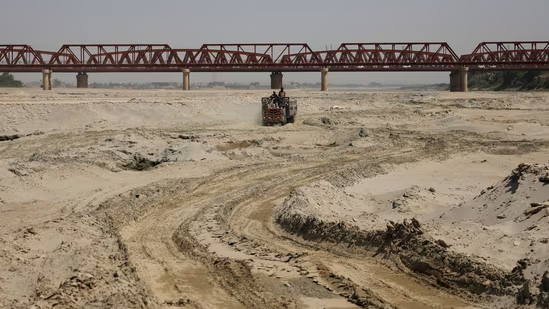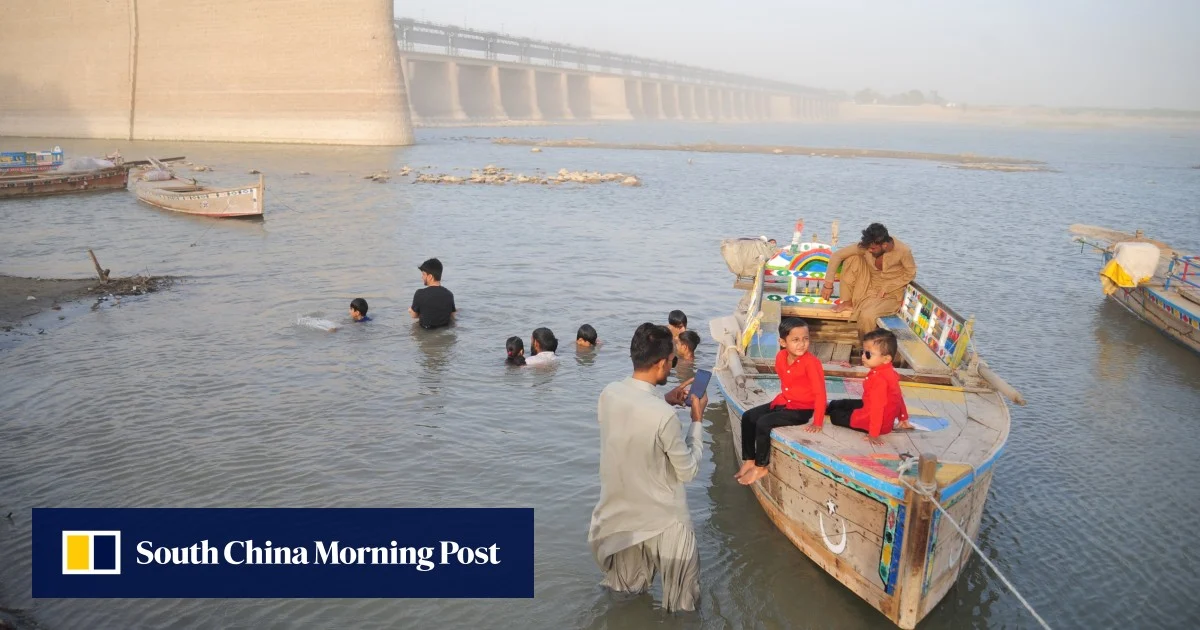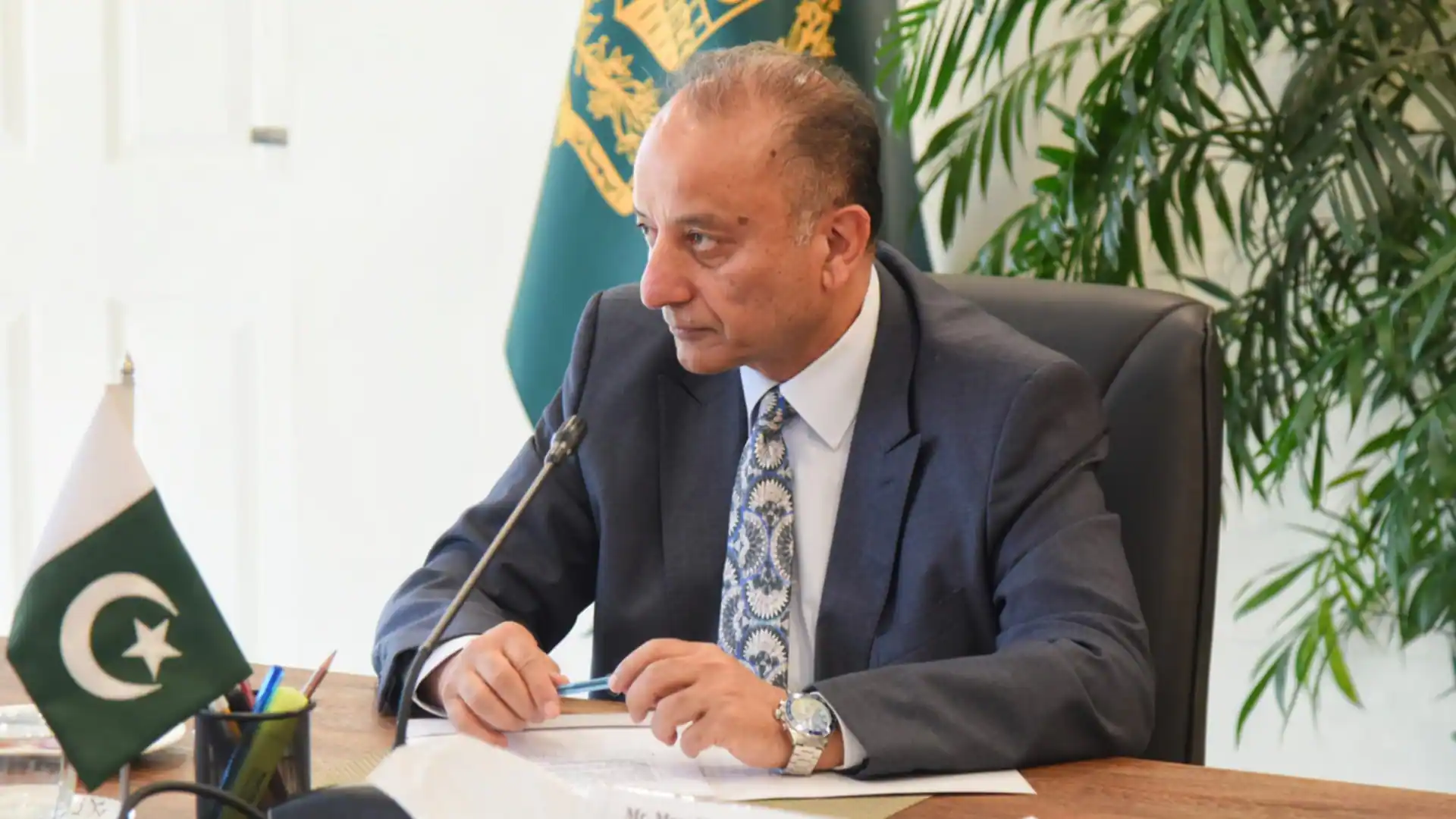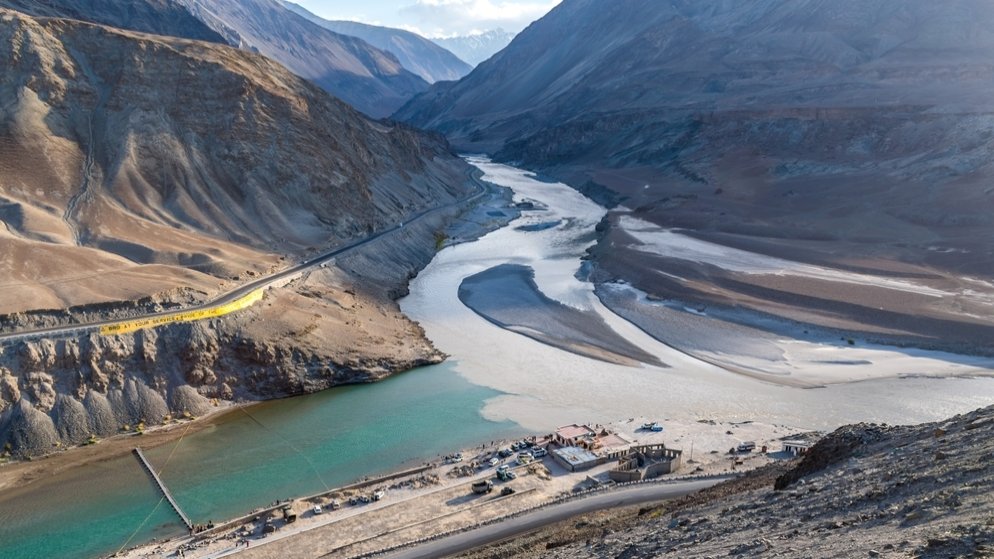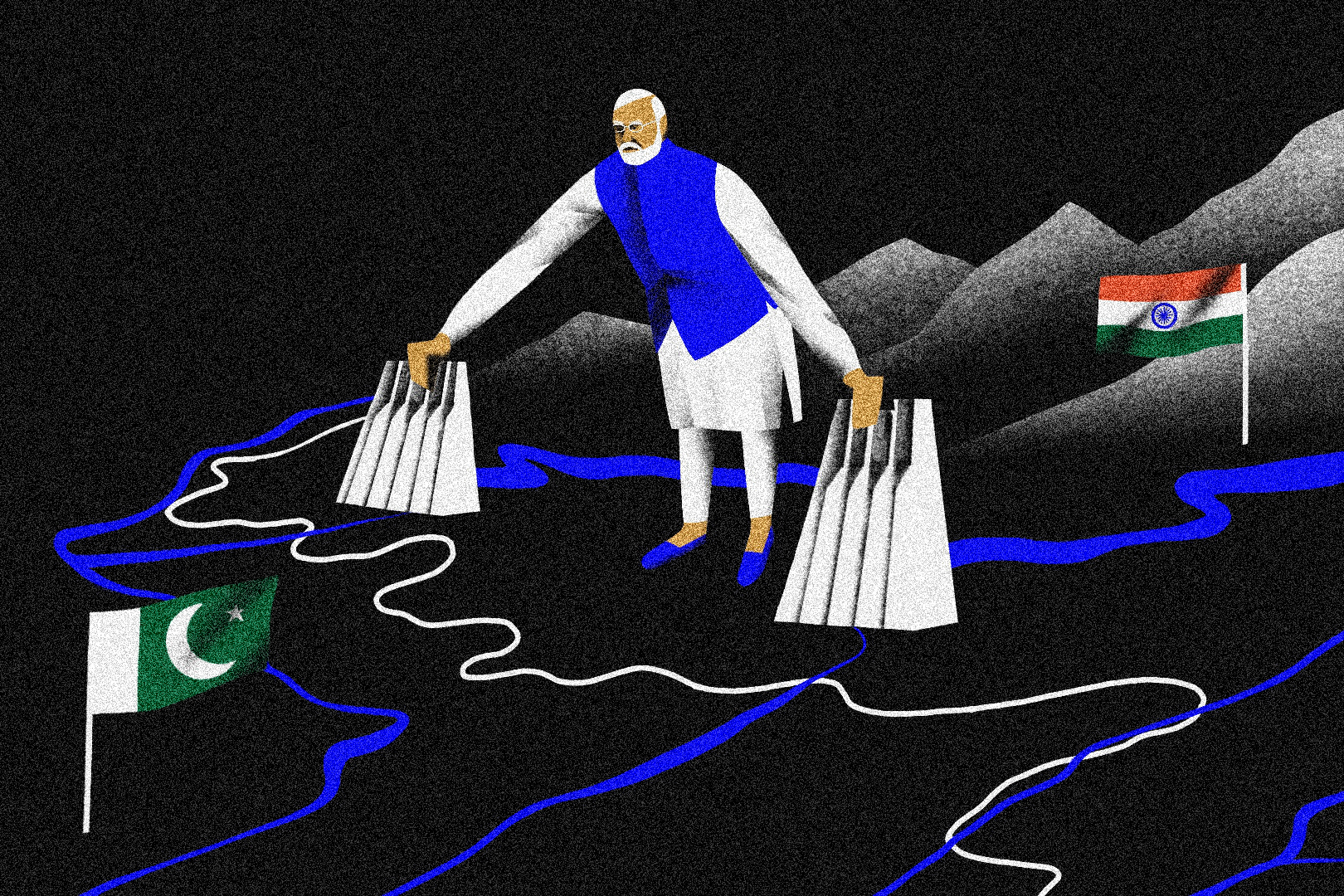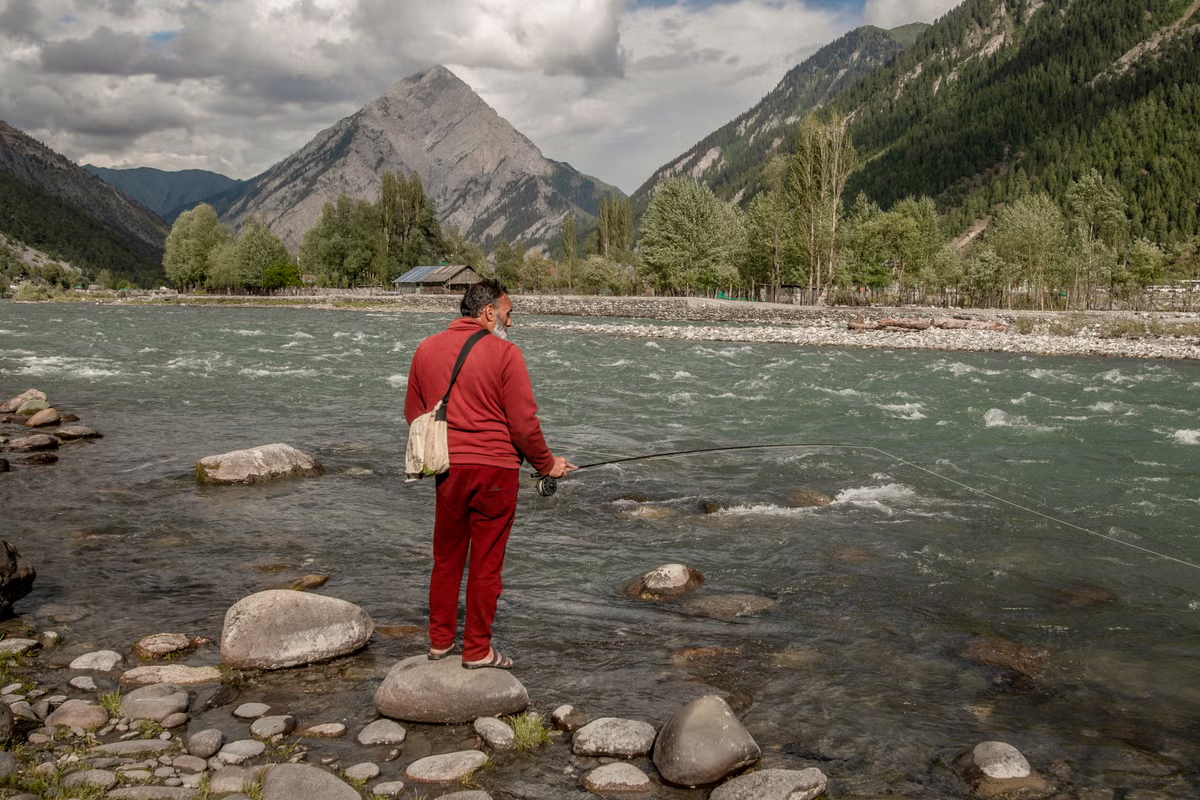
Tensions between India and Pakistan over the “suspended” Indus Water Treaty escalated this week, as Islamabad hosted a daylong international conference on the agreement's legal status and one of its ministers threatened to "cut off" the hands of anyone who interferes with the country's water supply. Pakistan's climate change minister Musadik Malik told a press conference on Monday that India was “controlling” Pakistan's share of water from the river network that the two countries share. India and Pakistan have been engaged in a heated diplomatic standoff for well over a year, with tensions spilling over into a brief four-day conflict in May 2025. The episode began with a terror attack on tourists in Pahalgam, Kashmir, which killed 26 people, with India blaming Pakistan for harbouring the militants responsible. Pakistan said it had no involvement in the attack. On 23 April last year, India announced the suspension of its decades-old river-sharing treaty with Pakistan, along with the downgrading of diplomatic ties and closure of land borders. What is the Indus Water Treaty?The treaty, brokered by the World Bank, divided the six rivers of the Indus basin between the two countries. The three western rivers – Indus, Jhelum, Chenab – went to Pakistan and the three eastern rivers – Ravi, Beas, Sutlej – to India. It allowed India, limited use of the western rivers for non-consumptive purposes like hydropower generation, but prohibited it from altering their flows in a way that could harm Pakistan’s access.There is no legal provision in the treaty for suspension, making India’s announcement unprecedented (AFP/Getty)However, Delhi has last year declared that it would stop participation in the treaty “until Pakistan credibly and irrevocably abjures its support for cross-border terrorism”.There is no evidence that India has significantly altered the flow of the three western rivers so far, but earlier in June foreign minister Subrahmanyam Jaishankar said the treaty would stay suspended “until Pakistan completely stops cross-border terrorism”. India’s minister for water resources said last week that Mr Modi had ordered his government to ensure that “not a single drop of water” flows into Pakistan. Why ‘suspension’ is contentiousThere is no legal provision in the treaty for suspension, making India’s announcement unprecedented. Experts say while India’s move may not translate into an immediate disruption of river flows, it erodes the predictability the deal ensured, which in turn could unsettle Pakistan’s already fragile water systems.“There is no provision for suspension in the treaty, so we are entering into a grey area,” Himanshu Thakkar, coordinator of the South Asia Network on Dams, Rivers and People, told The Independent. “If India stops participating in the mechanisms such as data-sharing and project reviews, it could still have implications for how downstream flows are managed.”According to the treaty, India is required to allow 43 million acre-feet of water to flow into Pakistan annually. That makes up roughly 80 per cent of Pakistan’s total surface water, a crucial lifeline for its agriculture, cities, and hydropower generation.India’s minister for water resources said last week that Modi had ordered his government to ensure that “not a single drop of water” flows into Pakistan (AFP/Getty)How has Pakistan reacted?Pakistani officials strongly condemned the decision. Energy minister Awais Leghari described the suspension as “an act of water warfare; a cowardly, illegal move”.“Every drop is ours by right and we will defend it with full force, legally, politically, and globally,” he said.On Monday 29 June, the climate change minister Malik told reporters: “There is a tap being controlled by the prime minister of a neighbouring country. He says he will not let even a drop of water flow into Pakistan. We've proved that if anyone lays a hand over our share of water, we'll cut off that hand.”Mr Malik said 40 to 50 per cent of Pakistan's population relied on agriculture for their livelihood, and that the dispute threatened "50 per cent of employment in the country and 25 per cent of the economy."Pakistan's information minister Attaullah Tarar, addressing the same press conference, said the treaty remained legally binding and could not be suspended, revoked or amended unilaterally. "Legally, Pakistan's stance has garnered support internationally, as the IWT cannot be unilaterally revoked, abolished or amended," he said, according to Dawn. The escalation follows ominous remarks a week earlier from Pakistan's defence minister Asif Khwaja that Islamabad is willing to resume fighting with India if necessary. "The moment we feel that our national security, and water is part of our national security, is being threatened, we will go to war against India,” Mr Khwaja told local outlet Ary News. India had last year declared that it would stop participation in the treaty “until Pakistan credibly and irrevocably abjures its support for cross-border terrorism” (Getty)Is the Indus Water Treaty still fit for purpose?Environmental experts in Pakistan say the bigger threat lies not in India cutting off water flows, which is hydrologically and politically difficult, but in the slow degradation of river systems and the loss of predictability.Muhammad Abdullah Deol, a water scientist with Green Planet Consultant Netherlands, said this moment could be an opportunity for renegotiation of the treaty to reflect the realities of the 21st century.“Everything changes with time. It was in the 1960s. If we look at the geography, the science, technology, and population, I think it would be good if both countries can just negotiate, renegotiate,” he told The Independent.Mr Deol pointed out that both countries were using outdated irrigation techniques that ended up wasting vast quantities of water – something that could no longer be afforded as populations grew and climate impacts worsened. “We need to work on our agriculture, and we need to renegotiate because, like I said, with the changing world everything is changing,” he said. “So I think for the peace and prosperity of both people at the end of the day, it's 13 per cent of the human population, and we should sit together and we should use water for peace and not for power.”A dolphin swims in the Indus river in the southern Pakistani city of Sukkur (AFP via Getty)Mr Deol also raised environmental concerns. There could be damage to coastal ecosystems due to less freshwater reaching the Indus Delta, for instance. “Running water itself is a form of protection,” he said. “When the river reaches the ocean, it carries sediments that maintain the coastline. Without that, the ocean rises and eats away land – and Pakistan is already losing land to the sea.”He said some Pakistani policymakers believed the treaty, in its current form, failed to account for issues such as wastewater discharge from India and the cumulative ecological impacts downstream.Outdated treaty in a changing climateOther regional experts agree that the treaty no longer reflects the environmental and political landscape of today. Ambika Vishwanath, founder director of the Kubernein Initiative, said while the treaty was “technocratic and engineering-led”, it did not anticipate the extreme climate patterns now seen across South Asia.“The treaty didn’t take into account climate change – because that science didn’t exist then. But the kind of flooding, glacier melt and droughts we’re seeing now were never part of the design,” she said. “That’s why this suspension, even if temporary, opens a window to revisit how the treaty works.”Still, experts warn that India’s decision to step away from its treaty obligations could set a damaging precedent for future transboundary water negotiations – not just in South Asia but globally. India itself is a lower riparian in other international river basins, such as the Brahmaputra, where it insists on the sanctity of flow-sharing principles.The Indus Water Treaty may not be perfect, but it is a rare example of enduring cooperation between two rival nations. Its suspension – even without immediate consequences – marks a shift towards uncertainty, with water again at the centre of geopolitical risk in the region.
What is Indus Water Treaty and why could India and Pakistan ‘go to war’ over it?
Future of river-sharing treaty that has survived wars, border conflicts and prolonged diplomatic freezes in the past is now under threat
1,296 words~6 min read