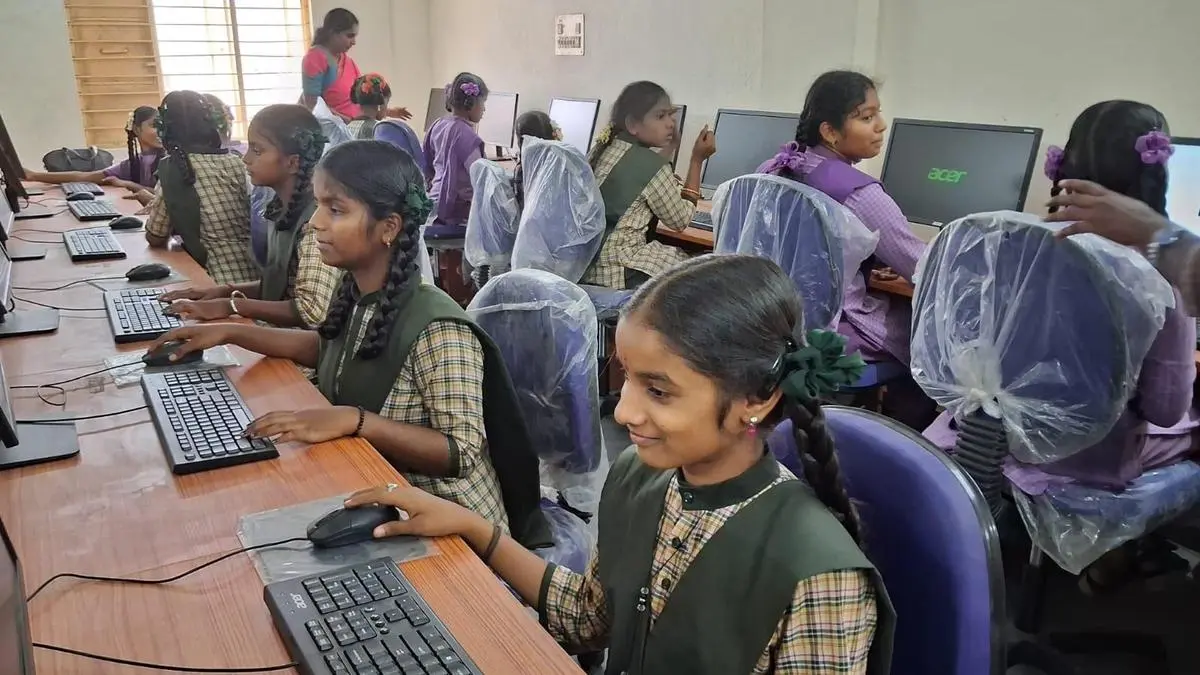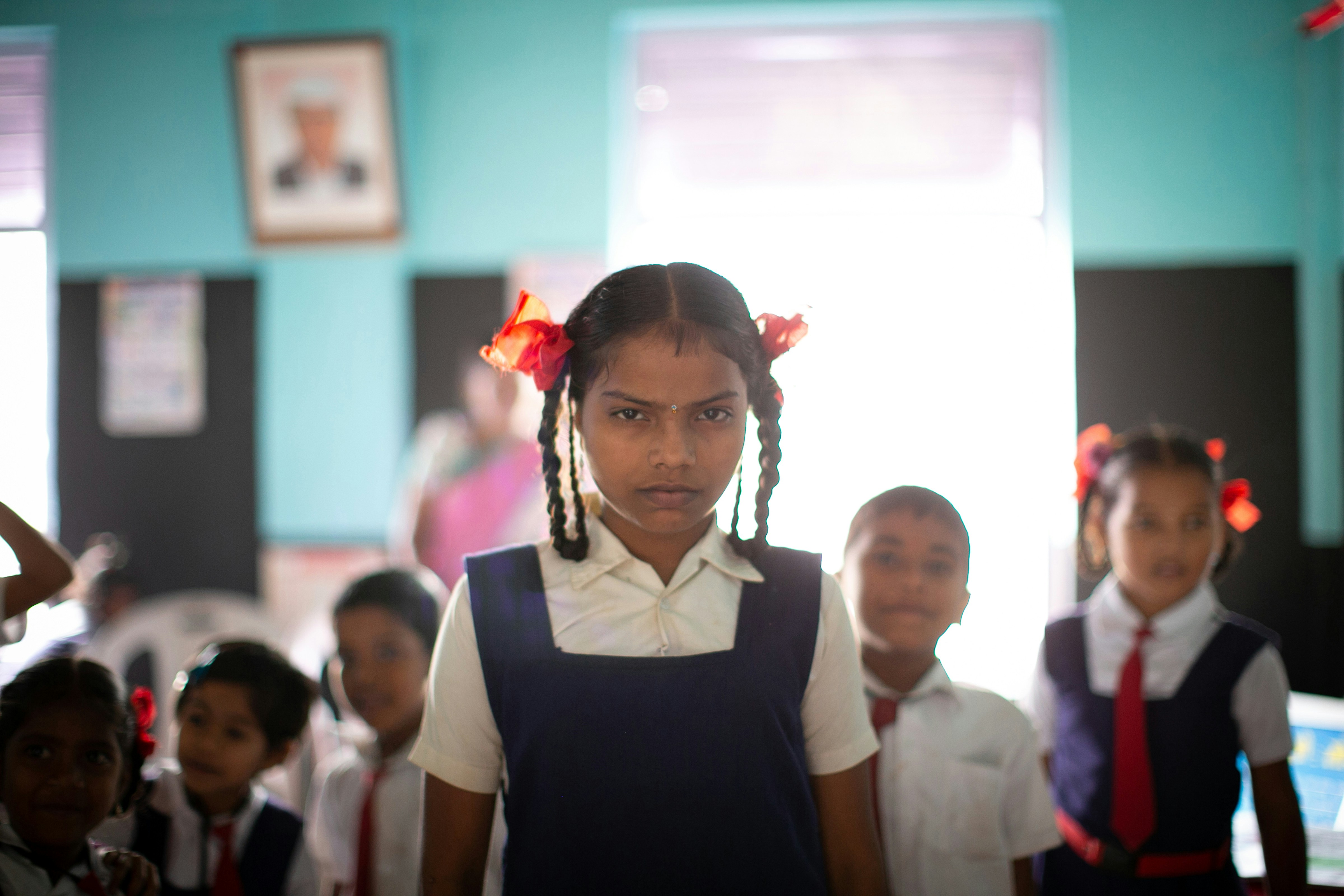
When Kiran Salave entered Class 10 in a government-run school in Kondhwa, Pune, Maharashtra, she was doing well in her studies. Her grades were steady, her teachers were supportive, and she carried a determination that many first-generation learners know well.School-to-work (Pixabay/Representative)What she did not have was clarity about what would follow.At home, there were no conversations about college admissions or career choices. Her family had never navigated application forms, scholarships, or course comparisons. Like millions of young Indians approaching the end of secondary school, Kiran stood at an important threshold without a map. However, what changed her trajectory was not a single opportunity, but rather continuity.A mentor sat with her to understand her interests and to explain the differences among academic pathways. Teachers helped her strengthen subjects she struggled with while also building confidence in skills such as communication and digital literacy. Exposure visits introduced her to workplaces she had never imagined entering. Scholarships and financial guidance ensured that cost did not close doors before she could even consider them.Over time, these supports helped Kiran do something profoundly important: make informed choices. Years later, she would return as a near-peer mentor, helping younger students navigate the same uncertain passage.Her story reflects a deeper structural reality. India has invested significantly in expanding schooling. Yet insights from the 2024-25 UDISE Report suggest that participation begins to narrow at the secondary and senior secondary stages, with notable variations across states and districts. The challenge, therefore, is not only about enrolment. It is about building systems that help young people move from education into meaningful work.This year’s Union Budget signalled growing recognition of the need to strengthen the relationship between education, employment, and enterprise. The proposal to establish a Standing Committee to examine this alignment is a welcome step.For decades, public discourse has focused on two ends of the spectrum: improving schools and creating jobs. The transition between the two has remained largely invisible.For young people, however, this transition is where futures are often decided. Between the ages of 15 and 25, they must make complex decisions about academic streams, vocational routes, higher education, entrepreneurship, or early entry into the workforce. These decisions are shaped not only by aspiration but by access to guidance, financial stability, exposure to opportunity, and the confidence to imagine possibilities beyond immediate surroundings.Students who benefit from strong institutional and family support often navigate these choices successfully. Those who do not may find themselves qualified on paper yet disconnected from meaningful employment.India’s familiar paradox of rising educational attainment alongside youth unemployment is not only a labour market issue. It is also a transition design challenge.Experiences from schools and transition initiatives across the country are beginning to reveal a consistent pattern. Young people are far more likely to move into stable and fulfilling career pathways when four forms of support are present and sustained over time.They need financial buffers to navigate high-risk passages, whether waiting between transitions or recovering from setbacks, so that economic constraints do not prematurely narrow their horizons or push them out of education and work pathways.They need strong academic foundations, complemented by life skills and emerging competencies (from self-awareness and decision-making to financial and digital proficiency). This helps build not just credentials, but capability for what comes next.They need trusted adults who can guide them through key transition points - not by deciding for them, but by building their agency and resilience so they can navigate uncertainty, reach out when needed, and keep moving forward.They need exposure to different pathways and a clear sense of what professions entail so they can understand themselves and the world of work and make informed choices aligned with their strengths and interests.Kiran’s journey was shaped by precisely this convergence. None of these elements alone would have been sufficient. Together, they created the conditions for informed decision-making and long-term mobility.This insight is increasingly informing the design of structured school-to-work pathways.Organisations are now piloting models that are beginning to shape these transition ecosystems. Working with schools, employers, and ecosystem partners, they are designing structured pathways that integrate mentoring, skills development, career exposure, and financial scaffolding into a coherent system.These initiatives are not only supporting individual students. They are generating practical knowledge about how transitions can be designed at scale, how institutions can collaborate, how outcomes can be measured over time, and how local labour market realities can shape programme design.In doing so, they are helping build a field of practice that moves the conversation beyond isolated interventions towards systemic continuity.Such continuity matters because the goal of education cannot be limited to completion certificates or placement statistics. Young people must be able to access career pathways that are informed by choice, ensure financial stability, and provide a sense of meaning.Different routes, universities, technical education, entrepreneurship, or workforce entry combined with ongoing learning can all lead to dignity and mobility when supported by strong transition ecosystems.If India is to fully realise the promise of its demographic dividend, it must treat school-to-work transition as a shared responsibility. Schools alone cannot prepare young people for complex labour markets. Employers must engage earlier. Policymakers must enable collaboration. Philanthropy and research actors must help generate and disseminate evidence.Most important, young people must not be left to navigate critical life decisions in isolation. Kiran often reflects that what changed her life was not simply access to education, but the presence of people and structures that helped her translate learning into livelihood.In a country where millions cross the threshold of secondary school each year, strengthening this bridge may be one of the most consequential reforms India can undertake. Education fulfils its promise not when a student graduates, but when they step into adulthood with confidence, capability, and direction.(The views expressed are personal)This article is authored by Sejal Desai, executive director, Akanksha Education Fund and Arjun Bahadur, lead, education practice, Sattva Consulting.
Stronger school-to-work pathways are an urgent education reform
This article is authored by Sejal Desai, executive director, Akanksha Education Fund and Arjun Bahadur, lead, education practice, Sattva Consulting.
970 words~4 min read