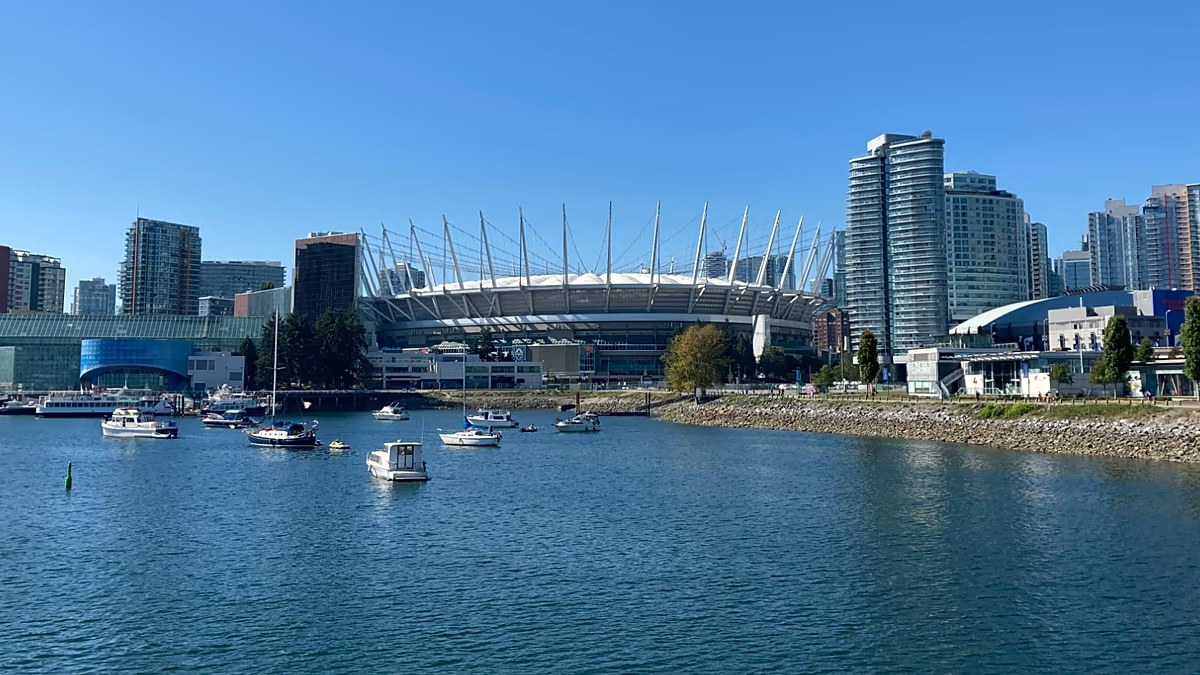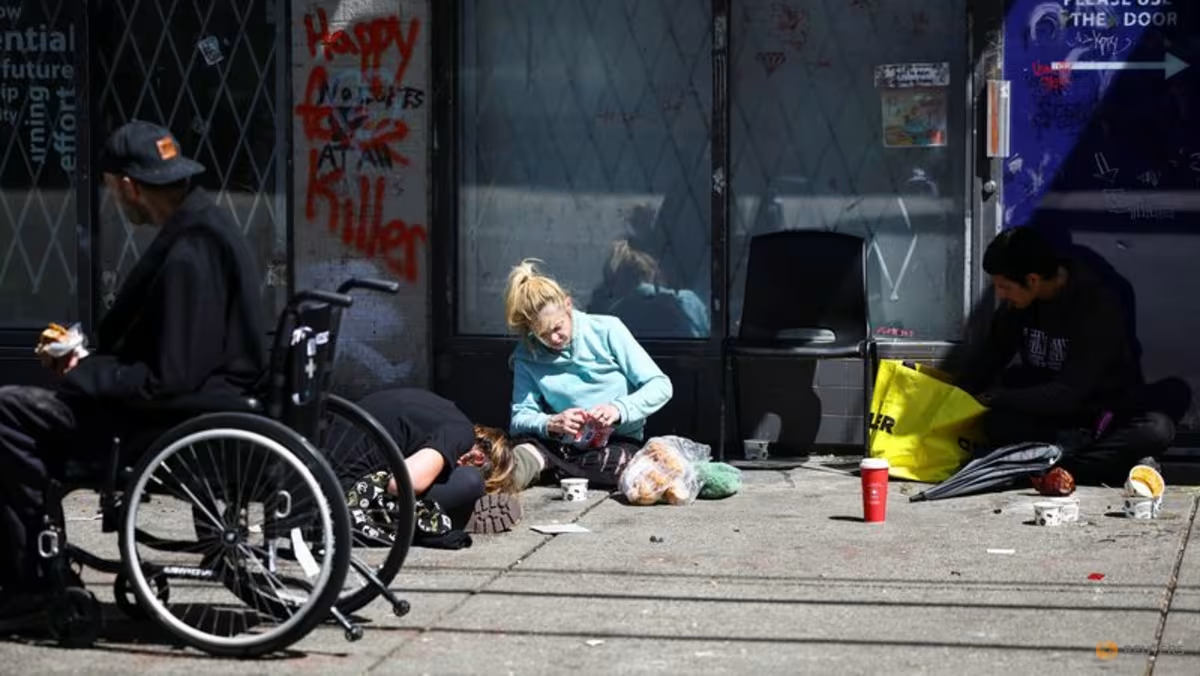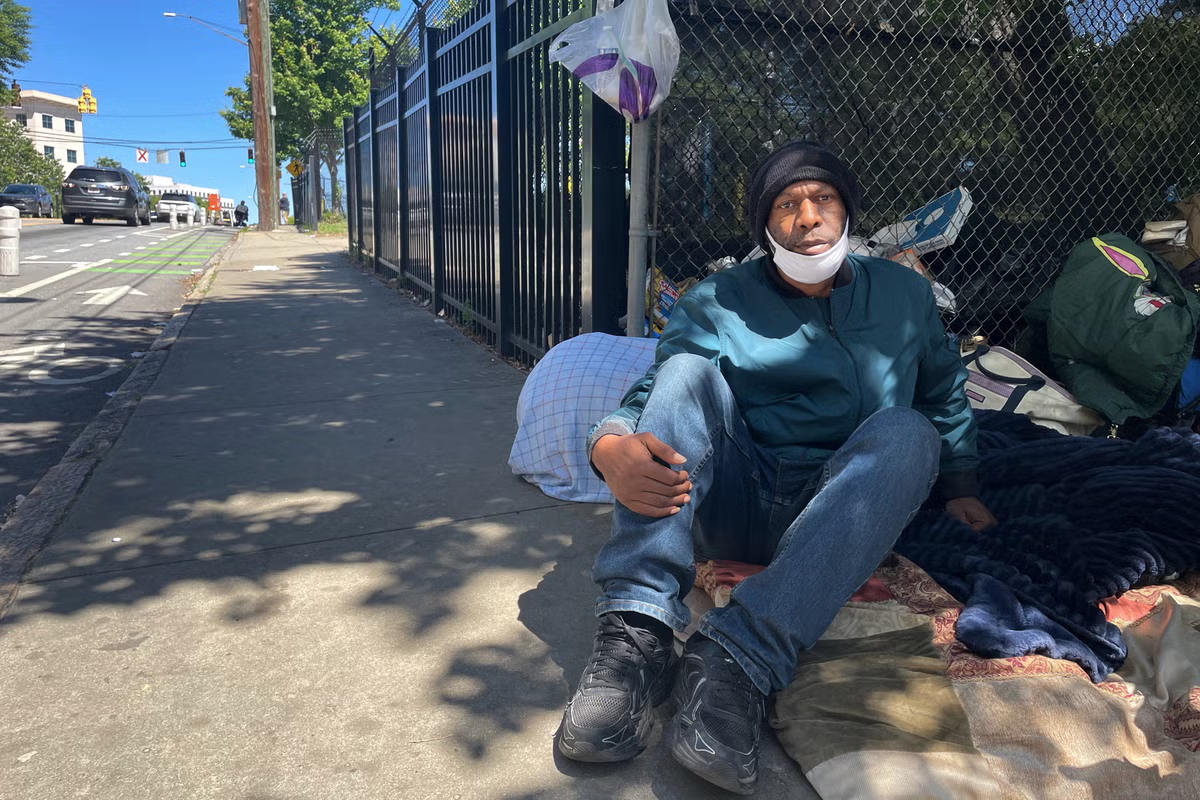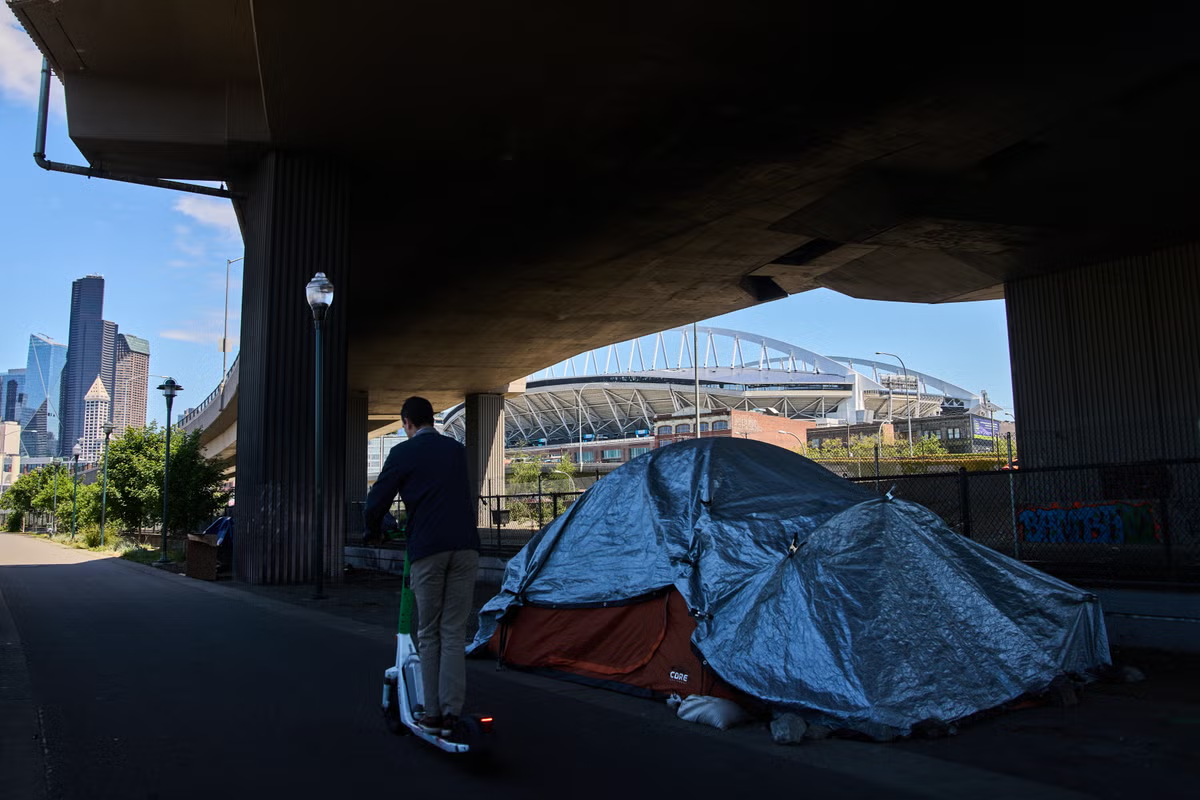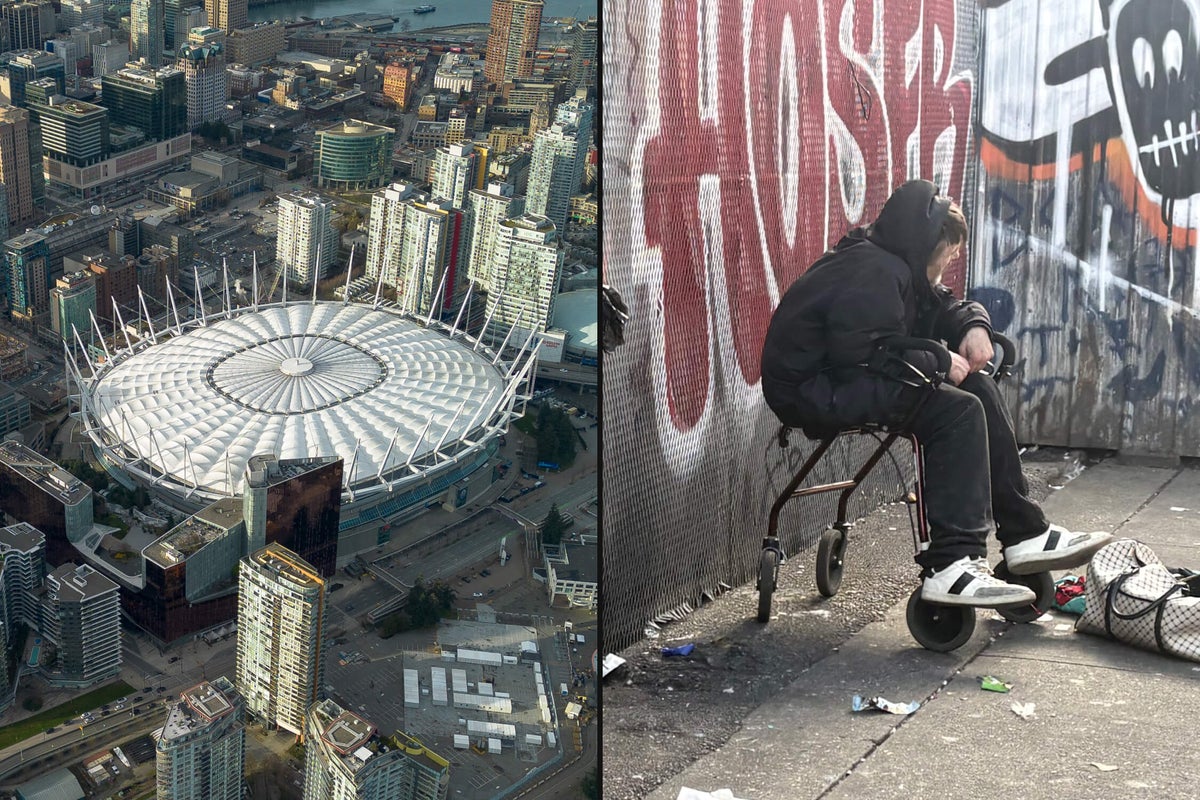
A barefooted man lay on the sidewalk, just a few yards from FIFA’s World Cup accreditation centre in Vancouver.The backdrop was BC Place stadium, on the eve of the first of seven men’s World Cup matches to be played in the Canadian city.The following evening, Australia shocked Turkey 2-0 in a pulsating contest. Yet a couple of blocks away in Downtown Eastside, a district blighted by some of the worst and most toxic drug addiction problems in North America, the glamour of the World Cup feels very far away.If any 2026 venue sharply contrasts the warped economics of FIFA’s showpiece event with extreme deprivation, then it is surely here.It was only 9am and on East Hastings Street, a young man stumbled towards me with his eyes popping out of his head. After passing the junction with Carrall Street, it got worse. Bodies lined the path, some of them barely breathing. Two men were pushed up against each other in a doorway and needles were scattered around them. The area smelled like it had been jet-washed with urine.Homeless people near the Vancouver Stadium (Simon Hughes/The Athletic)Another man was shooting up and had the attention of police officers, who did not have the bandwidth to also address a fight breaking out on the other side of the road.There, in what used to be an Army & Navy store, stood a homeless shelter called The Osborn, with a queue of people outside. A hunched woman was trying unsuccessfully to apply makeup to a face apparently ravaged by drugs.Some people were standing but bent rigidly at the waist, heads bowed and arms limp. The “fenty fold” happens when a person’s brain and spinal cord become depressed after using fentanyl, slowing down their muscle control and basic motor skills.At an alleyway just before Main Street, the scene became even bleaker.I write this as a European outsider looking in, having last visited North America in 2019. My home city of Liverpool in the United Kingdom has a problem with homelessness and drugs, and it is visible too, but the scale in Vancouver was many levels up.It has to be stressed, this was happening in a very small part of a city that otherwise has everything going for it, but the disparity helps explain why the mood in Downtown Eastside was so shocking. How did it end up this way?In the early 2000s, Canada rolled out a “four pillar” strategy that led to reduction, prevention, treatment and enforcement services centralised in areas like Downtown Eastside which were already affected by drugs.In 2023, a landmark drug decriminalization pilot allowed adults in the province of British Columbia to possess small amounts of some illegal drugs in public but that expired at the end of January earlier this year and was not renewed.Since 2016, British Columbia has been battling a public health emergency, which has led to more than 16,000 deaths related to opioids (drugs which, when prescribed, are normally used to treat severe pain but can cause severe addiction because they can cause relaxation and euphoria at the same time).When Vancouver applied to become a 2026 World Cup host city, it had to supply FIFA, the global governing body of football which also organises the tournament, with a human-rights action plan. In that document, in addition to serious problems relating to housing and homelessness, it acknowledged it was struggling to fix what was happening with toxic drugs because it did not control a volatile supply.In early June, health officials in British Columbia warned drug users about a new laboratory-made opioid that has made its way onto the market in this province. A street drug known as “down” was found to contain cychlorphine, which, according to the B.C Centre for Disease Control, is around 10 times more potent than fentanyl.Mark Lysyshyn, the deputy chief medical officer at Vancouver Coastal Health, describes the city’s relationship with drugs as a “complex problem that changes year by year”. While mortality rates have been falling due to suppliers using smaller doses of fentanyl, an increasing amount of sedatives, including tranquillisers, means users are affected for longer, and overdose events have risen.
The fentanyl crisis unfolding a few blocks from the 2026 World Cup
Small areas of World Cup host cities Vancouver and Seattle feel very far away from the glamour of the overall tournament
1,987 words~9 min read