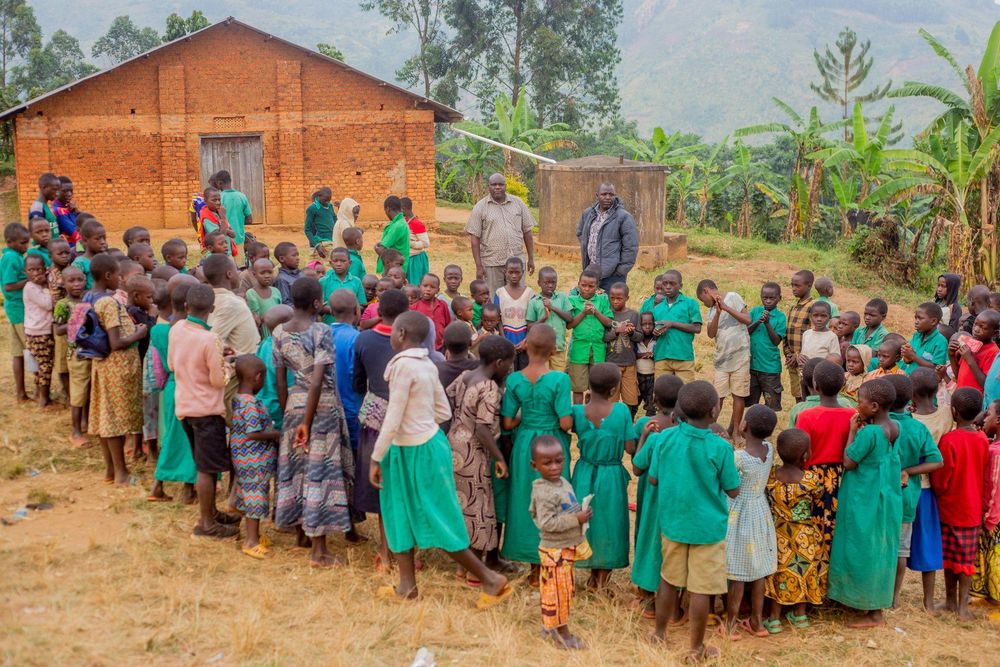
Rwandans gather after taking part in the ancient practice of Umuganda, a monthly tradition which empowers citizens and fosters resilience in a country shaped by its past, yet firmly oriented toward the future.
Bill Donahue
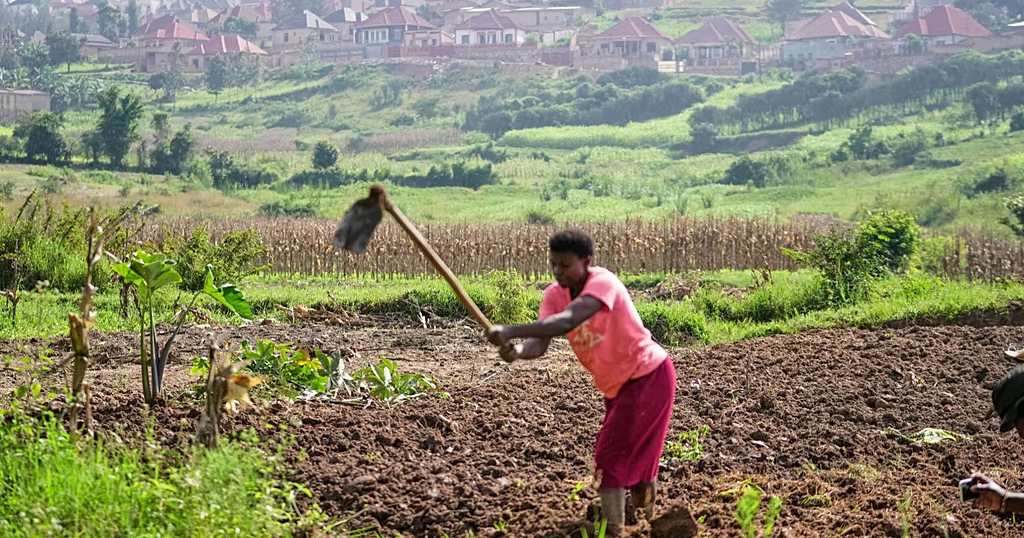
In a rural village outside Rwanda’s capital city, Kigali, about 3,000 people are arrayed on a steep, rubbly dirt road. They’re working loose sand and gravel into the road’s deep, wheel-swallowing holes, making the path smooth, their shovels and picks swaying almost in unison. They are all working for free, yet the vibe is far from penal. The workers are chatting happily with one another, pausing to laugh and shake hands.
This is Umuganda, a centuries-old cultural practice in which Rwandans join together to work - and to listen to political speeches - from 8am to 11am on the last Saturday of each month, in gatherings of varying size in cities and villages nationwide. A mainstay of precolonial Rwanda, Umuganda is now state policy in the tiny East African nation. Every household must provide one worker from age 18 to 65 for public-service initiatives such as tree planting, weeding and other forms of tidying.
Umuganda, a new documentary from the 26-year-old filmmaker Zion Sulaiman Mukasa Matovu, is an unwavering 57-minute paean to the monthly ritual. Tranquil in spirit and visually beautiful, it argues that Umuganda has been central to Rwanda’s remarkable renaissance by fortifying both esprit de corps and infrastructure. In 1994 the nation’s majority Hutus killed about 800,000 of its 7 million people in a genocide, most of them members of the Tutsi minority. Today, Rwanda is a clean and orderly country with a rapidly growing gross domestic product and a population of more than 14 million.