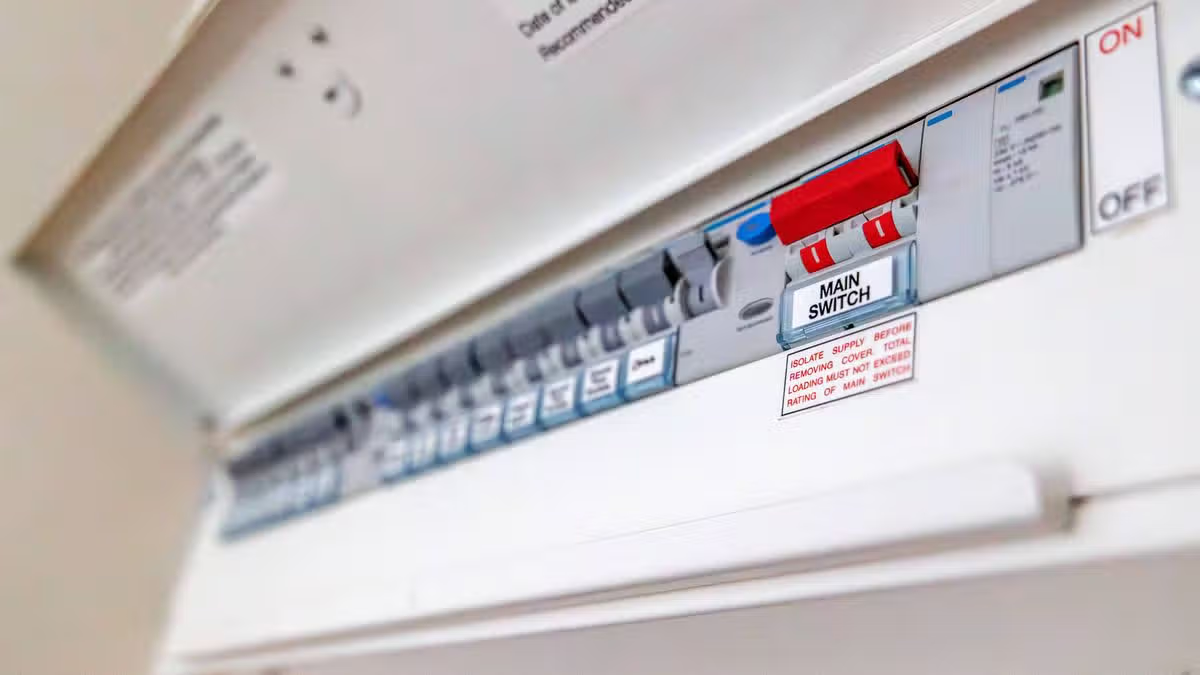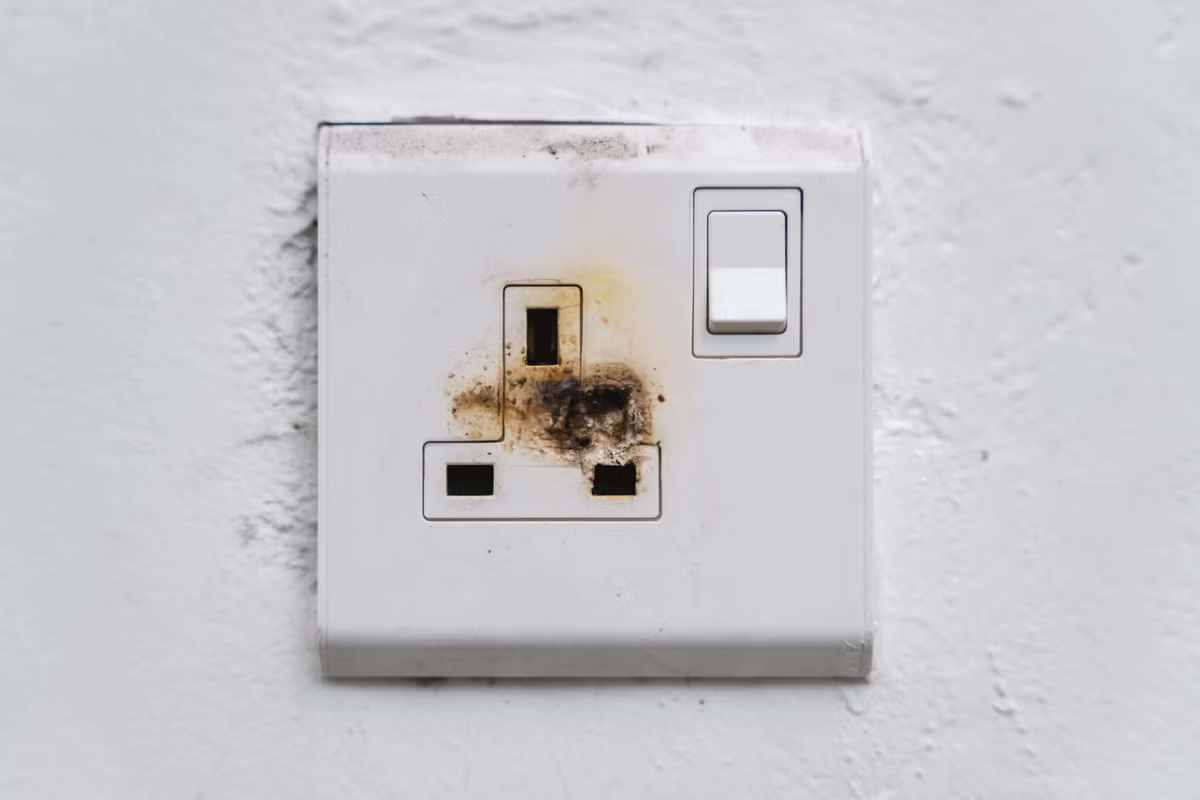
It’s easy to ignore ‘minor’ electrical niggles like a blown fuse or a buzzing socket in the hope they just won’t happen again.But the reality is there’s a risk such issues could be a sign your home electrics are dangerous – and electrical experts warn that ignoring them could lead to serious problems including electric shocks and fires.New research from the electrical certification and training body NICEIC has found that 22% of property owners have an ‘I’ll worry about it tomorrow’ attitude to potentially dangerous electrical faults including constant tripping, broken switches and flickering lights.And the same proportion (22%) haven’t had their electrics checked by a professional in more than a decade – if at all – while 16% have no idea if the electrics in their property have ever been looked at by an expert.“Ignoring electrical faults can allow relatively minor issues to develop into much more serious problems,” warns Paul Collins, NICEIC’s technical director.“Faulty wiring or overheating connections can increase the risk of electric shock, electrical fires and damage to your property.”And Luke Osborne, technical director at Electrical Safety First, the charity which aims to reduce deaths and injuries caused by electrical accidents, adds: “With the UK having some of the oldest housing stock in Europe, electrical issues might not be visible to the naked eye, with older wiring hidden behind your walls prone to developing faults.“Undetected faults can, over time, turn a small inconvenience into a serious fire or electric shock risk.”What are the warning signs that your electrics are a fire risk?He says common signs that your electrics may pose a fire risk include a fish-like smell coming from plug sockets, which can be a sign of components overheating inside.Discoloured sockets that are turning yellow can also be a sign of overheating, and if your overhead lights continue to flicker or your electricity regularly trips, this may be a sign of a fault or loose connections in your electrical system.(Alamy/PA)“If you’re experiencing any of these telltale signs, we always recommend contacting a registered electrician to undertake a safety inspection,” Osborne advises.And Collins adds that buzzing from switches or sockets can also be a sign of an electrical problem.“In kitchens and living rooms especially, where multiple appliances are often used at the same time, electrical systems are placed under significant demand,” he points out.“Any burning smell, sparks, buzzing sounds, scorch marks, or socket-outlets and switches that feel unusually warm should always be taken seriously. Likewise, if your circuit breaker regularly trips or fuses frequently blow, it’s often a sign that something isn’t right.”Warning signs can become more frequent if your electrical system is ageing, overloaded or wasn’t installed correctly, says Collins, and he stresses: “These issues rarely resolve themselves and can indicate underlying faults such as damaged wiring, loose connections or overloaded circuits.“If you notice any of these warning signs, stop using the affected equipment if it’s safe to do so and contact an NICEIC-registered electrician to investigate.”However, sometimes electrical issues can go unnoticed, hidden behind walls, under floors and above ceilings, where wiring and connections are out of sight. “Because of this, problems are often invisible until warning signs appear, and sometimes there are no obvious signs at all,” Collins explains.And he points out that the most reliable way to understand the condition of your home’s electrics is to have an Electrical Installation Condition Report (EICR) carried out by an NICEIC-registered electrician.“An EICR is like an MOT for your home, providing a comprehensive health check of your electrical installation,” he says.“Electrical installations naturally deteriorate over time, and many faults aren’t immediately visible. Addressing problems early is often simpler, safer and less expensive than waiting until a failure or emergency occurs.”An EICR assesses the condition of wiring, socket-outlets, switches, consumer units and other electrical equipment to identify any deterioration, damage or potential safety issues, says Collins.And Osborne stresses: “It will tell you if any hazards might be developing and allow you to address them before they become a serious risk. We recommend having one of these checks once every five years.”The NICEIC research found that 49% of property owners said they weren’t confident about identifying a dangerous electrical fault in their home, although 47% were concerned about their property’s electrical safety.Yet the majority of homeowners (69%) had no idea what an EICR was, and 48% of those who did know were unaware that it’s recommended the check is carried out at least every 10 years for private homeowners.And Collins says it’s also worth booking an EICR when you’re buying or selling a property, or if you have any concerns about the condition of the electrics in your existing home.For rented properties an EICR should be carried out at least every five years, says Collins, who stresses: “As our homes become increasingly dependent on electricity to power everything from heat pumps and EV chargers to smart technology and everyday appliances, regular inspections have never been more important.“Many electrical issues develop gradually and remain hidden, so having your installation checked periodically is one of the most effective ways to identify problems early and help keep your home safe.”A worrying 24% of homeowners have attempted to fix an electrical issue by themselves – but Collins warns against DIY electrical repairs, saying: “If you do spot a warning sign or have concerns, I would urge people to contact a professional as soon as possible – DIY electrics are never worth the risk.“If something goes wrong, there can be real and serious consequences for both your property and your safety.”To find a registered electrician near you, visit NICEIC’s Find a tradesperson, or Electrical Safety First’s Find a registered electrician.
Are your home electrics dangerous?
Electrical experts tell Lisa Salmon that too many people overlook signs of faulty electrics and urge them to book a safety check.
937 words~4 min read