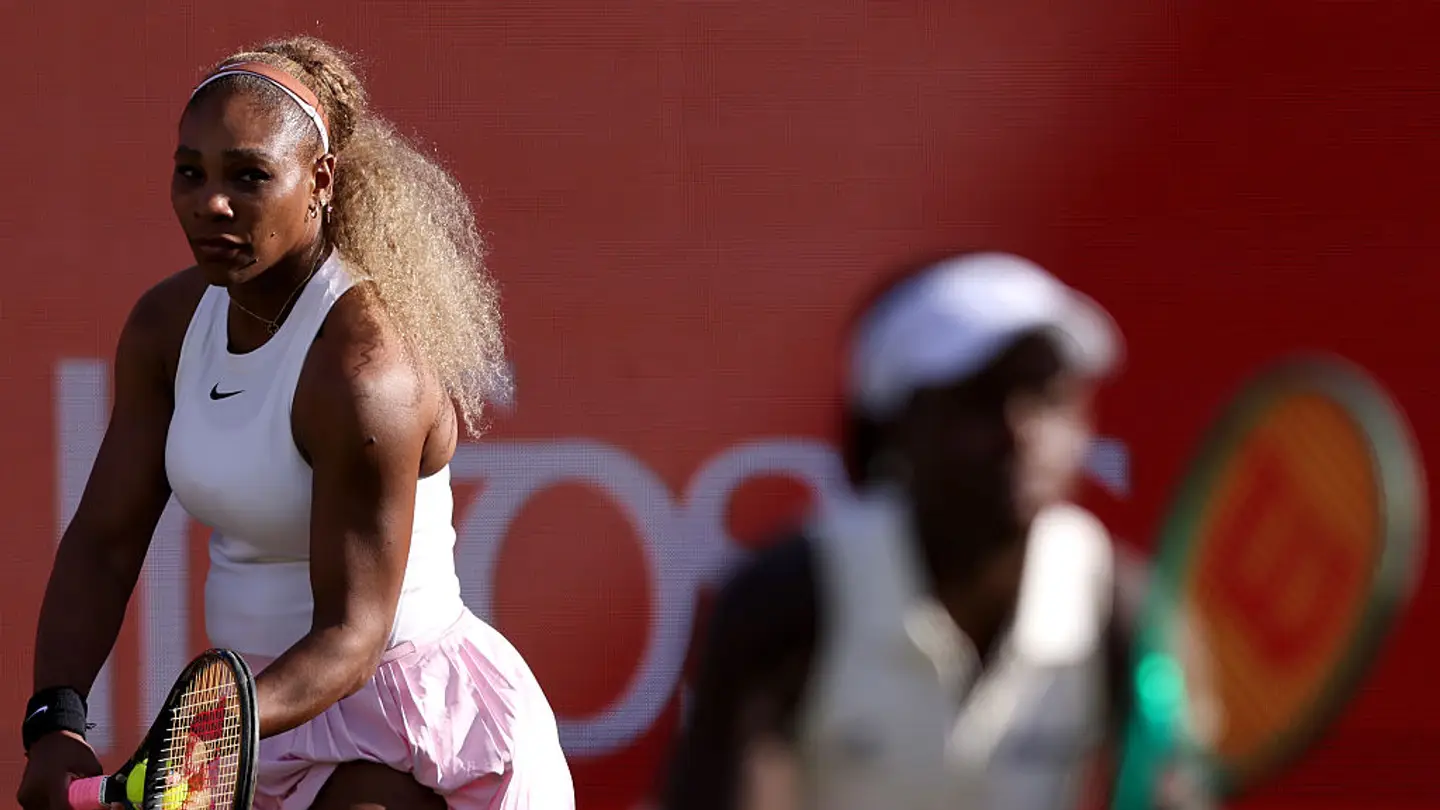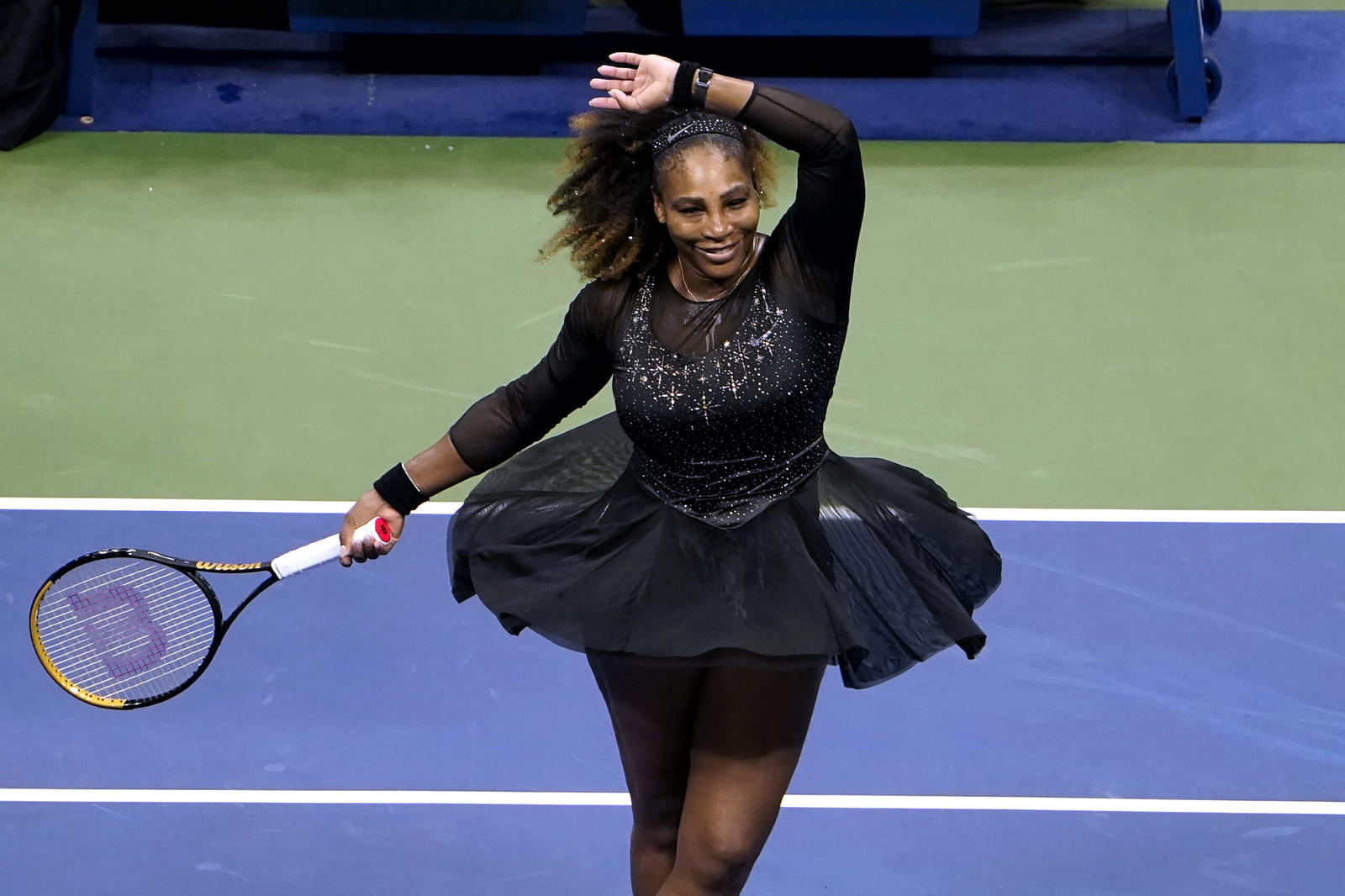
After 23 Grand Slam titles, more than a thousand matches, and innumerable GOAT debates, Serena Williams’ professional tennis career ended for the first time. It was September 2022, at the U.S. Open.She bowed out having spent 319 weeks as the world No. 1 (the third most behind Steffi Graf’s 377 and Martina Navratilova’s 332) and with 73 singles titles (the fifth best of all time), despite often playing a reduced schedule to save herself for the four majors.No, it was not the mic-drop, record-equaling 24th major singles title ending of which she had dreamed. But that thrilling week in New York lent even more gravitas to one of the most significant dates in tennis history: The day that Williams, after a quarter of a century of domination, said farewell to the sport she helped define.Another day in the summer of 2026 might just match it. After returning to tennis on the grass at Queen’s in west London in doubles, and confirming a Wimbledon doubles wild card with her sister and fellow legend of the sport, Venus, Serena will play singles at Wimbledon via wild card entry, nearly four years after she left the sport she dominated.Since September 2022, tennis fans all over the world have come to understand the sport without Williams, who played her first qualifier for a professional tournament in 1995, her first main-draw match two years later, and won her first Grand Slam as a 17-year-old at the US Open in 1999.Now, she is back. And still, few superlatives remain to describe someone who achieved as much as she did in what appeared to be her career, but was in fact just the first part of it.Serena and Venus Williams are reuniting at WimbledonAva WallaceAs she returns to tennis, it’s a chance to put one of the greatest sporting careers of all time into proper context. To explain why, when reliving those 25-or-so years, there are so many moments that defy belief.Like the fact that she beat a player born in each year from 1966 to 2001, and then one born in 2003 for good measure. The fact that she reached a Grand Slam semifinal in four separate decades. The fact that 6-1 was a more frequent set scoreline in her favour than 6-4. The fact that she won more bagel (6-0) sets than tiebreaks, because more often than not, no one could get near her.This is a breakdown of Williams’ career and an attempt to convey the extent of her domination, the evolution of her game, and how she changed the sport forever — the first time over.Greatness and longevityIt was October 1995 when a 14-year-old Williams played her first professional match — a defeat in qualifying to the then-world No. 149 Annie Miller at the Bell Challenge in Quebec City. By way of tennis context, Steffi Graf, Mary Pierce, Andre Agassi, Thomas Muster and Pete Sampras won that year’s Grand Slam titles. Bill Clinton was the president of the U.S.The following year, Ash Barty, a player Williams would beat twice in their only two meetings, was born. In November 1997, Williams won her first professional match — at the Ameritech Cup in Chicago against the world No. 27 Elena Likhovtseva. She followed that up with wins at the tournament over top-10 players and major champions Mary Pierce and Monica Seles. A month earlier, Naomi Osaka — another future adversary of Williams — was born.A look at the first part of Williams’ career has numerous quirks like these, constant reminders of how long she has been around and how much the tennis landscape has changed since those first steps.When she won that first match in Chicago, equal prize money at Wimbledon was still a decade away, Hawk-Eye technology was nine years from being introduced and John McEnroe was still two years away from playing his final competitive match at Wimbledon.Crystalizing Williams’ longevity is the list of players she has beaten, which spans generations. It takes in former doubles world No. 1 and singles world No. 13 Larisa Savchenko (née Neiland), who is now 59 and was born before England won the men’s football World Cup in 1966, and Lisa Pigato, who was born with Williams already a five-time Grand Slam champion and a few weeks from picking up her sixth. Williams beat her when she was 19; she is now 22.The graphic below shows that spread and also introduces how strong Williams’ head-to-head record was against the best players. Of the 36 players listed below, only Arantxa Sánchez Vicario, who played Williams exclusively at the very start of her career, and Osaka boast a winning record against her.That longevity and dominance against her rivals are further illustrated by the next chart, which shows that Williams beat the winner of every Grand Slam from the 1991 Australian Open to Wimbledon 2019 inclusive — a span of almost 30 years. And again, it’s only Sánchez Vicario and Osaka with winning records.Head-to-head records matter a great deal to tennis players; they clarify who has the upper hand in what is essentially individual combat. Williams prided herself on how hard she was to beat regularly — a player might do it once or twice, but doing it regularly was extremely difficult.Take the case of Maria Sharapova, who won her second and third meetings against Williams. She held three match points in the fourth, but Williams found a way to come through on one of an unrivaled three occasions when Williams saved a match point at a Grand Slam before going on to win the title. Including that victory, Williams won a staggering 19 straight matches against one of her great rivals. Their head to head ended up a lopsided 20-2 in Williams’ favor.
Serena Williams is back. Her tennis career already defied belief
As Williams returns to the sport she dominated and defined, a look back on her already absurd achievements.
2,775 words~13 min read