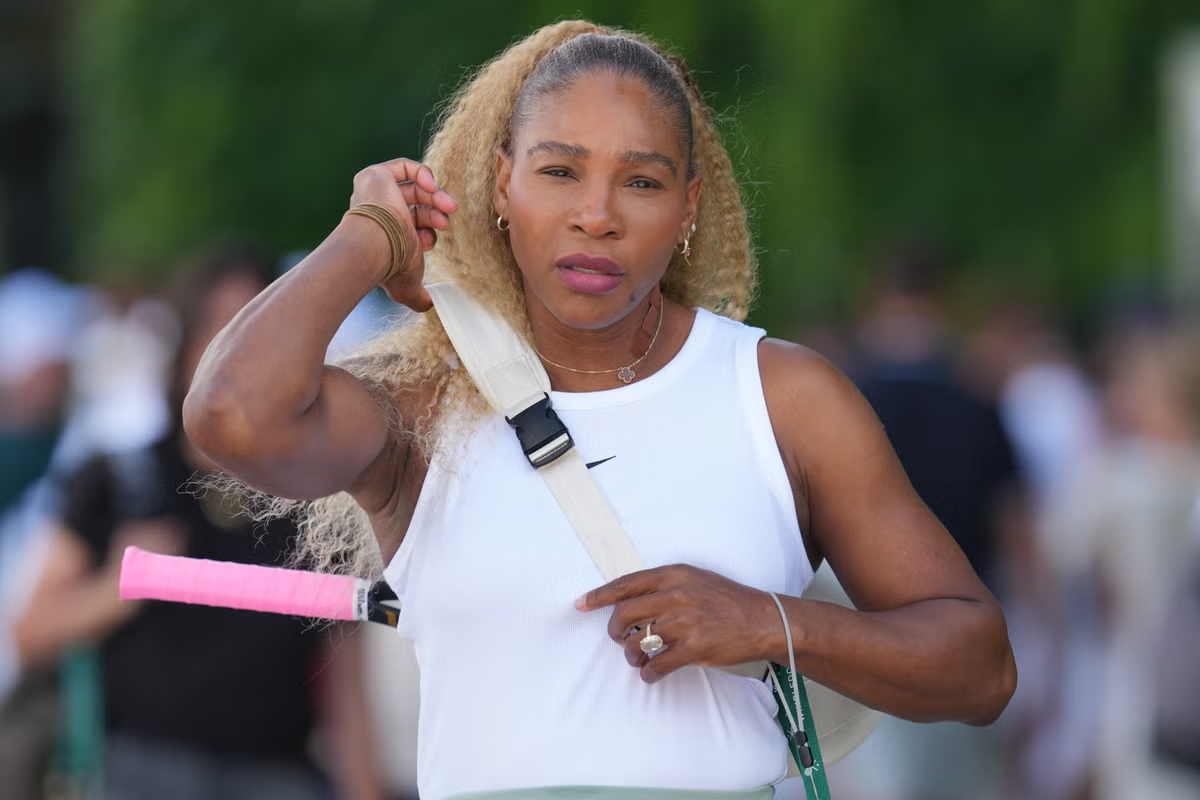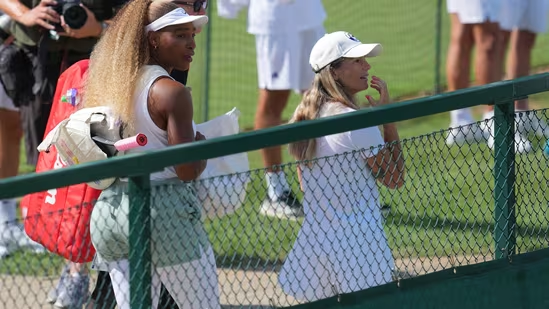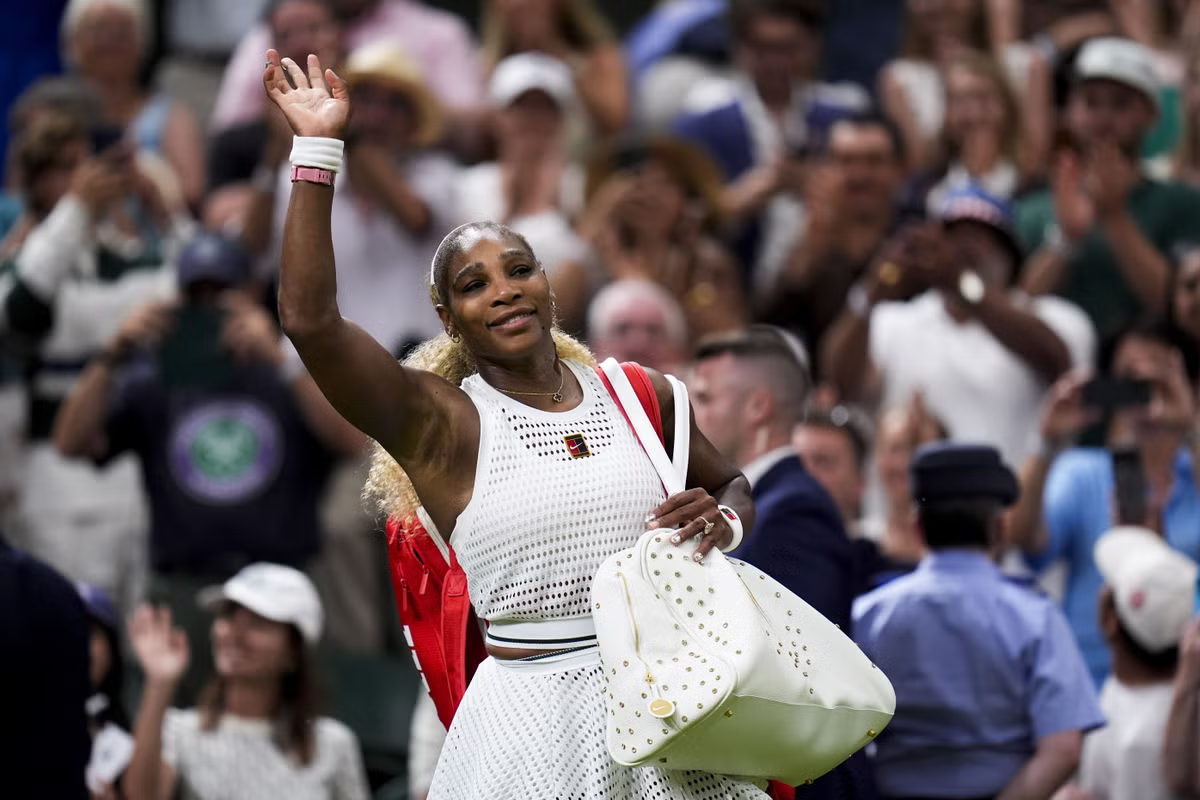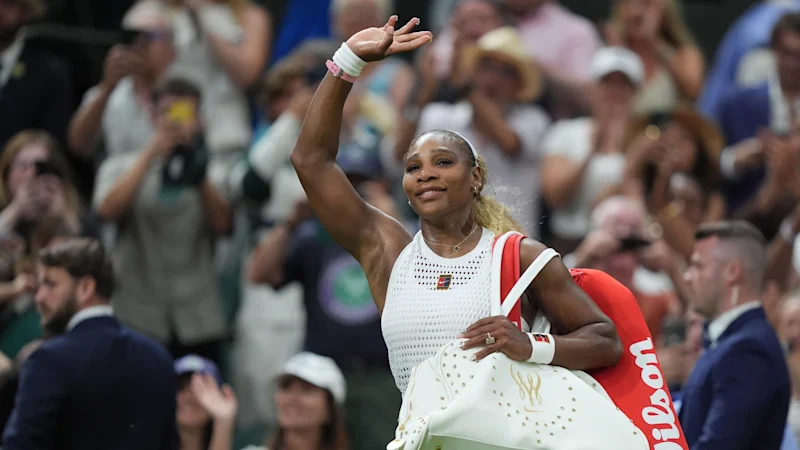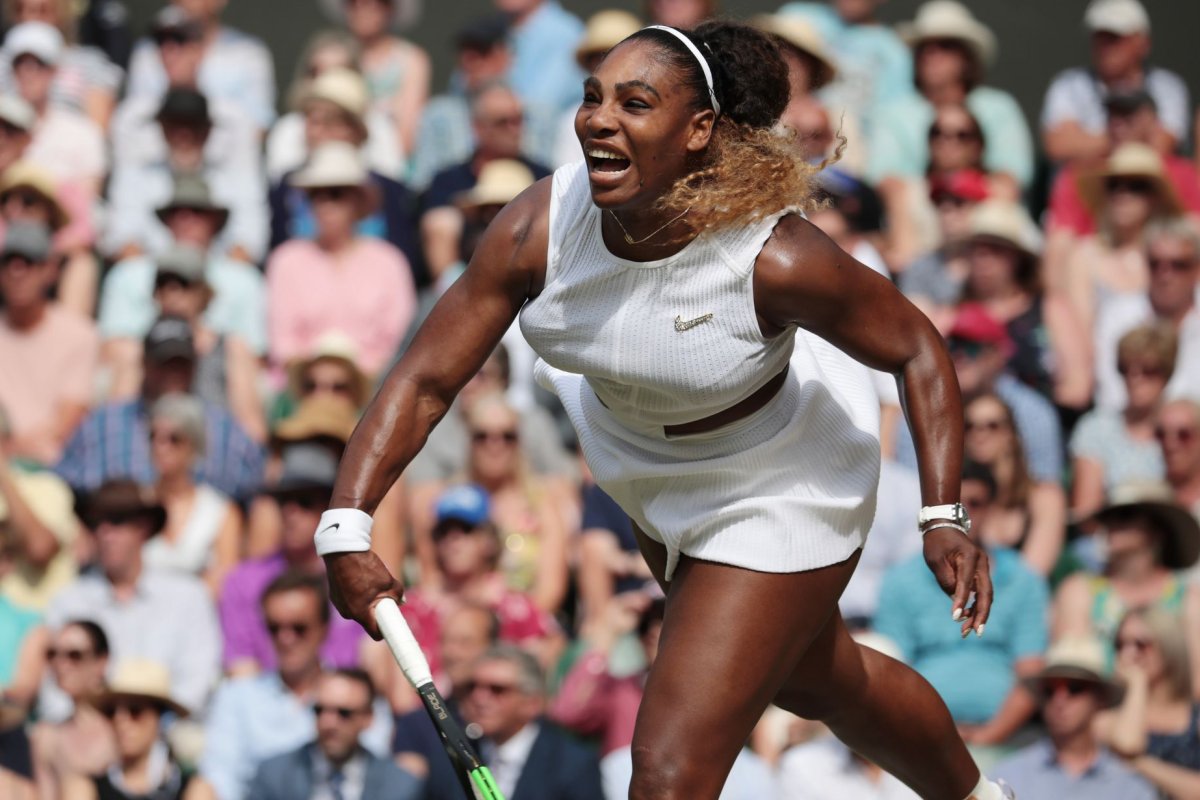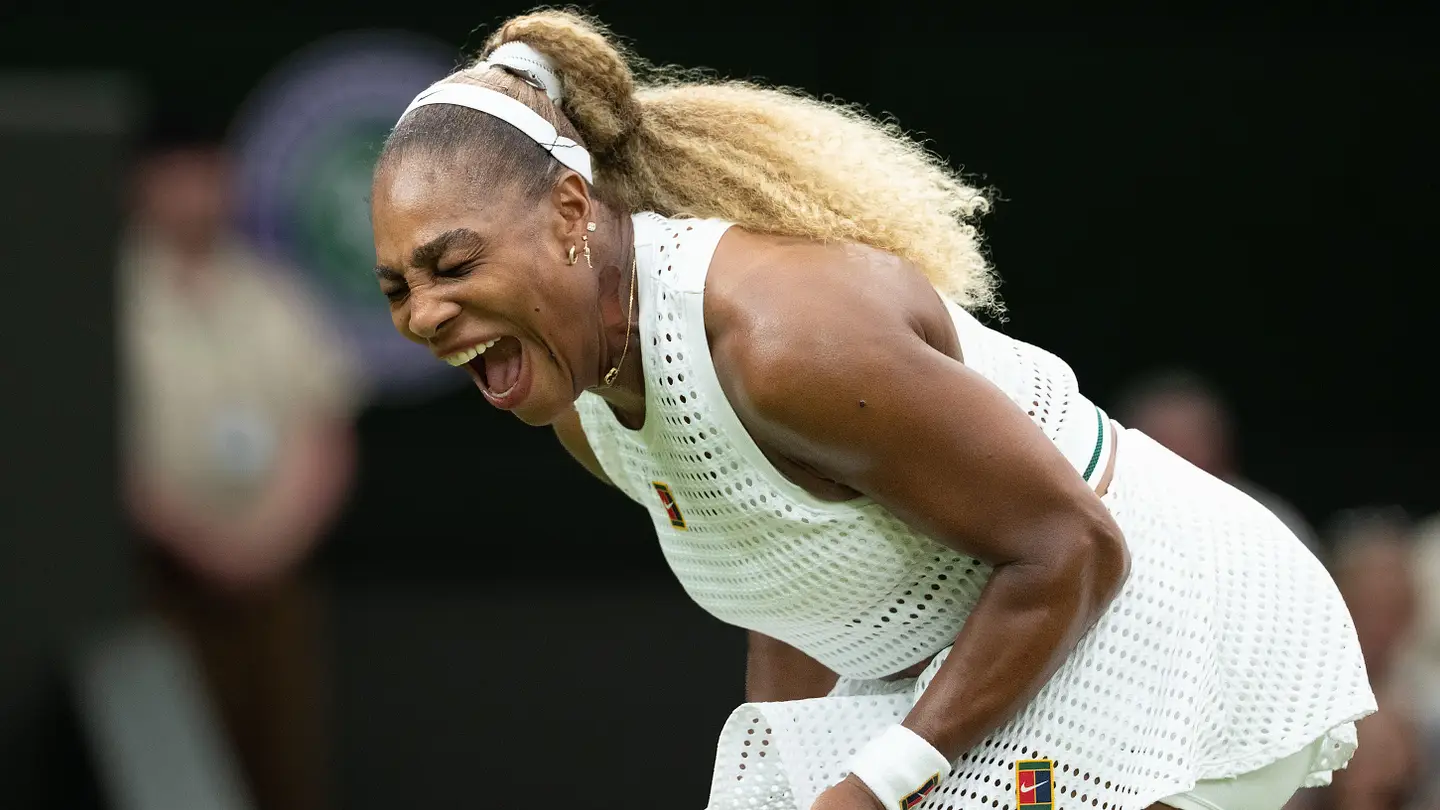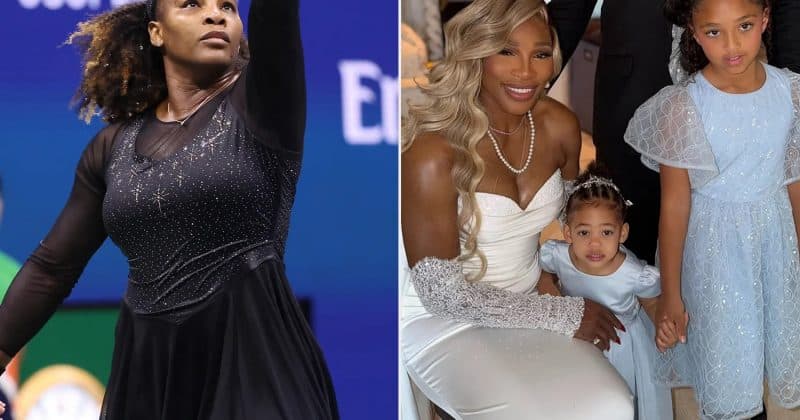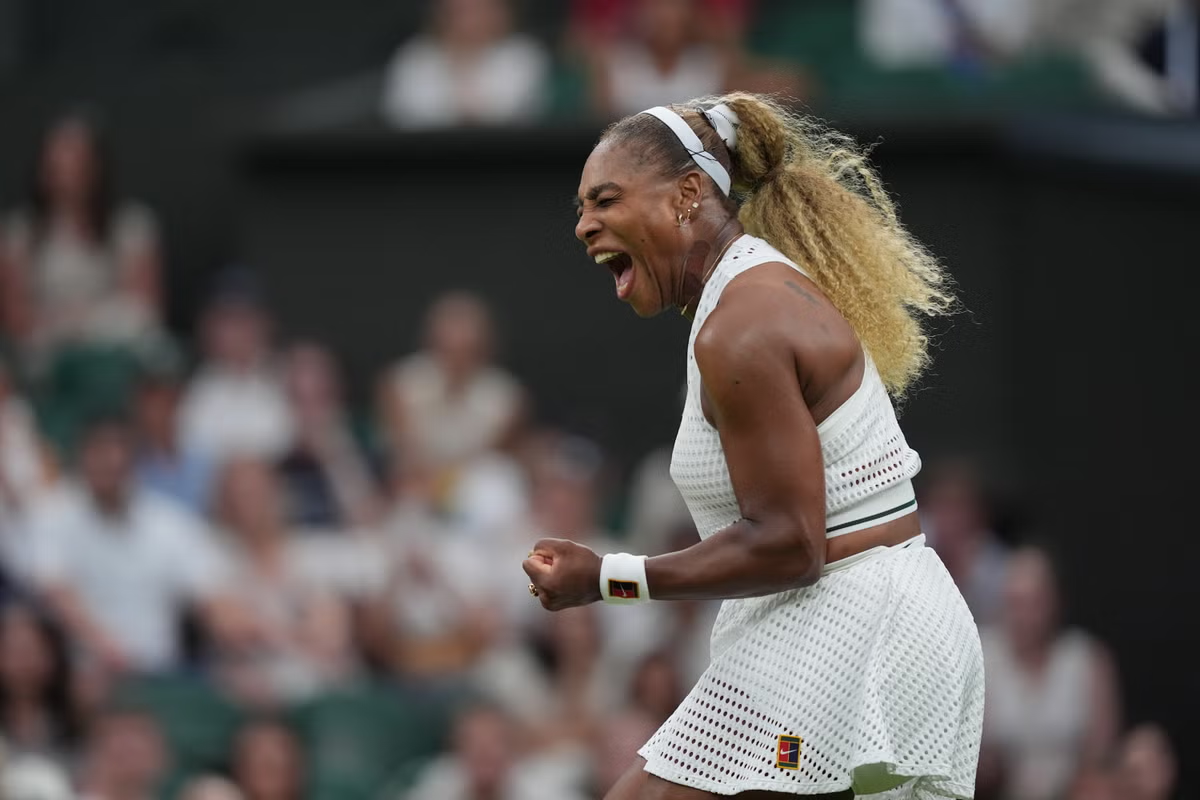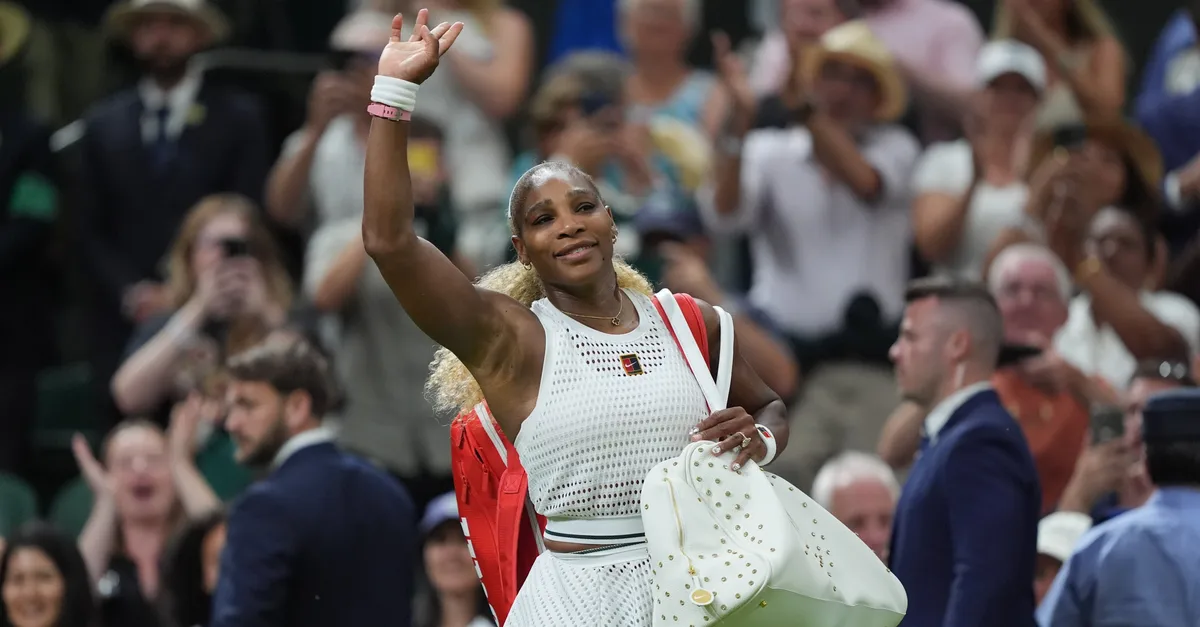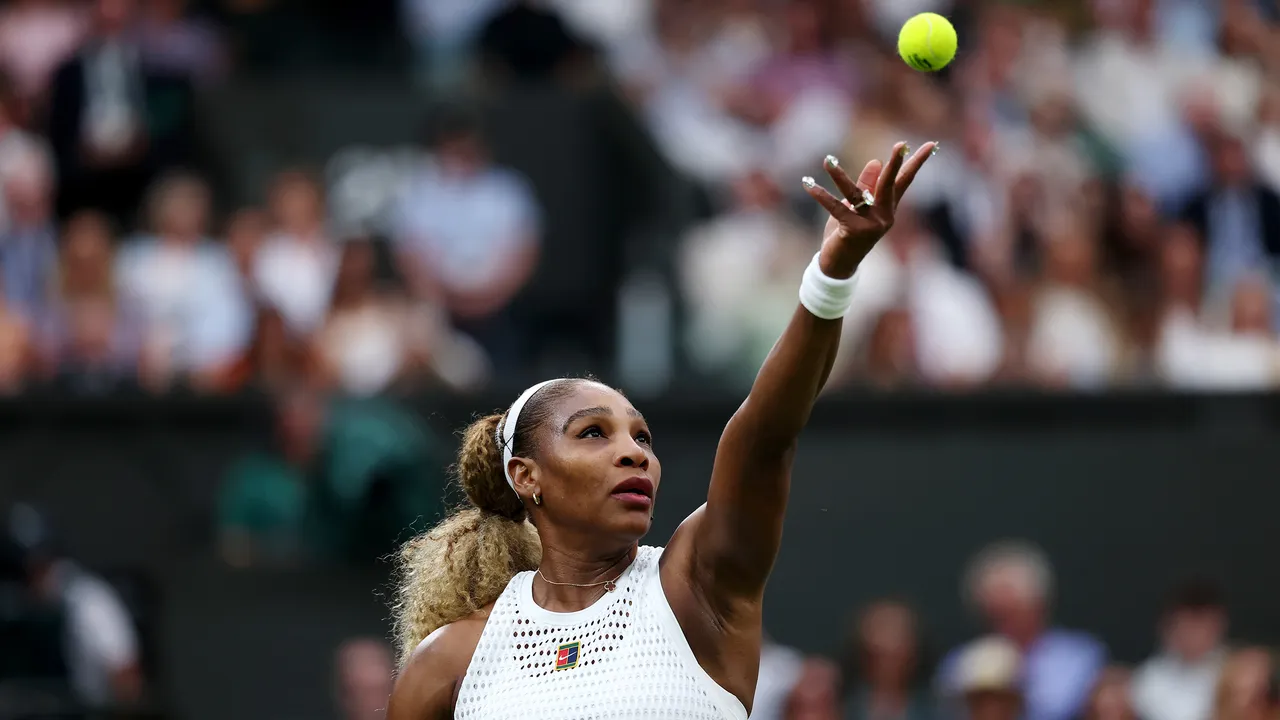
By the time Maya Joint was born, in 2006, Serena Williams had already won seven Grand Slam titles. By the time Joint played her first Grand Slam main-draw match, in 2024, Williams had won twenty-three slams, and had been off the tour for a year and a half.Williams refused to say she had “retired” when she announced that she would be playing her final tournament, at the U.S. Open in 2022. She had “evolved” away from tennis, she wrote, in a piece for Vogue. She wanted to focus on her daughter, Olympia, and wanted to have another (and she did; Adira was born in 2023). She had a burgeoning portfolio of business interests. And Williams never really went away. She remained in front of cameras—appearing in Super Bowl commercials; acting as a spokeswoman for Ro, a GLP-1 weight-loss medication for which her husband was an early investor; snuggling with her daughters for Instagram (she has nearly eighteen million followers); documenting gym sessions; wearing couture, and more couture. She had that way, as some celebrities do, of living comfortably in the public eye yet shielding something of herself from it—of being at once curated and authentic, unknowable and yet known.What makes an athlete different from any other celebrity, though, is that on a field or a court—and especially on a tennis court—there is only so much a person can control. There is a sense, finally, of something essential being revealed. A test of strength and skill seems to turn into a test of something else. A stadium becomes a panopticon with the prisoners’ doors blown off, leaving the guard, in her tower, the one exposed. And so, on Tuesday evening, when Williams walked down the winding halls from the players’ locker room onto Centre Court for her first-round match at Wimbledon, her first singles match since announcing her return to tennis, wearing a white perforated skirt and jacket, pink headphones blocking out the bustle of the busy passageways, the cameras in her face, she seemed herself, at home—which, in a way, she was. She has won the tournament seven times.Joint walked in front of her. Joint’s shoulders were tense, her thin cheeks flushed. Her eyes beneath her bright-white visor darted from left to right, right to left, as if she did not want to meet the camera’s gaze but did not know where else to look.No one knew what would happen when the match began, Joint and Williams least of all. After a strong showing last year, Joint’s current season had been an abject disaster; she’d lost thirteen of her last fourteen matches on tour, including the last eleven straight. But at least she’d been playing. Other than a couple of doubles matches in the preceding month, Williams had not played a professional match in nearly four years.Why did Williams come back? She gave a handful of different explanations in the lead-up to the match. She wanted her daughters to see her play. She wanted to play, for the first time in a long time, without expectations. Perhaps she had been inspired watching her sister, Venus, a champion in her own right, play into her forties. Maybe she wanted to do something no one has ever done, to defy the assumptions of fans and critics one more time. And there is a chance that she was addicted to the attention, to the celebrity, to being at the center of the action. Aging athletes talk all the time about that sense of being tested, of being seen from all angles.Or perhaps it was, as she said in the pre-tournament press conference, a lark. Wimbledon had offered her a wild card, and held it open for her, and so she thought, Why not?There were, in fact, reasons. The last time she had played at Wimbledon, in 2022, she had lost to Harmony Tan, then ranked a hundred and fifteenth in the world, 7–5, 1–6, 7–6 (7). The loss clearly rankled her. Since when had the great Serena Williams been unable to close out a match? And now she was forty-four—still strong, still capable of throwing down aces, still Serena, so powerful that she had become an iconic force. But the limitations of a body of a forty-year-old cannot be willed away, especially without much in the way of reps. After a break, even a player in her prime needs the pressure of match play to scrub off the rust. There was no way for Williams to simulate it.And, for the first set, that showed. Williams played decently well, hitting her serve at more than a hundred and twenty miles an hour, directing her ground strokes deep down the middle so that Joint wouldn’t be able to create clever angles and expose Williams’s limited movement and lack of match fitness. There were signs of the great player shining through beneath the rust—a gorgeous flicked topspin lob; those fearsome first-serve stealth missiles. But Williams’s strategy of trying to hit through Joint wasn’t working. Joint was comfortable with Williams’s pace, and stronger than her willowy frame suggested. Whenever Williams’s shot fell even slightly short in the court or toward the wings, Joint found the angles, and she served well—finishing, in fact, with ten aces to Williams’s seven. She was the one winning the bigger points, brushing away the two break points she faced and comfortably taking the set. As Joint gained confidence, her ground strokes skidding low and flat across the grass, Williams started to wilt. But, at just the moment when I thought Joint might run away with the match, Williams did what she has done so many times: she came back.It was as improbable as it was inevitable, like so much about her life. She adjusted, mixing up her pace and looking for angles instead of simply rocketing the ball up the center of the court. She anticipated Joint’s favorite shots. And she began to seem more confident on the bigger points. There it was: the flying forehand outside the doubles alley following a big serve, the classic one-two punch, to save match point. The hundred-and-twenty-two-mile-an-hour ace at six-all in the second-set tiebreak. Another big serve to force an error, which gave Williams the third set. In other words, she evolved, while at the same time reminding us—perhaps reminding herself—of who she has always been.But time only moves in one direction. Williams’s opponent was twenty-four years younger. And, as the third set wore on, Williams faltered again. Joint finished the third set with fifteen winners, to Williams’s four. Williams once again found herself in an unfamiliar position: the outcome had been on her opponent’s racquet. She lost 6–3, 6–7 (6), 6–3.Where does her evolution take her next? On Wednesday morning, it was announced that Williams had suffered a knee injury, and her status for the doubles tournament, where she was planning to pair up with her sister, Venus, was in jeopardy. From there, who knows? She’s been evolving all along. Changing cities, tactics, coaches, hair styles, spots. She’s left the sport before, more than once, and come back. She has always seemed to know what she wants, even if we don’t know why she wants it, and maybe she doesn’t either. It didn’t surprise me that she came back—too much about her past, her ambition, and her public persona suggested that she would. But watching her fight, watching her throw back her head with pride, or roar in defiance, I was surprised to realize how much I wanted it, and how much I shared in it, too. There is no retiring from these moments that come to measure your life, whether the moments are yours or not. They stay with you always, somehow. ♦
Serena Williams Returns to Wimbledon
For a moment, it looked like the forty-four-year-old would pull off another stunning comeback in the tournament she has won seven times. Then reality sank in.
1,280 words~6 min read