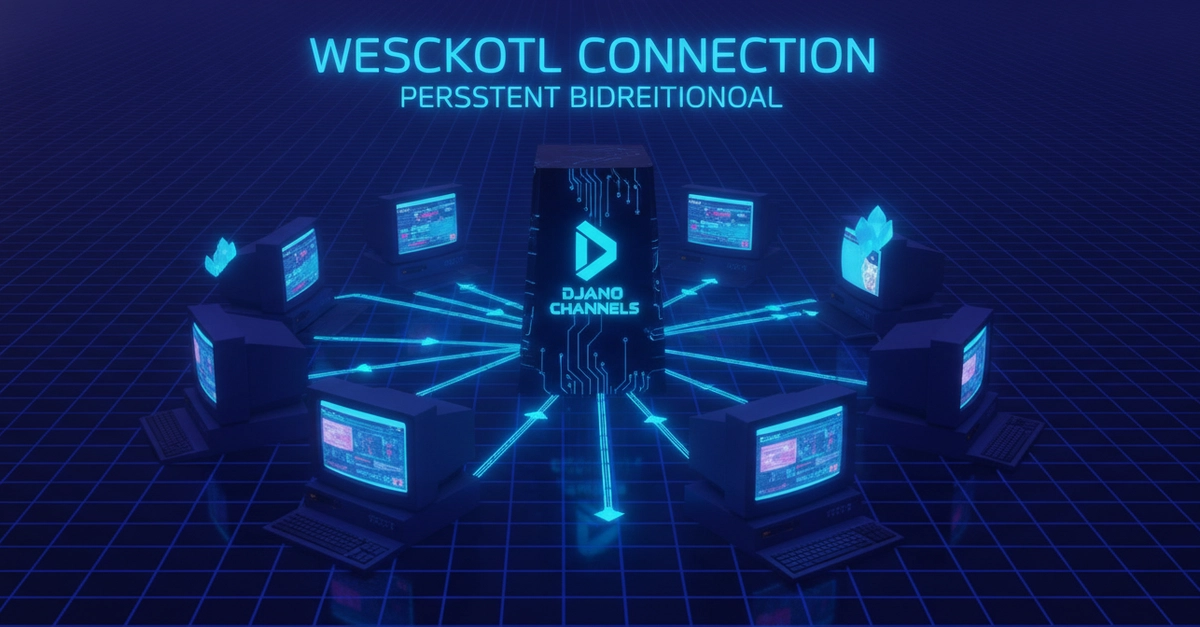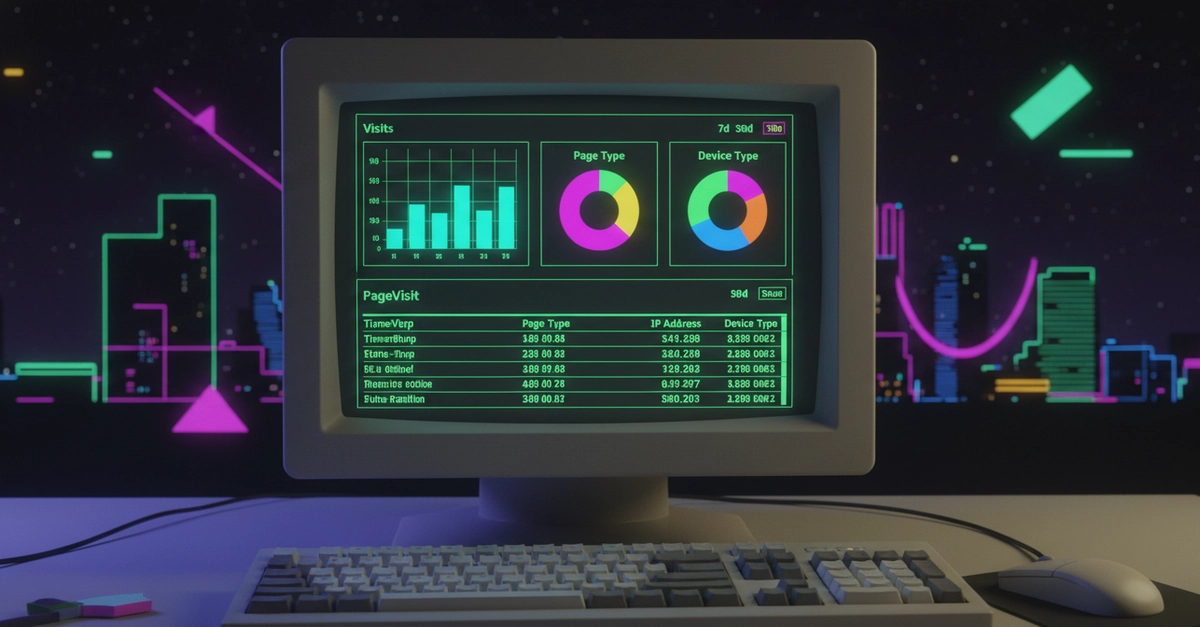
Your users want live updates: an order flips to paid, a notification pops, a dashboard number ticks up without a refresh. The obvious answer in Django is Channels. I reached for it first too. But as our scale grew, the costs of keeping connections in-process pushed me to rethink the architecture. I let Django stop handling WebSockets entirely, and almost everything got simpler. Here's the pattern that replaced it.
The Problem
Django is a request/response framework. It processes a request, returns a response, and moves on. Real-time notifications — a dashboard ticking up, an order status flipping live — need a server that holds a connection open for every connected client. That is a fundamentally different job.
The standard answer in the Django ecosystem is Channels. It moves you to ASGI, gives you consumers, and works well, especially when your real-time needs are deep and bidirectional.
Ours weren't. We needed server→client push: notify a user when an order completed, or when a payment landed. The connections were mostly idle. Channels gave us that, but it came with costs that started hurting at scale.