As Europe races to build its AI sovereignty, startups are steadily coming to grips with the massive manufacturing power and market access required to compete at global scale.
Asia is among the most expansive regions capable of servicing both needs. But with political tensions and concerns around intellectual property (IP) protections, expanding there can feel risky.
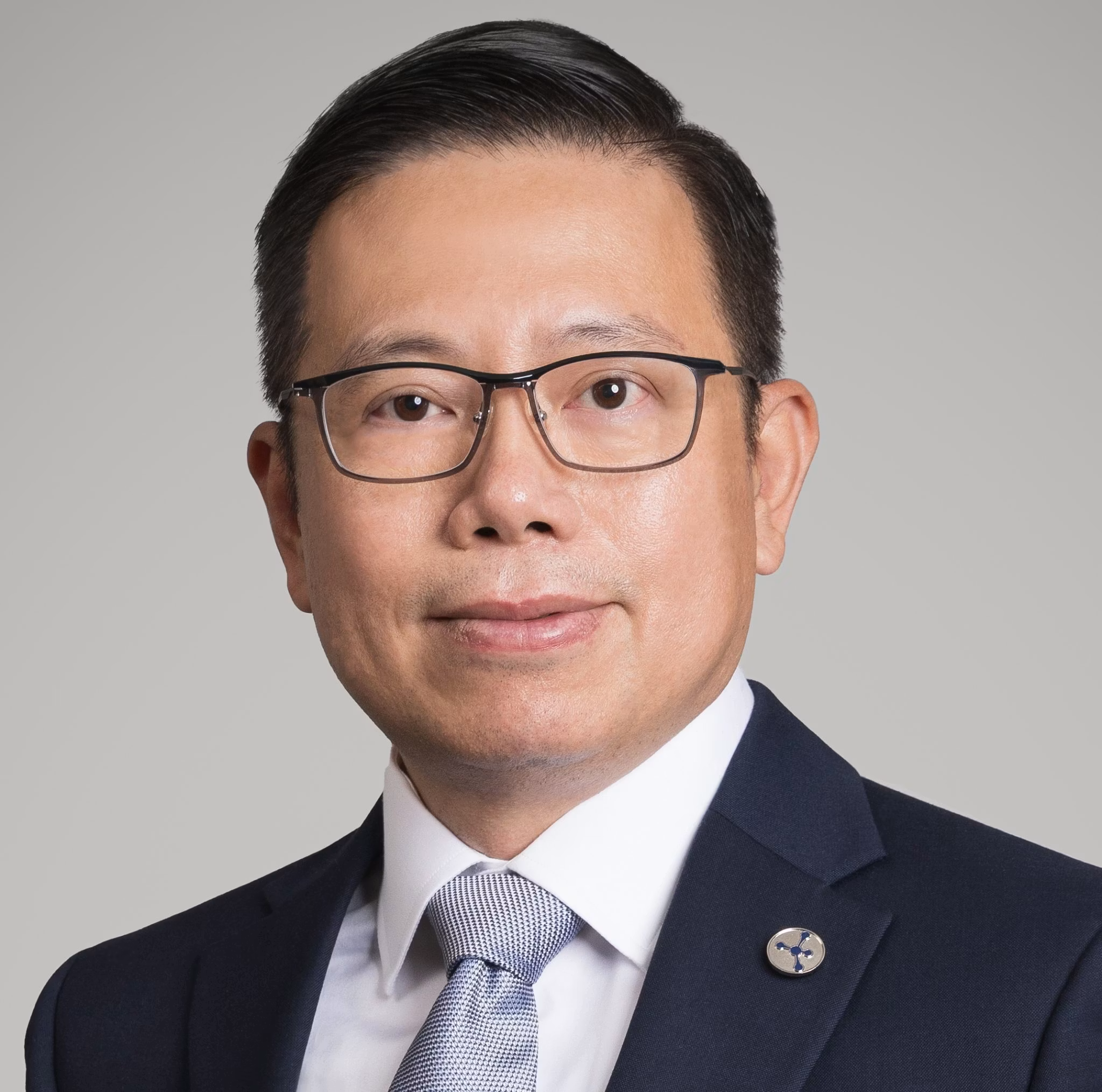
Today, a growing number of European startups are charting a path eastward through Hong Kong, says Terry Wong, CEO of Hong Kong Science and Technology Parks Corporation (HKSTP), the city’s largest ecosystem player driving innovation and technology development across Hong Kong and wider Asia. Hong Kong's role extends beyond acting as a legal gateway into Asia. The city sits at the intersection of several forces that are increasingly difficult for startups to find in one place: international capital markets, globally connected universities, advanced manufacturing networks and access to one of the world's largest technology markets.Achieving sovereignty now depends on an entity's ability to access global networks while retaining long-term control over its intellectual property (IP).The question for European innovators is not whether they should collaborate internationally, but how. Industrial sovereignty requires the opposite of isolation. In practice, it depends on the ability to access global innovation networks and infrastructure while retaining control over IP, governance and vision. By offering familiarity to the legal framework and proximity to the Chinese booming economy, Hong Kong is becoming a bridge for the exchange between Western and Asian businesses in the language of innovation.