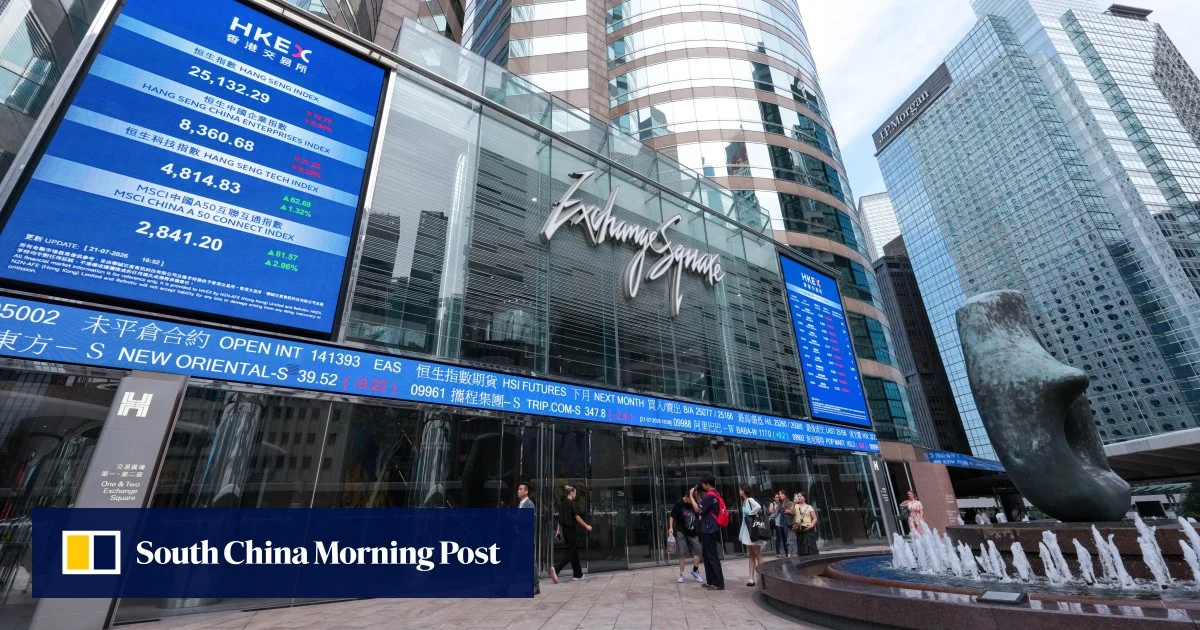
Hong Kong stocks have trailed other major global markets in the first half of the year, a trend analysts said could persist as sluggish consumer spending weighs on Chinese internet platforms and an entrenched AI trade risks widening the performance gap.A glut of stocks from the expiry of IPO lock-up periods could pose a further threat this quarter, prompting the city’s exchange to respond quickly with countervailing measures. These included lowering trading barriers for individual investors, a possible expansion of the Stock Connect programme to attract mainland investors and the faster inclusion of hot tech stocks into key indexes.The 11 per cent decline in the Hang Seng Index made Hong Kong one of the few major markets to end the six months with a loss. By contrast, the S&P 500 rose 20 per cent and the Nasdaq-100 jumped 10 per cent over the same period, as investors piled into artificial intelligence stocks to catapult both gauges to record highs in June after fears of a war-driven oil shock receded.Even within Asia, Hong Kong stocks paled in comparison with South Korea, Taiwan and Japan, where bellwether companies are more deeply embedded in the global AI supply chain. South Korea’s Kospi surged 101 per cent in the January-to-June period, thanks to soaring demand for memory chips from Samsung Electronics and SK Hynix, while Taiwan Semiconductor Manufacturing Co lifted the island’s Taiex index by 60 per cent.The disconnect could widen further, as SK Hynix’s planned Nasdaq listing this month looks set to reinforce the fervent AI trade, validating the tight supply of the hardware supporting the most sophisticated technology.Meanwhile, an unexpected contraction in China’s retail sales in May augured badly for corporate earnings at the likes of Alibaba Group Holding and Meituan, the biggest weightings on the benchmark index. Alibaba owns the South China Morning Post.“Hong Kong’s market only has structural opportunities until expectations for corporate earnings improve noticeably,” said Zhang Sida, an analyst at Guoyuan International.
Can Hong Kong absorb a US$100 billion share flood amid the global AI boom?
A surge in shares becoming eligible for trading comes as investors pour into AI-linked stocks in rival markets.
324 words~1 min read