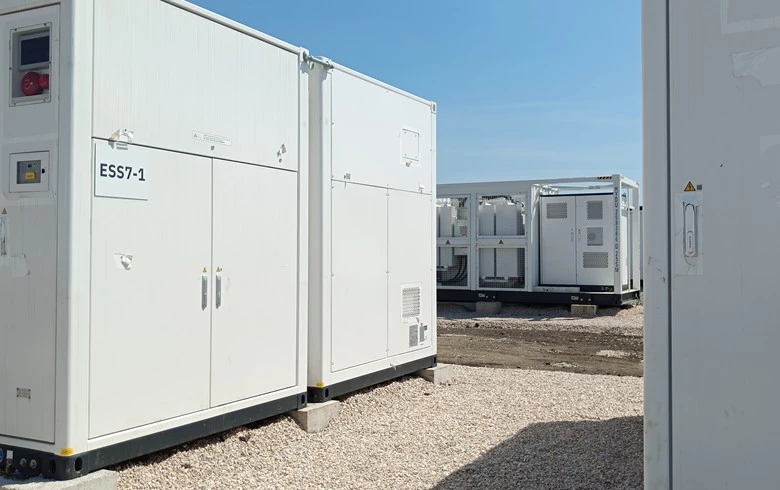
KARIYA, Japan and YOKOHAMA, Japan, June 30, 2026 /PRNewswire/ -- DENSO CORPORATION (Headquarters: Kariya City, Aichi Prefecture; President: Shinnosuke Hayashi, hereinafter referred to as "DENSO") and TÜV Rheinland Japan, Ltd. (Headquarters: Yokohama City, Kanagawa Prefecture; President: Kunihiro Okamoto, hereinafter referred to as "TÜV Rheinland Japan") have conducted a joint validation of battery passport for an energy storage product of AESC Group Ltd. (Head Office: Yokohama, Kanagawa; CEO: David Wan; hereinafter "AESC"), using actual data from AESC's ESS*[1] business. In this validation, DENSO, in collaboration with the relevant parties, was responsible for building and providing the technological foundation for battery passport, and TÜV Rheinland Japan, as the independent third-party certification body, have verified that the product complies with the EU Battery Regulation*[2] and is both practical and feasible for real-world use. This achievement lays a solid foundation for AESC's energy storage products to enter the EU market.
In recent years, societal expectations have increasingly called for achieving carbon neutrality and transitioning to a circular economy that enables resources to circulate within the economic system. As a result, efforts to develop sustainable products have accelerated. In Europe in particular, Digital Product Passport (DPP)*[3] is being introduced to digitally manage and present product traceability information. Under the EU Battery Regulation, a battery passport will become mandatory from February 2027 for batteries used in automotive, industrial, and other applications.