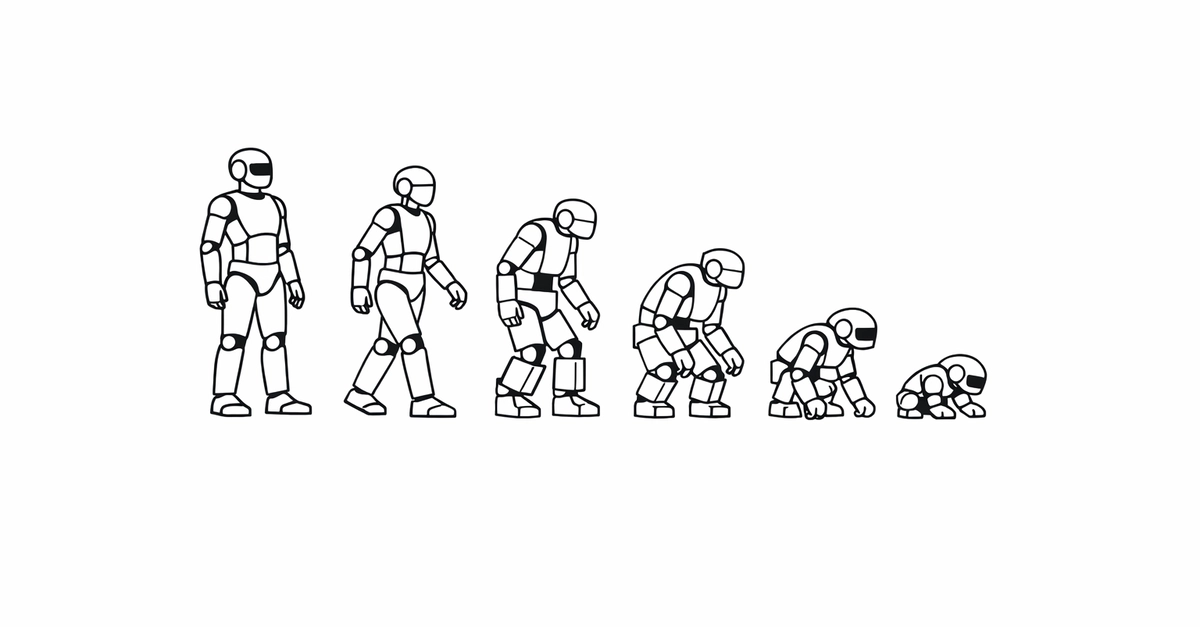
If you have shipped anything that fine-tunes on its own outputs — a distillation pipeline, a self-instruct loop, a "we generated 200k examples with GPT and trained on them" project — there is a slow leak in your system you probably have not measured. The model gets a little blander every generation. The tails of the distribution thin out. Rare phrasings, unusual edge cases, and minority patterns disappear first, and they disappear quietly, because your eval set is usually too small and too central to notice the loss.
This is model collapse, and in 2026 it has graduated from a cute academic result to a real engineering constraint. The original 2024 Nature work showed that models trained recursively on generated data converge toward a degenerate distribution. The follow-up research this year has been less about whether it happens and more about exactly how to keep it from happening when synthetic data is now unavoidable. If you build with LLMs, this is worth understanding at the mechanism level, because the naive mitigations mostly do not work.
Why collapse happens, mechanically
Collapse is not a mysterious AI pathology. It is a sampling problem you would recognize from any statistics course.