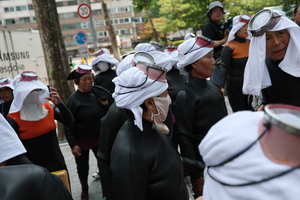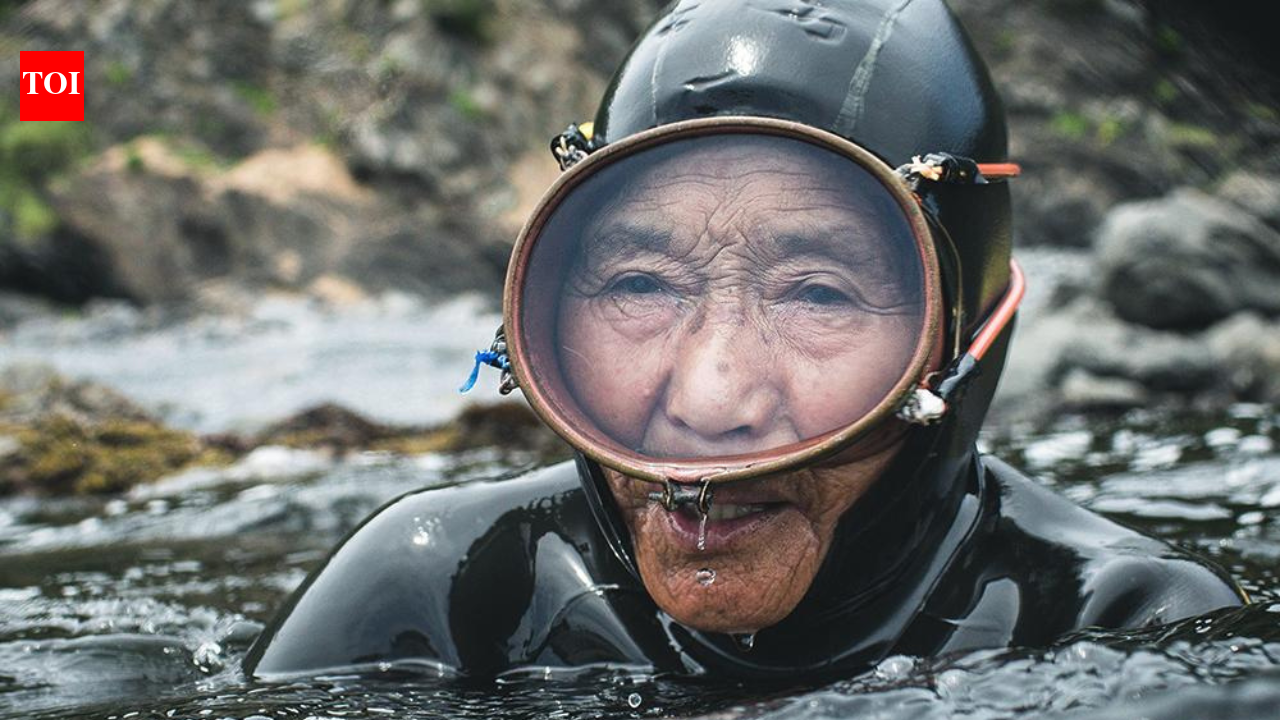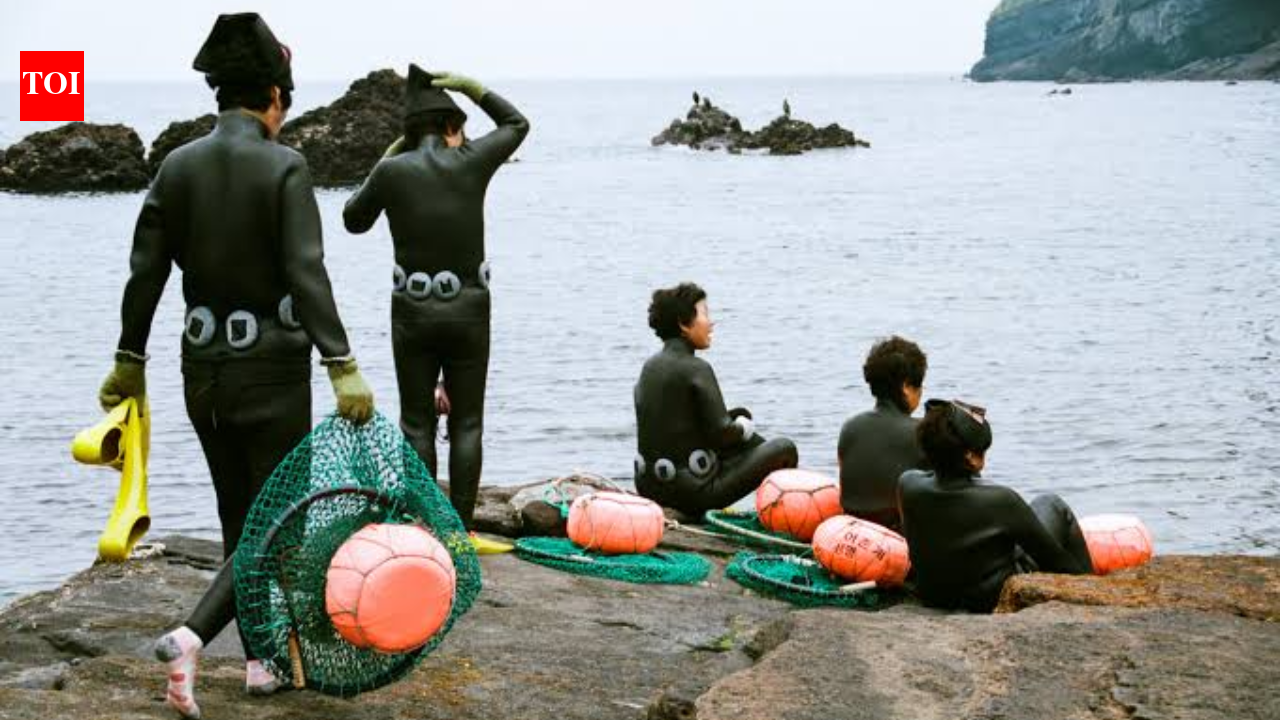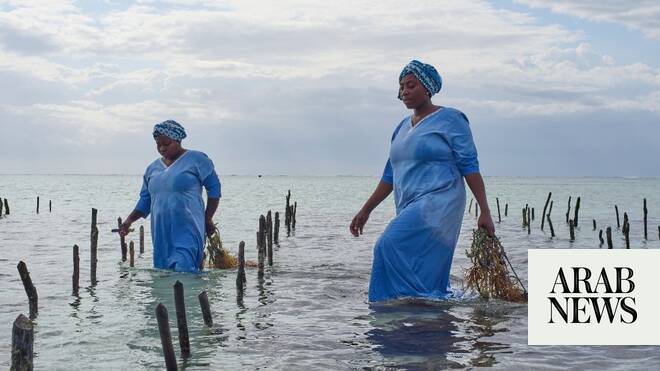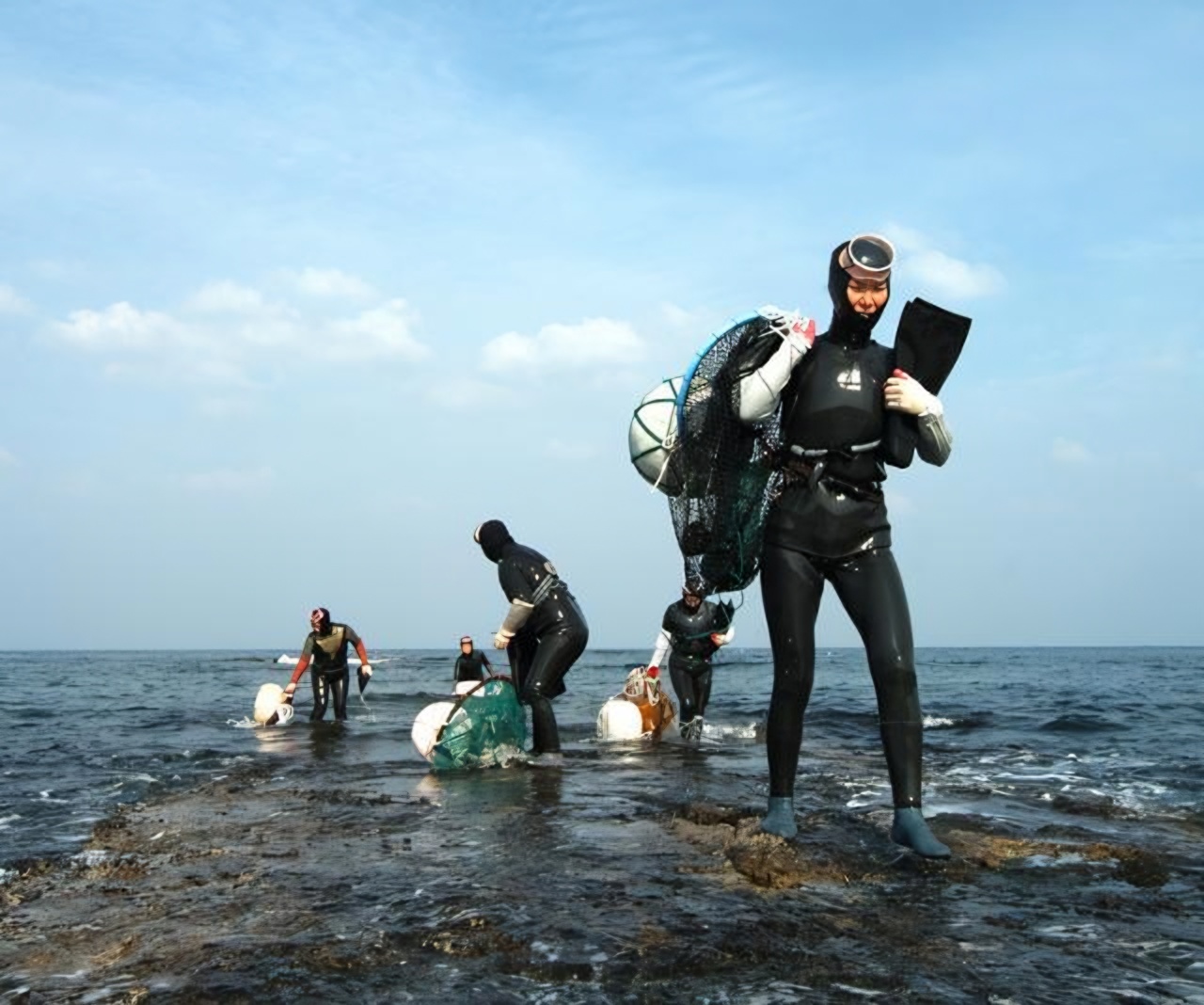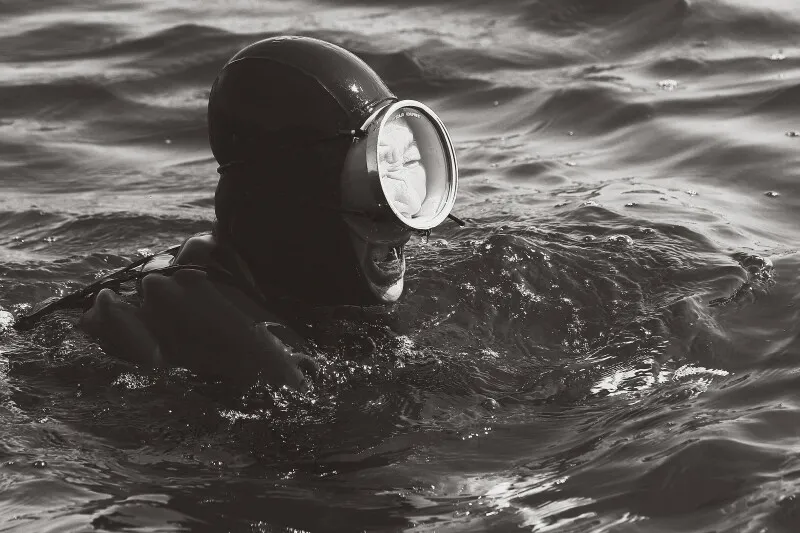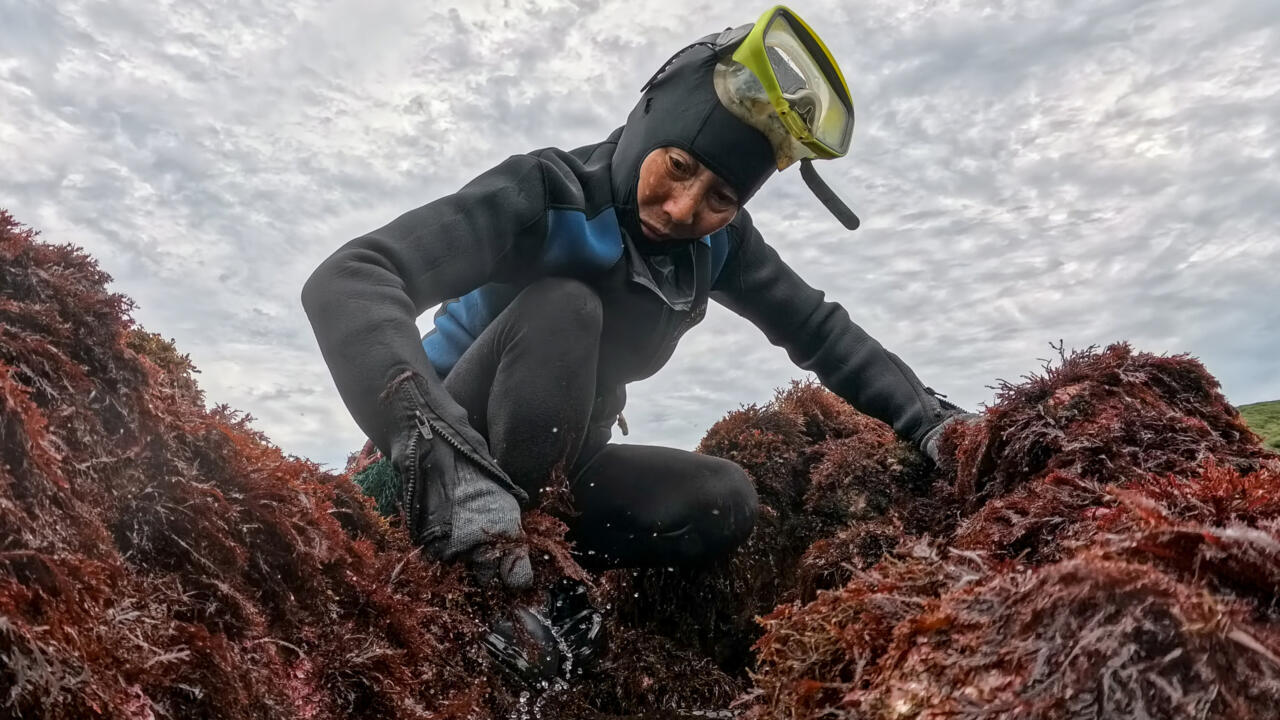
Seaweed foraging on the rocky coastline at the edge of the Pacific Ocean can be arduous and dangerous, says Wu, whose passion has kept her going for more than half a century.But as younger Taiwanese largely opt for city life over the island's remote northeast, she fears this tradition could vanish when her generation of "hainu", or "sea women", are no longer able to carry on."If it's in your blood, you'll naturally want to learn, right?" she told AFP in her village of Magang.
Seaweed foraging on the rocky coastline at the edge of the Pacific Ocean can be arduous and dangerous © I-HWA CHENG / AFP
"Even if you just come here, gather something from the sea and eat it, that's already part of being a hainu."Along the easternmost point of the coast, sea women stuff "stone flowers" -- as the algae is called in Taiwanese and Mandarin -- into net sacks.They then lug heavy loads back home, spreading the seaweed out on the ground and snipping off residue.Absorbing sunlight, the seaweed takes about four days to fully dry before it can be washed several times and boiled to release the jelly-like substance known as agar-agar.Once dried, 300 grams (0.7 pounds) of Gelidium algae can produce about 50 bottles of refreshing agar-agar cooler, each selling for around $1.30.