This content was published on
June 30, 2026 - 03:22
4 minutes
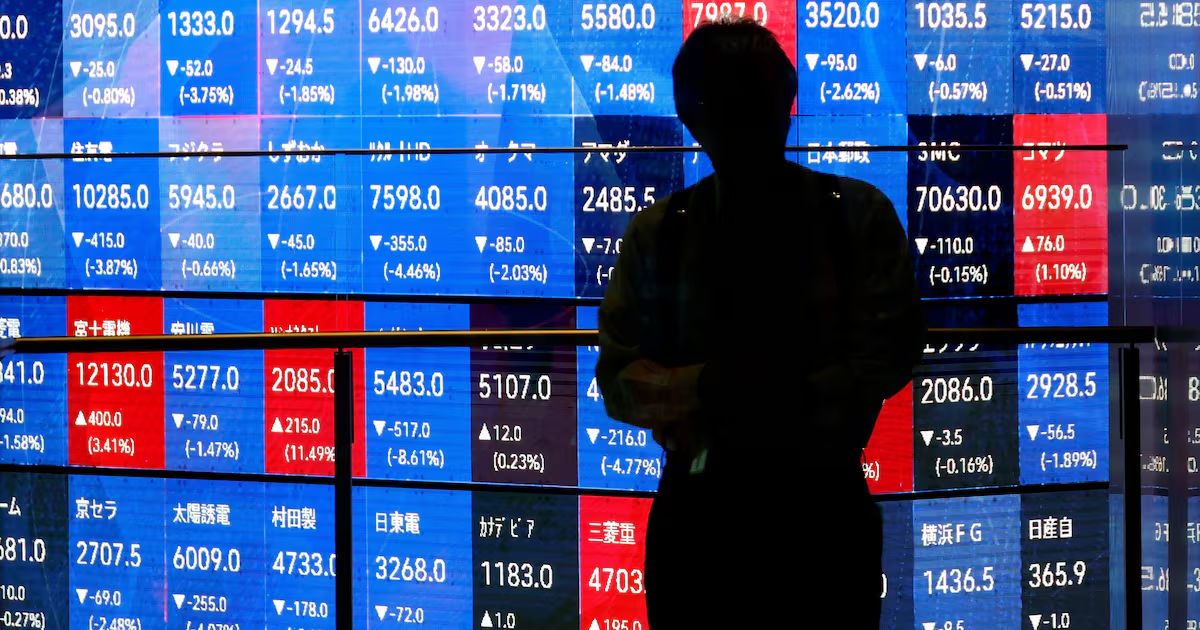
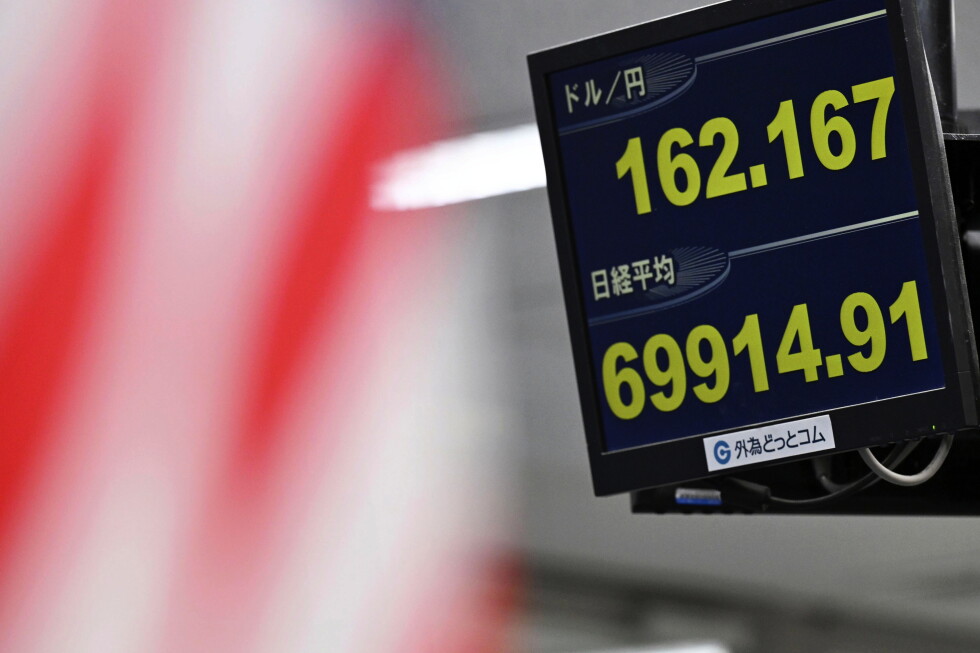
(Bloomberg) — Asian equities were on track for their best quarterly gain in 17 years as technology stocks rallied on optimism over the artificial intelligence trade. The yen slid to its weakest level against the dollar since 1986.The MSCI Asia Pacific Index rose 0.6% on the last trading day of the quarter, after swinging betweens gains and losses earlier Tuesday. The gauge has climbed 21% in the past three months, led by South Korea, the world’s best-performing major benchmark this year.Meanwhile, the yen extended its losses on Tuesday to trade past 162 per dollar. The currency’s slide will generate unease in Japan and put traders on high alert for authorities wading into the market.Global equities are on track for their best quarter in almost six years as investors crowd into the artificial-intelligence trade. Investors now turn their focus to the US-Iran talks Tuesday and June US jobs data on Thursday that may offer clues on whether the Federal Reserve will keep interest rates higher for longer.In the US, the stock resurgence has defied skeptics, coming in the face of war, an oil supply shock and inflation jitters. Since bottoming three months ago, the S&P 500 has staged one of the swiftest rebounds this century, gaining 20% from its March 30 low to its June 2 peak — something it has done just three other times since 2000.“We continue to believe strongly that the action in the tech sector will continue to be the main driver in the stock market,” said Matt Maley at Miller Tabak.While tech doesn’t have to keep outperforming in a big way, the sector needs to refrain from declining in a significant manner due to its heavy weight in the S&P 500, he noted. Otherwise, individual investors could start “rotating” toward cash, especially after hearing so much talk about bubbles in the past year, Maley added.Elsewhere, Brent slipped lower ahead of expected US-Iran talks in Doha. The commodity traded around $72.55 a barrel. Gold slipped below $4,000 an ounce.Attention in Asia is on the yen. While the weaker Japanese currency has boosted exporters’ profits and helped propel the country’s stocks to record highs, it has also raised import costs, squeezed households and added to political pressure on Prime Minister Sanae Takaichi’s government.The Bank of Japan lifted its benchmark interest rate on June 16 to 1%, the highest since 1995. Yet the impact was minimal, as traders expect the Fed to stay hawkish going forward.“It’s the 1980’s all over again for the yen,” said Tim Waterer, chief market analyst at KCM Trade. “The yen is now getting uncomfortably weak from an imported inflation standpoint.”Some of the main moves in markets:StocksS&P 500 futures fell 0.1% as of 10:21 a.m. Tokyo time Japan’s Topix rose 0.1% Australia’s S&P/ASX 200 was little changed Hong Kong’s Hang Seng was little changed The Shanghai Composite rose 1.2% Euro Stoxx 50 futures rose 0.3% CurrenciesThe Bloomberg Dollar Spot Index rose 0.1% The euro was little changed at $1.1411 The Japanese yen fell 0.1% to 162.14 per dollar The offshore yuan was little changed at 6.8001 per dollar The Australian dollar fell 0.1% to $0.6877 CryptocurrenciesBitcoin fell 0.6% to $59,859.37 Ether fell 1.4% to $1,593.17 BondsThe yield on 10-year Treasuries was little changed at 4.37% Japan’s 10-year yield advanced 2.5 basis points to 2.660% Australia’s 10-year yield declined one basis point to 4.73% CommoditiesWest Texas Intermediate crude fell 0.7% to $70.23 a barrel Spot gold fell 1% to $3,974.09 an ounce This story was produced with the assistance of Bloomberg Automation.–With assistance from Aya Wagatsuma and Winnie Hsu.©2026 Bloomberg L.P.